God of light and purity, best-loved of all the gods
Gods of Asgard · The Æsir
LightPurityGoodness
Who they are
Son of Odin and Frigg, the embodiment of light and goodness, the best-loved of the gods. His death is the first knell of Ragnarök — light falls, marking the turn of the gods’ golden age toward its end. The myth promises that after the old world burns away in flame, Baldr will return from death to rule the newborn world.
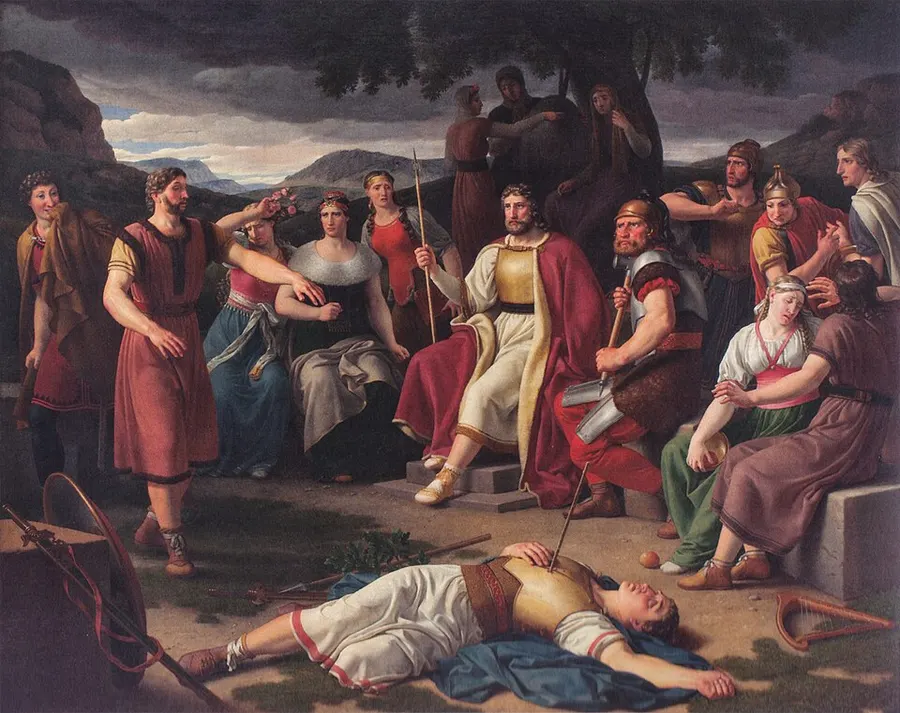
Because all things had sworn not to harm Baldr, the gods amused themselves by hurling objects at him and watching them turn aside. Loki learned that the mistletoe had sworn no oath, whittled it into a dart, and pressed it into the hand of the blind god Höðr, guiding his throw. The dart pierced Baldr’s chest; the god of light fell, and for the first time Asgard sank into a grief past all mending.
To Return If All Things Weep
The goddess Hel agreed: if all things in the world wept for Baldr, she would let him return to life. The gods ran to spread the word, and grass and stone, metal and beast all shed tears — save one giantess, Þökk, sitting in a cave, who coldly refused, and she was most likely Loki in disguise. One thing would not weep, and so Baldr stayed bound in the underworld until the new world should come.
Version differences
The Danish historian Saxo Grammaticus, in Gesta Danorum, tells Baldr’s death as a war between two mortal kings over a woman — utterly unlike the Edda’s "pure god of light undone by trickery," a textbook example of the many-versioned nature of Norse myth.
Below are how modern works borrow or reinterpret this name or story — not the original material. The two differ, so keep them apart.
The "death of goodness foretelling the end" motifBaldr’s death as the first knell of Ragnarök, its tragic structure of "the purest falling first," has been borrowed by much later fantasy as the opening of an apocalyptic tale.