God of trickery, the wild variable between gods and giants
Gods of Asgard · The Æsir
TrickeryShape-shiftingFireChaos
Who they are
A giant on his father’s side, yet blood-brother to Odin, moving among the Æsir. He is the hardest figure in Norse myth to define: he has bailed the gods out of countless scrapes, and with his own hand brought about their greatest disaster. He can shift at will into a mare, a fly, an old woman — quick, sly, unpredictable. After contriving Baldr’s death he was bound by the gods beneath a great rock, venom dripping on his face; until Ragnarök, when he breaks his chains and leads the host of giants and the dead against Asgard.
To delay a giant mason building a wall, Loki turned into a mare and lured away the giant’s magical stallion. Afterward he found himself with child, and bore the eight-legged steed Sleipnir, which he gave to Odin as a mount — one of the strangest "births" in all Norse myth.
Bound Beneath a Rock, Venom on His Face
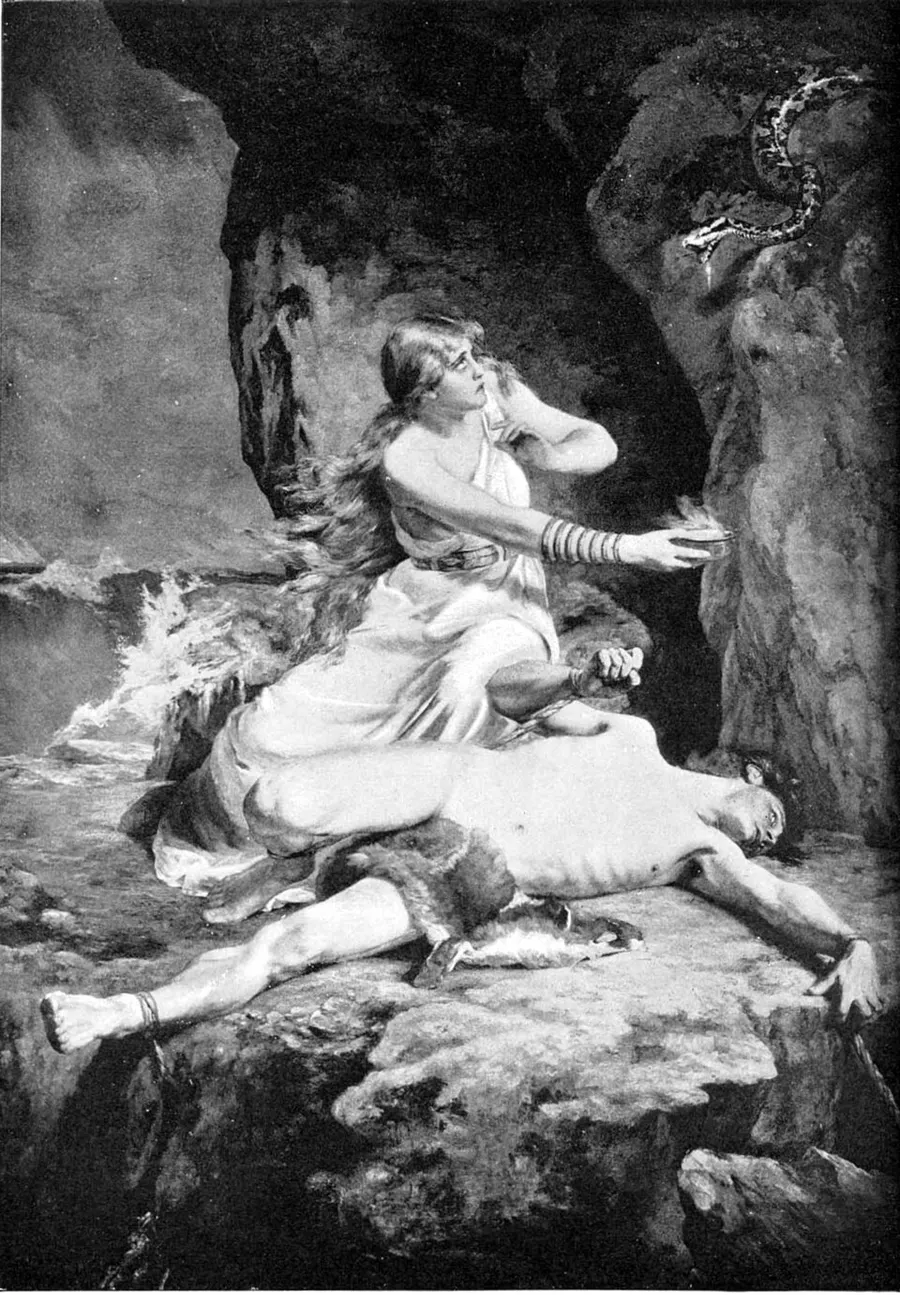
After causing Baldr’s death and then blocking his return, the gods’ patience finally broke. They seized Loki and bound him to jagged stones with the entrails of his own son, a venom-dripping serpent hung above his head. His wife Sigyn holds a bowl to catch the venom; in the moment she turns to empty the full bowl, it drips onto his face, and his agonized writhing makes the earth quake.
Version differences
Whether Loki was a worshipped god, pure malice, or "the gods’ necessary shadow" is much disputed; his relation to the Æsir (blood-brother, resident giant) is also inconsistent across texts, and this site states the differences without giving a single verdict.
Below are how modern works borrow or reinterpret this name or story — not the original material. The two differ, so keep them apart.
The Marvel LokiMarvel made Loki a wildly popular figure of ambiguous morality, so that the "god of trickery" is among the Norse gods best known to modern audiences — his shifting complexity oddly matching the original’s resistance to definition.