🪓MythologyNorse Mythology
🏠 Home🌐 中文
Norse MythologyEDDA
💀

Hel

Old NorseHel

Queen of the underworld, keeper of those who die not in battle

Ice, Fire & Chaos · Giants & the Primordial
DeathThe UnderworldJudgment

Who they are

The daughter born to Loki and Angrboða, half of her living flesh, half black as a corpse. Odin cast her into the realm of gloom and set her to rule the underworld of Helheim — those who die not in battle but of sickness and old age all fall under her charge. She is cold, unmoved, and just, and even when the gods begged her to let Baldr return to life, she gave only a merciless condition.

Primary sourcesPoetic Edda, "Baldrs draumar"Snorri, Prose Edda

Key stories

The Condition for Baldr’s Return
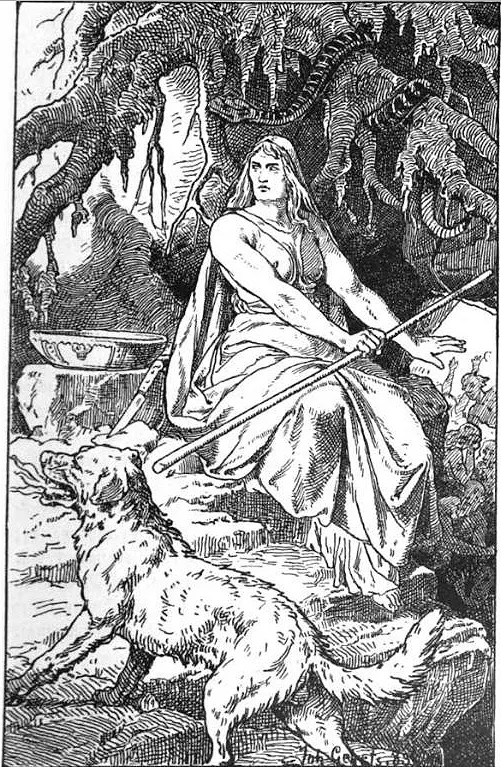
Hel
Hel · Johannes Gehrts, 1889

After his death Baldr fell into Hel’s underworld. The gods sent the messenger Hermóðr on the long journey to plead. Hel was unmoved by grief, and coldly named a single condition: if all things in the world, living and dead, would weep for Baldr, she would let him go. The gods nearly managed it — all but one giantess in a cave, who refused to weep.

Version differences

"Hel" is both the name of the underworld queen and of the underworld itself; after Christianity came, the word evolved further into English "hell," its meaning now far from the Norse original.

Relationships

Father

Echoes today

Below are how modern works borrow or reinterpret this name or story — not the original material. The two differ, so keep them apart.

The etymology of "hell"The modern English word "hell" derives from Hel, but the Norse Helheim was not a place of punishment, only the destination of those who died of sickness and age — the drift of meaning is itself a piece of cultural history.

Appears in