🏰HistoryEuropean History
🏠 Home🌐 中文
European HistoryEUROPA
🖋️

Voltaire

French Enlightenment Thinker, Spokesman for Religious Tolerance and Free Speech

Those Who Changed How Humanity Thinks · Masters & Thinkers
The EnlightenmentReligious ToleranceSatirical Literature

Who they are

Voltaire (1694–1778) was one of the most influential thinkers and writers of the French Enlightenment, who wrote ceaselessly, criticizing religious fanaticism, absolutist oppression, and social injustice with a sharp satirical pen — his masterwork Candide mocking blind optimism in absurd, humorous strokes. Imprisoned or exiled several times for his words, he was also invited to the court of Frederick the Great of Prussia, and late in life his prestige rose for his active campaigns for the wrongly accused (such as the famous Calas case), seen as an important advocate of free speech and judicial justice. Though the famous line "I disapprove of what you say, but I will defend to the death your right to say it" is often attributed to him, scholars broadly hold it a later biographer’s summing-up of his spirit rather than his own words.

Primary sourcesVoltaire, Philosophical LettersDocuments of the Calas case appeal

Key stories

The Bastille and Exile in England
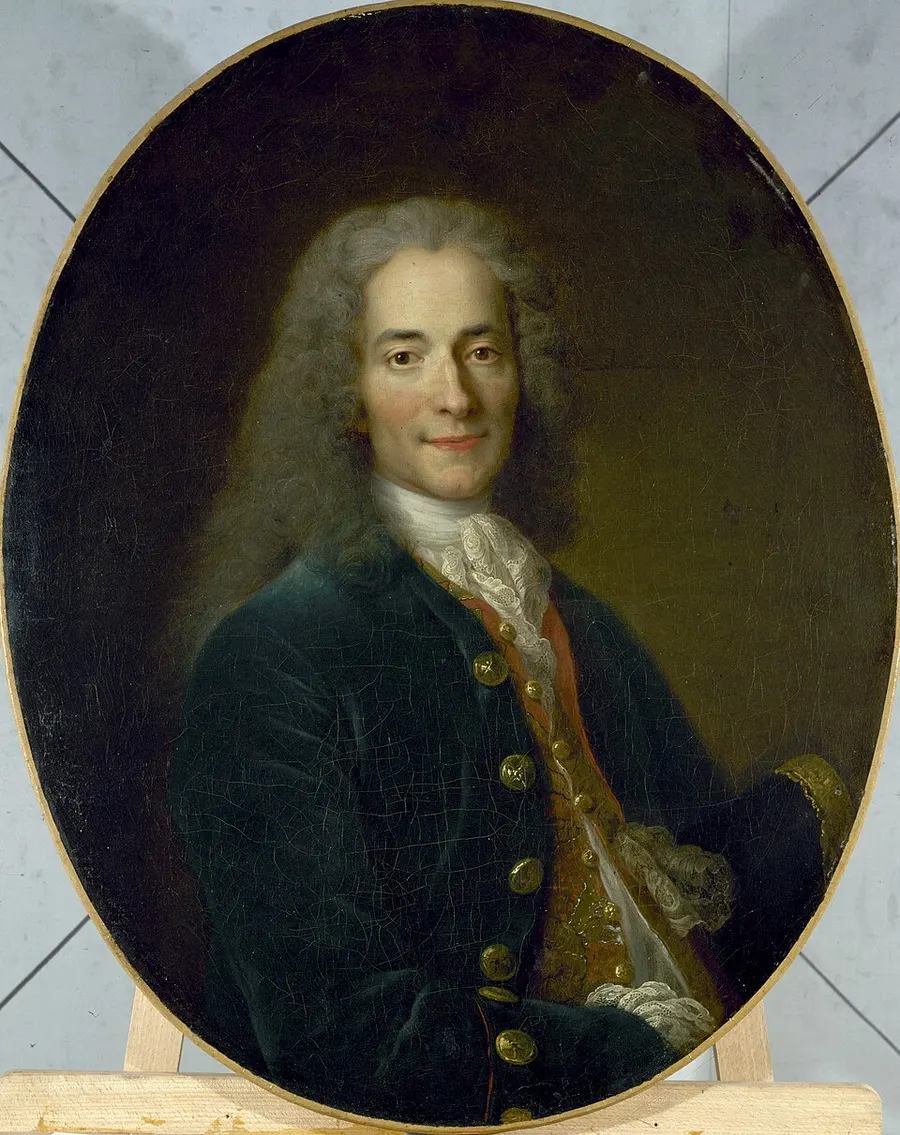
Voltaire
Voltaire · Nicolas de Largillière, 1718

In his youth Voltaire was twice thrown into the Bastille for satirical verse, and then, after a clash with a nobleman, was forced into exile in England for several years. This English experience brought him into close contact with Britain’s relatively open climate of speech and its constitutional monarchy, and he then wrote the Philosophical Letters, sharply contrasting and criticizing the absolutism and religious intolerance of France at the time.

Campaigning for the Calas Case

In 1762, a Protestant merchant of Toulouse, Calas, was charged with killing his son who wished to convert to Catholicism, and was executed without solid evidence. Voltaire judged it a miscarriage born of religious prejudice, and for years afterward campaigned tirelessly in writing, finally bringing about the case’s reversal before his death — one of the most acclaimed public causes of his later years.

Version differences

The widely told line "I disapprove of what you say, but I will defend to the death your right to say it" is broadly held by scholars to be a summing-up of the spirit of Voltaire’s thought by the early-twentieth-century biographer Evelyn Beatrice Hall, not his own exact words.

Relationships

Echoes today

Below are how modern works borrow or reinterpret this name or story — not the original material. The two differ, so keep them apart.

"Voltairean satire" (an idiom)"Voltairean" is still used in English for that style of writing which exposes hypocrisy and injustice with witty, biting satire.

Appears in

Curiosity mailCurious about world civilization? Leave your email — we’ll tell you when there’s something worth a look.

Free · unsubscribe anytime · Privacy