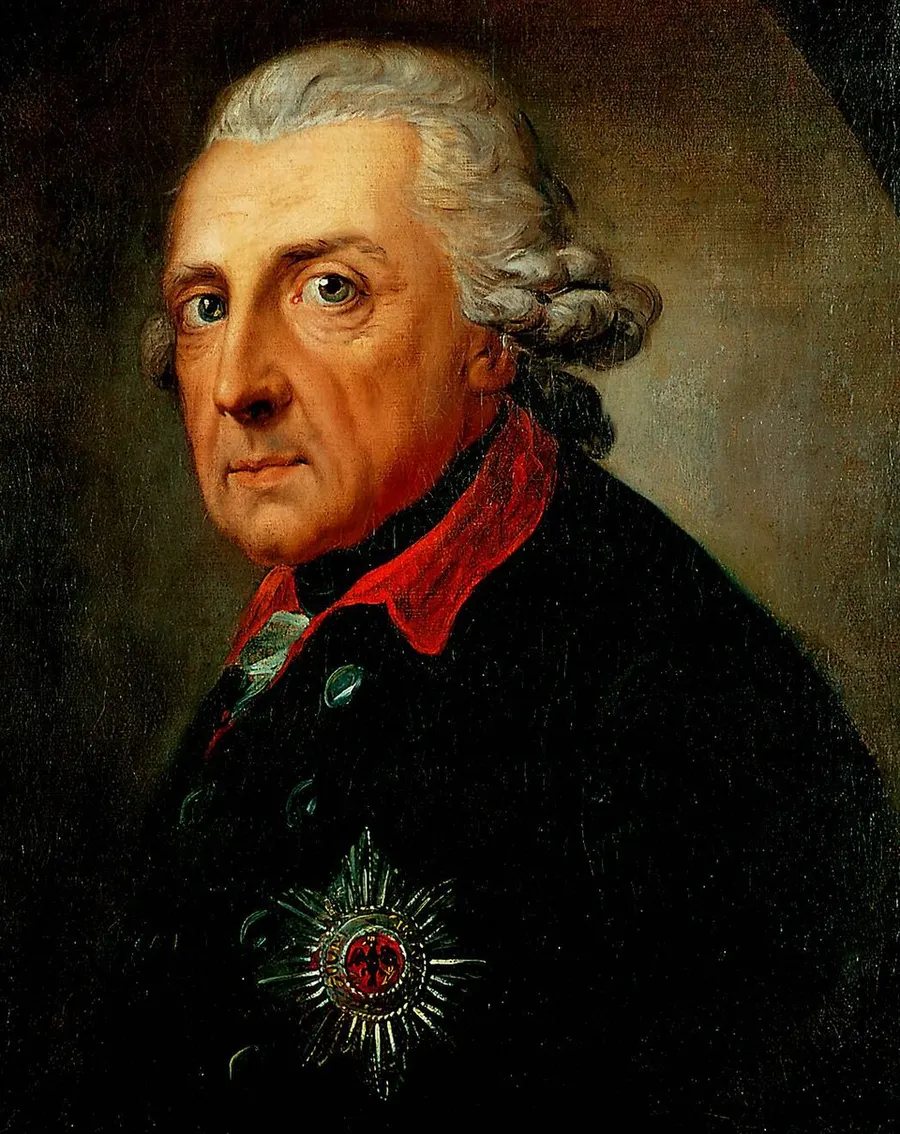
King of Prussia, a Representative of "Enlightened Absolutism" and Military Reform
Those Who Drew the Lines on the Map · Founders & Monarchs
The Kingdom of PrussiaThe Silesian WarsEnlightened Absolutism
Who they are
Frederick II (1712–1786) was King of Prussia who in his youth, absorbed in art and philosophy, was at odds with his father, a devotee of military discipline, and nearly executed for plotting to flee, yet on taking the throne became, surprisingly, one of Europe’s finest military commanders, seizing the industrial and population center of Silesia from Austria in the Silesian Wars and bringing Prussia among the great powers of Europe. Styling himself "the first servant of the state," he pursued religious tolerance and judicial reform and kept close intellectual exchange with Voltaire, a typical "enlightened absolutist" monarch, laying the foundation for Prussia’s later leadership of German unification.
Primary sourcesFrederick II, Anti-MachiavelHis collected correspondence with Voltaire
Key stories
The Crown-Prince Years Nearly Ending in Execution
Frederick the Great · Anton Graff, 1781
The young Frederick loathed the militarized upbringing imposed by his father Frederick William I, yearning for music and French culture, and once plotted with a friend to flee to England; when it failed his father imprisoned him and even forced him to watch the friend who had helped him beheaded — a bitter experience that greatly honed his later political skill.
The Court Friendship With Voltaire
On taking the throne, Frederick invited the French Enlightenment thinker Voltaire to his palace of Sanssouci at Potsdam, and the two were for a time close, talking through the night, but for clashes of character and interest the friendship ended sourly, Voltaire leaving Prussia in a huff — a telling epitome of the complex relationship between the "enlightened absolutist" monarch and the Enlightenment thinker.
Below are how modern works borrow or reinterpret this name or story — not the original material. The two differ, so keep them apart.
SanssouciThe summer palace "Sanssouci" he built at Potsdam is still an important World Heritage tourist site of Germany, a direct embodiment of the aesthetic of "enlightened absolutism."