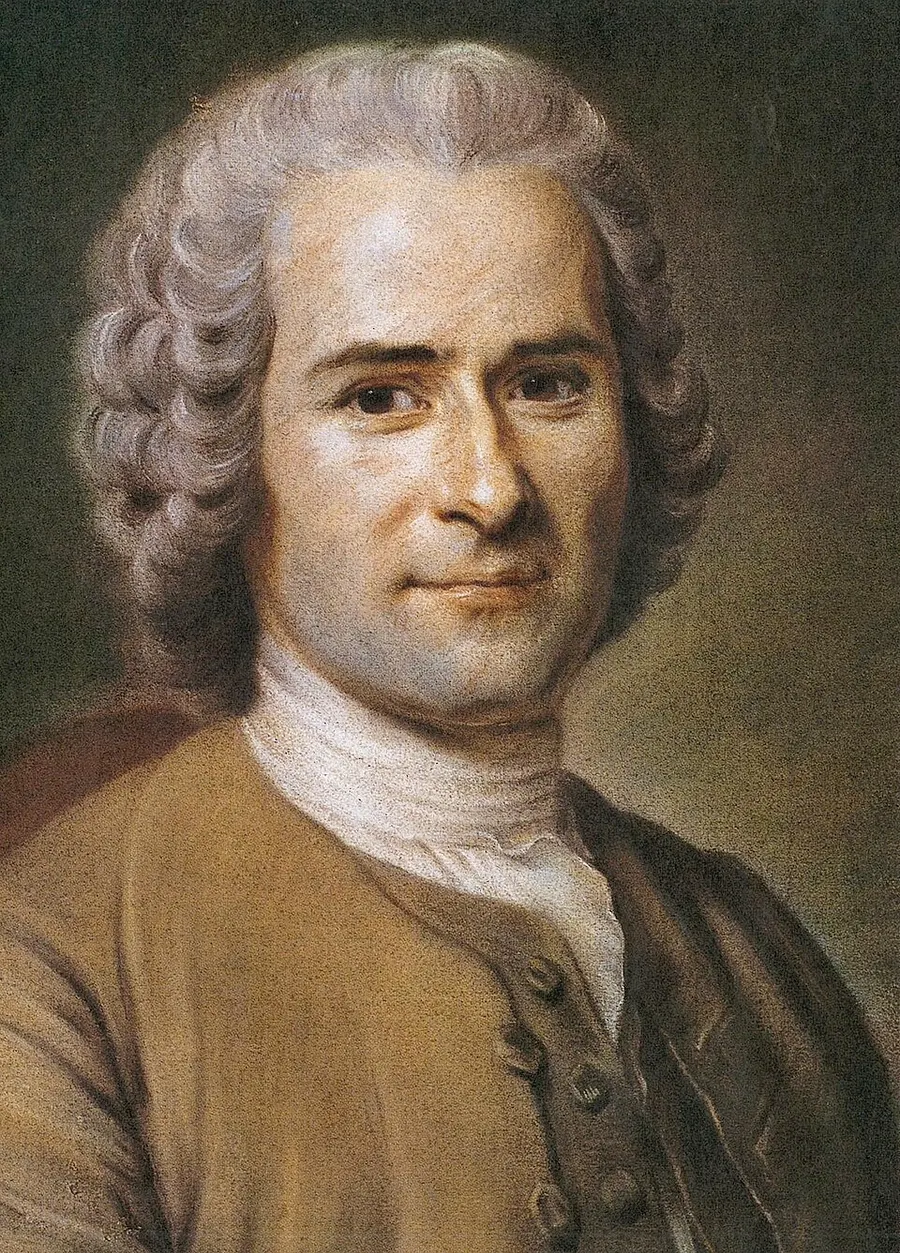
French Enlightenment Thinker, Author of The Social Contract
Those Who Changed How Humanity Thinks · Masters & Thinkers
The EnlightenmentThe Social ContractEducational Thought
Who they are
Jean-Jacques Rousseau (1712–1778) was a French Enlightenment thinker born in Geneva, whose masterwork The Social Contract proposed that "man is born free, and everywhere he is in chains," holding that the legitimacy of government power derives from the general will and contract of the people — a theory that deeply shaped the later French Revolution and modern democratic political theory. He was also an important thinker on education, his Émile advocating a "natural education" following the child’s nature. Sensitive and suspicious by temperament, in later years he fell out with many Enlightenment thinkers, Voltaire among them, and long sank into loneliness and persecution-mania — which did not lessen the deep influence of his thought on later ages.
Primary sourcesRousseau, The Social ContractRousseau, Émile
Key stories
"Man Is Born Free, and Everywhere He Is in Chains"
Jean-Jacques Rousseau · Maurice Quentin de La Tour, 1753
This opening line of The Social Contract concisely captures the core concern of Rousseau’s political philosophy — that humanity is by nature free and equal, but social institutions and the unequal distribution of property have bound people anew in "chains," and only a social contract founded on the general will can let people keep true freedom even while obeying the collective.
The Break With Voltaire
Rousseau and Voltaire were both standard-bearers of the Enlightenment, yet held sharply opposed positions on core questions such as "whether the progress of civilization necessarily brings moral improvement," and as their correspondence grew ever sharper in tone they broke openly at last — the most representative case of intellectual division within the Enlightenment.
Below are how modern works borrow or reinterpret this name or story — not the original material. The two differ, so keep them apart.
"Man is born free, and everywhere he is in chains"This opening line of The Social Contract is still among the most frequently quoted Enlightenment formulations in political philosophy and public discussion.