🏰HistoryEuropean History
🏠 Home🌐 中文
European HistoryEUROPA
🦁

Richard the Lionheart

Original nameRichard I

King of England, Central Commander of the Third Crusade

Those Who Turned a Ruler’s Decision Into Reality · Generals & Statesmen
The Plantagenet DynastyThe Third CrusadeThe Anglo-French Feud

Who they are

Richard I (1157–1199) was a Plantagenet king of England, named "the Lionheart" for his valor in war, who in his ten-year reign spent almost all his time campaigning on the Continent or on the Third Crusade, spending in all less than half a year in England itself. He fought the sultan of Egypt and Syria, Saladin, repeatedly in the Holy Land and, though he could not retake Jerusalem, reached a dignified truce with Saladin securing Christian pilgrims’ right to enter the holy city — a "knight-to-knight" contest romanticized over and over in Eastern and Western literature since.

Primary sourcesContemporary Crusade chroniclesEnglish royal archives

Key stories

The Chivalric Contest With Saladin
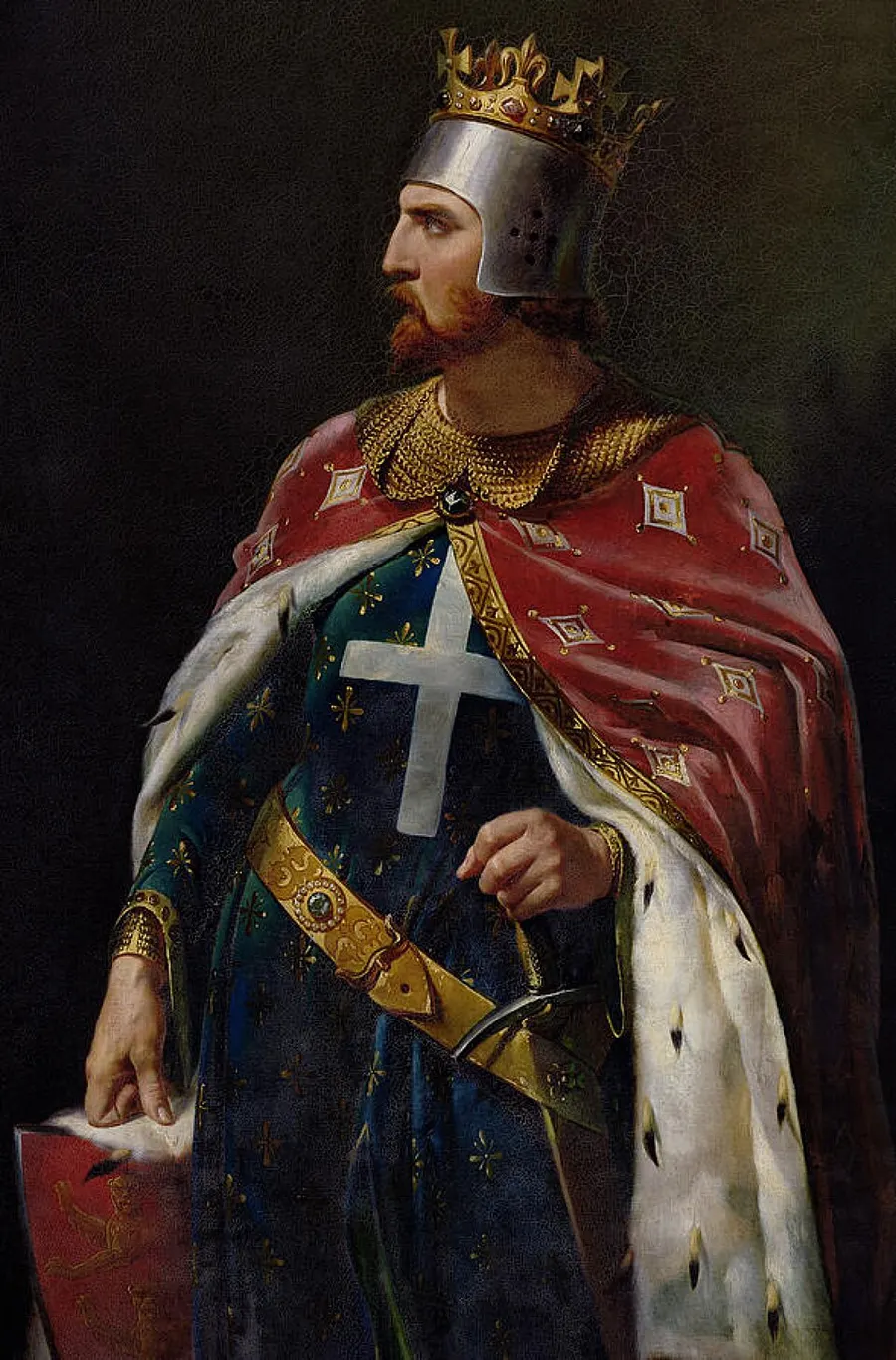
Richard the Lionheart
Richard the Lionheart · Merry-Joseph Blondel, 1841, Versailles

Though battlefield foes, Richard and Saladin showed a chivalry beyond enmity in their several encounters: Richard is said to have considered resolving the conflict through a marriage proposed by Saladin’s brother, and Saladin is said to have sent his own physician to treat Richard when he was ill, with gifts of fruit and ice — anecdotes embellished by later literature that made their contest a symbolic narrative of medieval chivalry.

Captured on the Way Home

After the Third Crusade, Richard, having offended the Duke of Austria, was seized while crossing the Continent on his way back to England by the Holy Roman Emperor Henry VI, and England had to pay a huge ransom to redeem him — a ransom that all but drained the treasury, the most direct "cost" of his reign to English finances.

Version differences

Several "mutual-admiration" anecdotes told of Richard I and Saladin (gifts exchanged, a proposed marriage alliance) have some details worked up repeatedly by medieval literature and later historical fiction, with a degree of artistic embellishment beyond the careful original sources.

Relationships

Echoes today

Below are how modern works borrow or reinterpret this name or story — not the original material. The two differ, so keep them apart.

The Robin Hood legendThe English folk legend of "Robin Hood" is often set against the background of Richard I’s Crusade and the regency of his brother John, and this fictional narrative has become one of the most widely known medieval cultural symbols in the English-speaking world.

Appears in

Curiosity mailCurious about world civilization? Leave your email — we’ll tell you when there’s something worth a look.

Free · unsubscribe anytime · Privacy