Ayyubid Sultan, Richard I’s Adversary in the Third Crusade
One Story Remembered for Life · Small Roles, Famous Names
The CrusadesThe Ayyubid DynastyThe Contest for Jerusalem
Who they are
Saladin (1137–1193) was a Kurdish Muslim general and founder of the Ayyubid dynasty, who in 1187 routed the main Crusader army at the Battle of Hattin and soon retook Jerusalem, held by the Crusaders for nearly ninety years — his treatment far more merciful than the bloody massacre of the Crusaders’ own storming of the city in 1099, allowing the Christians of the city to depart safely on payment of a ransom. The event directly prompted Europe to launch the Third Crusade, and the English king Richard I led an army east and clashed with him again and again; though battlefield foes, the two showed in their repeated encounters a chivalry beyond mere enmity, at last reaching an honorable truce that guaranteed Christian pilgrims access to the holy city. Saladin thereby became one of the few historical figures viewed favorably from both the Christian and the Islamic side in medieval European literature and later historical narrative.
Primary sourcesIbn al-Athir, The Complete HistoryChronicles of the Crusade period
Key stories
The Retaking of Jerusalem
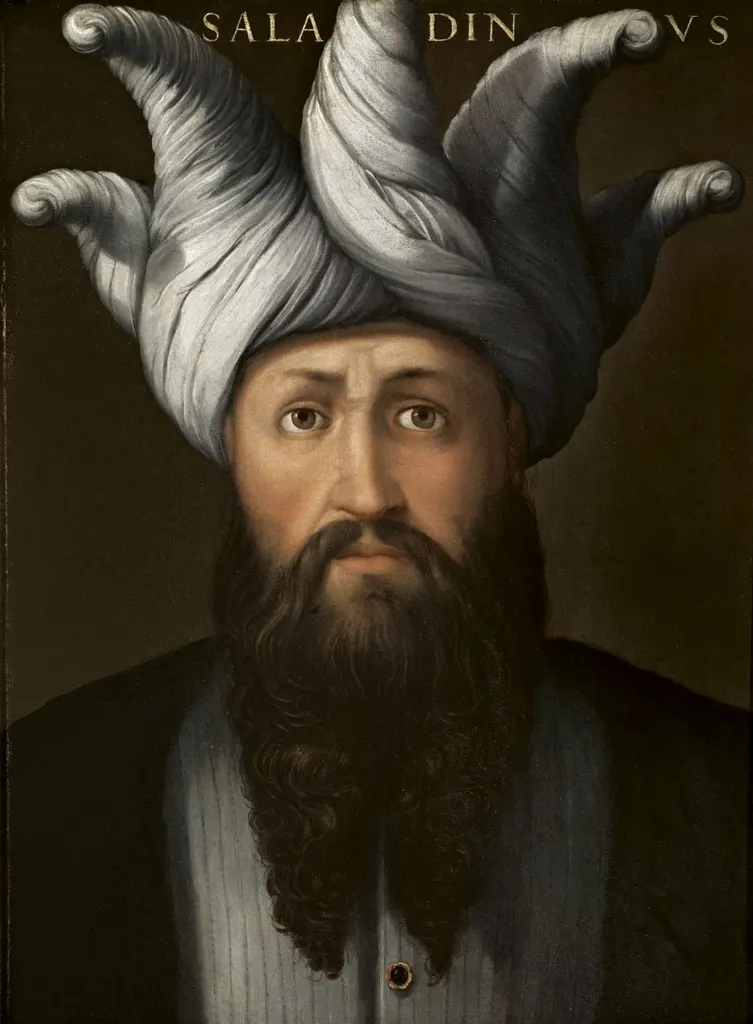
Saladin (imagined portrait) · Cristofano dell’Altissimo, before 1568
In 1187 Saladin routed the main Crusader army at the Battle of Hattin and then came before the walls of Jerusalem. When the garrison sued for surrender, Saladin — in stark contrast to the bloody massacre of the First Crusade when it stormed the city in 1099 — allowed the Christians of the city to depart safely on payment of a ransom, a handling repeatedly cited and discussed by later European historians.
The Chivalrous Contest With Richard I
During the Third Crusade Saladin and Richard I, though battlefield foes, again and again showed a chivalry beyond mere enmity: legend says that when Richard fell gravely ill Saladin sent his own physician and gifts of fruit and ice, and the two at last reached an honorable truce — Richard, unable to retake Jerusalem, acknowledged Saladin’s actual control of the holy land in exchange only for the right of free passage for Christian pilgrims.
Below are how modern works borrow or reinterpret this name or story — not the original material. The two differ, so keep them apart.
A model of chivalry in Western literatureWestern literary works such as Walter Scott’s novel The Talisman cast Saladin as a model of the merciful, faithful knight, one of the few historical figures viewed favorably in both the medieval Christian and Islamic narratives.