Austrian Composer, a Representative of Classical Music
Those Who Changed How Humanity Thinks · Masters & Thinkers
Classical MusicOperaThe Prodigy Legend
Who they are
Wolfgang Amadeus Mozart (1756–1791) was an Austrian composer who showed astonishing musical talent from infancy, composing from age five and, as a child, touring the courts of Europe with his father, a model of the "prodigy." Over his life he composed a vast body of works — symphonies, operas, concertos — elegant and flowing yet rich in emotional depth, a representative of the Viennese Classical school. He died young at only 35, the cause still variously conjectured (the official record is complications of rheumatic fever, but various conspiracy-like guesses, including the legend of being poisoned by a rival, have long circulated among the public; scholars broadly hold such claims to lack reliable evidence).
Primary sourcesMozart’s family lettersVienna court music archives
Key stories
The Touring Prodigy of Europe
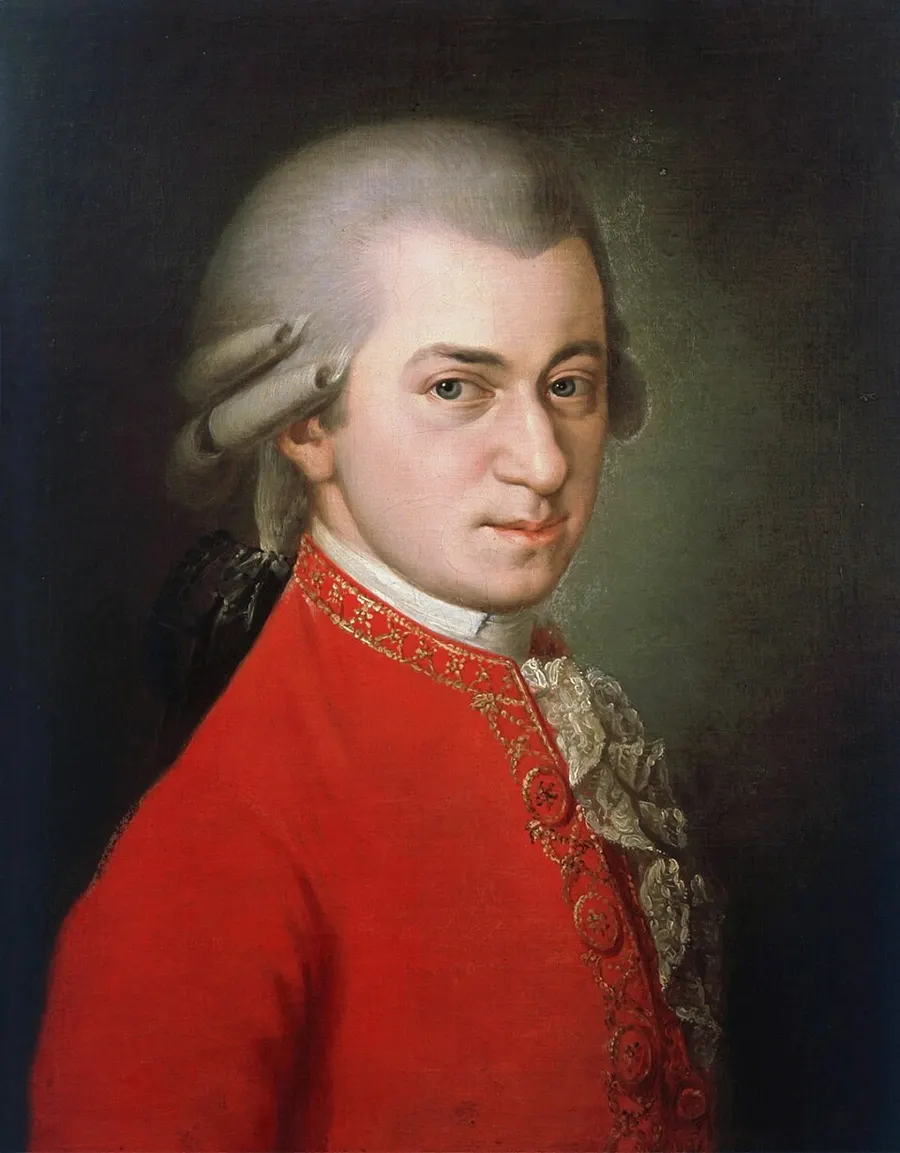
Wolfgang Amadeus Mozart · Barbara Krafft (posthumous), 1819
By age six Mozart could already play the harpsichord and violin skillfully, and his father Leopold toured the courts of Europe with him and his sister; the young Mozart could even improvise complex pieces and play blindfolded, causing a sensation wherever he went — a childhood that laid the deep foundation and broad connections of his later career as a professional composer.
The Unfinished Requiem
On his deathbed Mozart was composing a Requiem Mass, which he could not finish before his death as his condition worsened, and which was later completed by his pupil from his sketches and dictation. The Requiem itself is shrouded in an air of ominous coincidence, adding another layer of romanticized imagination to the legend of Mozart’s early death.
Version differences
The legend that Mozart was poisoned by his rival Salieri is widely told (and further popularized by the film Amadeus), but modern medical history and archival research broadly hold this claim to lack reliable evidence, his death more likely related to complications of rheumatic fever.
Below are how modern works borrow or reinterpret this name or story — not the original material. The two differ, so keep them apart.
The "Mozart effect" (a contested popular claim)The popular claim that "letting babies listen to Mozart raises their intelligence" — the "Mozart effect" — is held in rigorous scientific testing to rest on insufficient evidence, but is still widely circulated in popular culture.