🏰HistoryEuropean History
🏠 Home🌐 中文
European HistoryEUROPA
🎼

Beethoven

Original nameLudwig van Beethoven

German Composer Who Completed His Late Masterworks While Deaf

Those Who Changed How Humanity Thinks · Masters & Thinkers
The Classical–Romantic TransitionThe SymphonyDeafness and Creation

Who they are

Ludwig van Beethoven (1770–1827) was a German composer whose nine symphonies are milestones of Western classical music’s transition from the Classical to the Romantic. His hearing declined from his twenties and he was nearly wholly deaf by middle age, yet he kept composing, and many late masterpieces, including the Ninth Symphony (the "Choral," whose finale sets Schiller’s Ode to Joy), were completed while he could hear nothing at all, by the music of his inner imagination. Fiery and unconventional in character, his relations with the aristocratic patronage system of the time were complex, and he is seen as an early symbol of the modern idea that "the artist is no longer merely dependent on the powerful."

Primary sourcesThe manuscript of Beethoven’s "Heiligenstadt Testament"Contemporary music criticism records

Key stories

The Heiligenstadt Testament
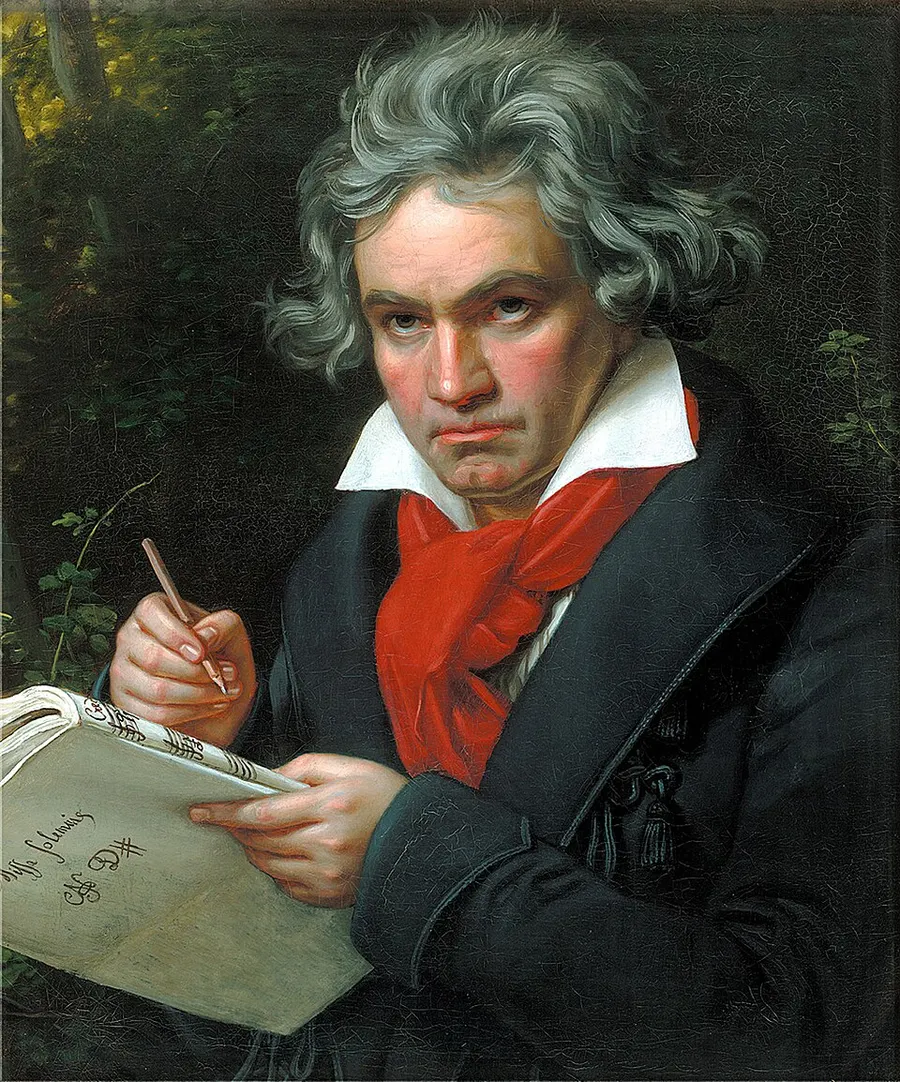
Ludwig van Beethoven
Ludwig van Beethoven · Joseph Karl Stieler, 1820

In 1802, tormented by his deafness and once near despair, Beethoven wrote at Heiligenstadt outside Vienna a never-sent testament-like letter, laying bare the loneliness and thoughts of ending his life brought by his deafness, but in the end he chose to go on living for music — a letter found only after his death, giving later ages a deeper understanding of the almost tragic spiritual power of his late works.

The Applause He Could Not Hear

At the 1824 premiere of his Ninth Symphony, thunderous applause is said to have broken out at the end, but the wholly deaf Beethoven, unaware, still stood with his back to the audience, until the soprano onstage gently turned him around and he saw the crowd on its feet cheering — one of the most moving anecdotes in the history of classical music.

Relationships

Echoes today

Below are how modern works borrow or reinterpret this name or story — not the original material. The two differ, so keep them apart.

Ode to Joy becomes the EU anthemThe melody of Ode to Joy from the finale of Beethoven’s Ninth Symphony is now the official anthem of the European Union, symbolizing the ideals of unity and peace.

Appears in

Curiosity mailCurious about world civilization? Leave your email — we’ll tell you when there’s something worth a look.

Free · unsubscribe anytime · Privacy