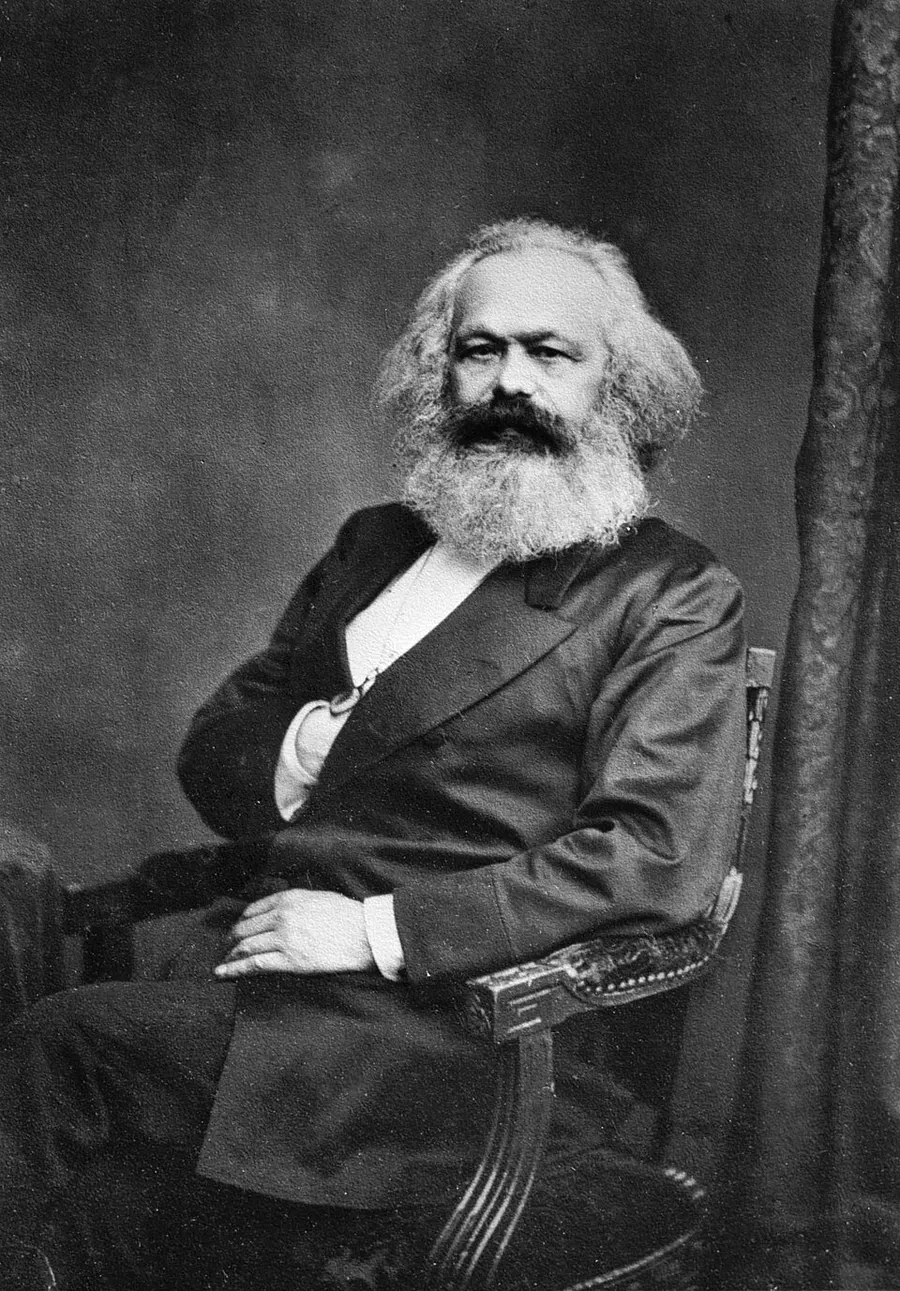
German Philosopher and Economist, Founder of Das Kapital and Communist Theory
Those Who Changed How Humanity Thinks · Masters & Thinkers
Historical MaterialismDas KapitalCommunist Theory
Who they are
Karl Marx (1818–1883) was a German philosopher and political economist who, with Engels, co-wrote the Communist Manifesto, systematically setting out historical materialism and class-struggle theory, holding that the inner contradictions of the capitalist mode of production would in the end lead to its replacement by a higher stage of society. His Das Kapital, written over decades, systematically dissects the operating logic and inner contradictions of the capitalist economy, the culmination of his life’s thought. He spent most of his life in exile in London, in poverty, living and working largely on Engels’s financial support, and his theory, after his death, was put into revolutionary practice by Lenin and others, deeply shaping 20th-century world politics.
Primary sourcesMarx and Engels, The Communist ManifestoMarx, Das Kapital
Key stories
Das Kapital in the British Museum
Karl Marx · photograph by John Mayall, 1875
During his London exile Marx went almost daily to the round Reading Room of the British Museum to research and write; the floor under his usual seat is said to have been worn with a mark from years of use. The first volume of Das Kapital was published in 1867 after nearly twenty years of repeated revision, the second and third compiled and published after his death by his close friend Engels from his manuscripts.
The Distant Echo With Darwin
Marx greatly admired Darwin’s theory of evolution, holding that natural selection confirmed, from the side of natural science, the core idea of his own historical materialism that "things develop by inner laws," and had a book of his own sent to Darwin to express his respect (whether Marx once proposed to dedicate Das Kapital to Darwin is still variously told by scholars).
Version differences
The regimes set up in various countries in the twentieth century in the name of "Marxism" (the Soviet Union, China, and others) differed greatly in their concrete practical paths, and scholars broadly hold that these practices involved considerable reinterpretation of and departure from Marx’s own texts, and cannot be simply equated with them.
Below are how modern works borrow or reinterpret this name or story — not the original material. The two differ, so keep them apart.
"Workers of the world, unite!"This closing slogan of the Communist Manifesto is among the most frequently quoted political slogans in twentieth-century global political history.