🏰HistoryEuropean History
🏠 Home🌐 中文
European HistoryEUROPA
🪖

Wilhelm II

Last German Emperor, Head of Germany at the Outbreak of WWI

Those Who Turned a Ruler’s Decision Into Reality · Generals & Statesmen
The German EmpireWorld War IThe Naval Race

Who they are

Wilhelm II (1859–1941) was the last German emperor and a grandson of Queen Victoria, who on taking the throne dismissed the seasoned Bismarck and pursued a more aggressive "world policy," greatly expanding the navy in a bid to challenge British sea supremacy; the rashness of his diplomacy and his frequent gaffes deepened suspicion and the arms race among the European powers, and many historians see him as an important factor in the background to the outbreak of World War I (though the causes of the war are highly complex, and scholars still debate the share of responsibility among nations). The war ended in Germany’s defeat, and in 1918 he was forced to abdicate and flee to the Netherlands, the German Empire ending and the Weimar Republic taking its place.

Primary sourcesGerman Empire court archivesWilhelm II’s memoirs

Key stories

A "Place in the Sun"
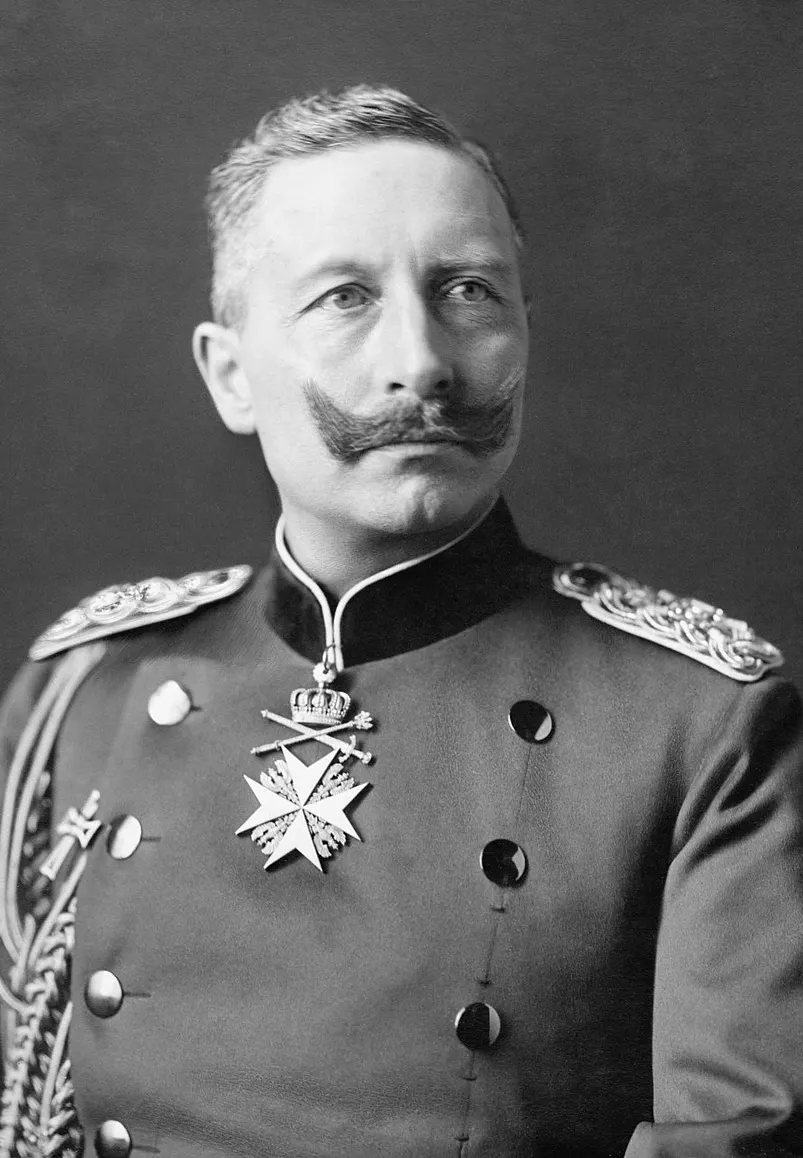
Kaiser Wilhelm II
Kaiser Wilhelm II · photograph, 1902

Wilhelm II repeatedly declared in public speeches that Germany too should have a "place in the sun," demanding overseas colonies and international influence to match its power; this "world policy" rhetoric strongly drove German naval expansion, directly spurring Britain to raise its own naval building, and the naval arms race between the two became an important part of the tension in pre-WWI Europe.

Abdication and Exile in the Netherlands

In November 1918, with Germany near defeat in WWI and revolution breaking out at home, Wilhelm II, deserted by all, was forced to abdicate and fled to the neutral Netherlands, never to return to Germany — ending the history of the German imperial monarchy.

Version differences

The weight of Wilhelm II’s specific responsibility in the outbreak of World War I is a long-debated question among historians — some stress the direct push of his personal reckless diplomacy in word and deed, while others hold that the causes of the war are better ascribed to the structural contradictions of Europe’s alliance system and arms race as a whole.

Relationships

Echoes today

Below are how modern works borrow or reinterpret this name or story — not the original material. The two differ, so keep them apart.

"A place in the sun" (an idiom)This political phrase he used repeatedly is still cited by historians as a classic illustration of the anxious mindset of a latecomer imperialism.

Appears in

Curiosity mailCurious about world civilization? Leave your email — we’ll tell you when there’s something worth a look.

Free · unsubscribe anytime · Privacy