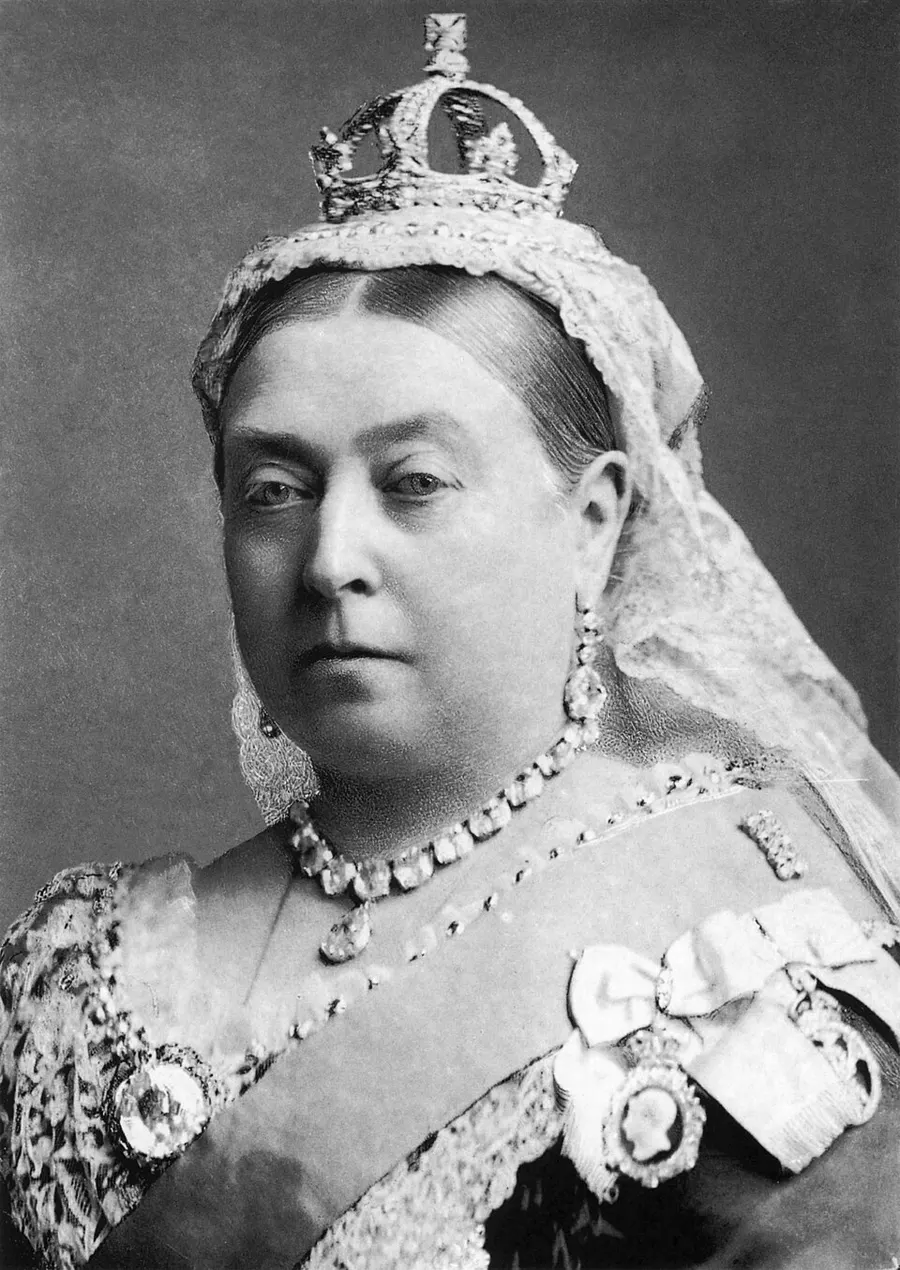
Queen of the United Kingdom, Reigning 63 Years, Symbol of the "Empire on Which the Sun Never Set"
Those Who Drew the Lines on the Map · Founders & Monarchs
The British EmpireThe Industrial RevolutionThe Victorian Era
Who they are
Queen Victoria (1819–1901) reigned 63 years (1837–1901), the second-longest reign in British history. Under her the fruits of the Industrial Revolution were fully released, the colonial map expanded to the height of an "empire on which the sun never set," and parliamentary democracy gradually matured, the monarch’s actual power shifting more to the ceremonial and symbolic. Her marriage to her cousin Prince Albert was deeply devoted, and after his early death she long wore black mourning in seclusion, so the "Victorian era" is often used for the conservative, restrained moral tenor of that time in British society. Her descendants married into royal houses across Europe, and she was called "the grandmother of Europe."
Primary sourcesQueen Victoria’s journalsBritish royal archives
Key stories
"The Grandmother of Europe"
Queen Victoria · photograph by Alexander Bassano, 1882
Victoria and Prince Albert had nine children, who married into royal houses across Europe — German, Russian, Spanish, and others were all directly related to her; her grandson Wilhelm II later became German emperor and went to war against Britain, his "mother’s house," in the First World War — one of the most ironic examples of European royal marriage politics.
The Great Exhibition
In 1851, actively promoted by Prince Albert, London’s Hyde Park hosted the first "Great Exhibition," in the vast glass "Crystal Palace," displaying the industrial and technological achievements of many nations and drawing over six million visits — a concentrated display of British industrial power and the confidence of the "Victorian era."
Below are how modern works borrow or reinterpret this name or story — not the original material. The two differ, so keep them apart.
The "Victorian era" (a term of periodization)Still the standard term in the English-speaking world for the social and cultural temper of nineteenth-century Britain (above all its conservative, restrained morality).
"The grandmother of Europe"Her descendants spread, through marriage, across the royal houses of many European nations, and this title is still a common usage in the study of European royal genealogy.