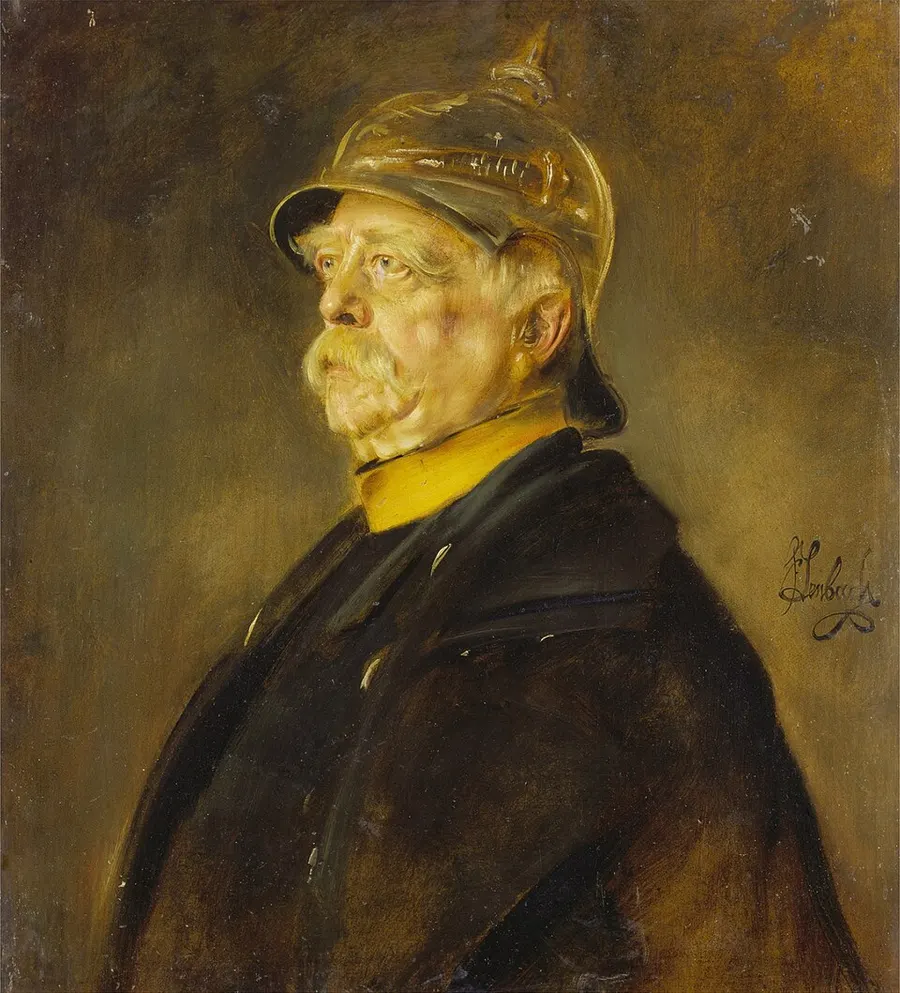
Minister-President of Prussia, the "Iron Chancellor" of German Unification
Those Who Turned a Ruler’s Decision Into Reality · Generals & Statesmen
German UnificationBlood and IronEuropean Balance-of-Power Diplomacy
Who they are
Bismarck (1815–1898), on becoming Minister-President of Prussia, through three carefully engineered wars — against Denmark, Austria, and France — brought the German states together into the German Empire in 1871, King Wilhelm I of Prussia crowned German emperor and Bismarck himself the first imperial chancellor. In a parliamentary speech he declared that "the great questions of the day are not decided by speeches and majority votes... but by iron and blood," whence the name "Iron Chancellor." After unification he turned to preserving the European balance and peace, building a complex system of alliances to prevent French revenge, until in 1890 he was dismissed by the young, headstrong Wilhelm II.
Primary sourcesBismarck, Thoughts and MemoriesPrussian parliamentary archives
Key stories
The "Blood and Iron" Speech
Otto von Bismarck · Franz von Lenbach, c. 1890
In 1862 Bismarck spoke to the Prussian parliament in defense of an expanded military budget, leaving the famous line: "the great questions of the day are not decided by speeches and majority votes — that was the error of 1848 and 1849 — but by iron and blood." This was later compressed into "the blood and iron policy," a byword for his hard-nosed realist style of diplomacy.
The Dismissed "Pilot"
When the young, headstrong Wilhelm II took the throne in 1888, he clashed repeatedly with the seasoned, cautious Bismarck over foreign and domestic policy, and in 1890 Bismarck was forced to resign. Britain’s Punch magazine ran a famous cartoon, "Dropping the Pilot," casting Bismarck as the old helmsman put off the ship by the young captain, hinting that Germany’s foreign course would now lose the European balance he had carefully maintained.
Below are how modern works borrow or reinterpret this name or story — not the original material. The two differ, so keep them apart.
"Iron and blood policy" (an idiom)The phrase is still widely used for a realist strategy that does not shrink from hard, even forceful means to achieve political ends.
The battleship BismarckThe battleship Nazi Germany built was named for him, sunk by the British Royal Navy in World War II — this history is also one of the best-known associations of the name "Bismarck" in modern popular culture.