🕊️Thought & FaithWorld Faiths
🏠 Home🌐 中文
World FaithsFAITHS
📚

Confucius

NameKong QiuHonorificSupreme Sage and First Teacher (later honorific)

Founder of the Confucian School

Where the Faith Begins · Founding Prophets & Central Figures
ConfucianismThe AnalectsRitual Propriety

Who they are

Confucius was born in the state of Lu in the late Spring and Autumn period, and traveled the states for fourteen years promoting a political ideal of "benevolence" and "ritual," never taken up by the rulers of the age; in his later years he returned to Lu to focus on teaching and editing the classics, with a reputed three thousand disciples and seventy-two worthies. His words and deeds, recorded by his disciples as the Analects, deeply shaped East Asian ethics, education, and political institutions for over two thousand years. In Chinese history Confucianism has had a dual philosophical and quasi-religious character — with Confucian temples and rites to Confucius through the ages — which is why whether "Confucianism" counts as a religion is still debated among scholars.

Primary sourcesThe Analects

Key stories

Traveling the States
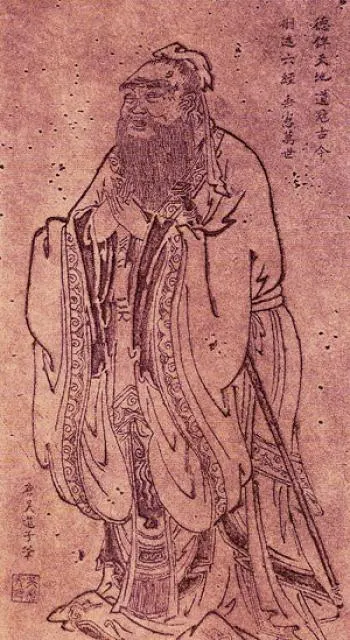
Confucius
Confucius · Tang-dynasty portrait

At fifty-five Confucius left the state of Lu and traveled with his disciples for fourteen years through Wei, Chen, Song, Cai and other states, hoping to persuade the lords to adopt his ideal of "benevolent government," meeting rebuff after rebuff — once even stranded without grain for seven days between Chen and Cai. When his disciple Zilu angrily asked "does a gentleman too fall into want?" Confucius answered, "a gentleman holds firm in want; a small man, in want, runs to excess."

"In Teaching, No Distinctions"

Confucius broke with the tradition that "learning belongs to the officials," holding that "in teaching there should be no distinctions" — anyone who brought a modest gift ("a bundle of dried meat") could become a student, his disciples of every station, rich and poor, high and low. This was a great breakthrough against the aristocracy’s monopoly on knowledge, and a chief reason later ages honored him as "the model teacher of all ages."

Relationships

Echoes today

Below are how modern works borrow or reinterpret this name or story — not the original material. The two differ, so keep them apart.

"Do not do to others what you would not have done to yourself" (idiom)From the Analects, seen by scholars as the core expression of the Confucian "way of reciprocity," often discussed alongside the Western "Golden Rule."
Confucius InstitutesThe language-and-culture promotion institutions China has established worldwide, named for Confucius — a modern extension of his role as an outward symbol of Chinese culture.

Appears in

Curiosity mailCurious about world civilization? Leave your email — we’ll tell you when there’s something worth a look.

Free · unsubscribe anytime · Privacy