French Enlightenment Thinker, Spokesman for Rationalism and Religious Tolerance
Those Who Reanswered "How Should We Live" · Modern & Contemporary Thinkers
The EnlightenmentRationalismReligious Tolerance
Who they are
Voltaire (1694–1778) was one of the most influential philosophers and writers of the French Enlightenment, who wrote ceaselessly, criticizing religious fanaticism, absolutist oppression, and metaphysical dogmatism with a sharp satirical pen. In the novel Candide he satirized, through the mouth of the character Doctor Pangloss, Leibniz’s optimistic metaphysical stance that "this is the best of all possible worlds," holding that rather than sink into abstract metaphysical speculation to find a rationalization for suffering, one had better keep one’s feet on the ground and "cultivate one’s own garden" — throwing oneself into concrete, achievable practical improvement. He vigorously advocated religious tolerance and free speech, and in his later years campaigned actively for the wrongly accused (such as the famous Calas case), one of the most action-driven practitioners of the Enlightenment spirit of "daring to use one’s own reason."
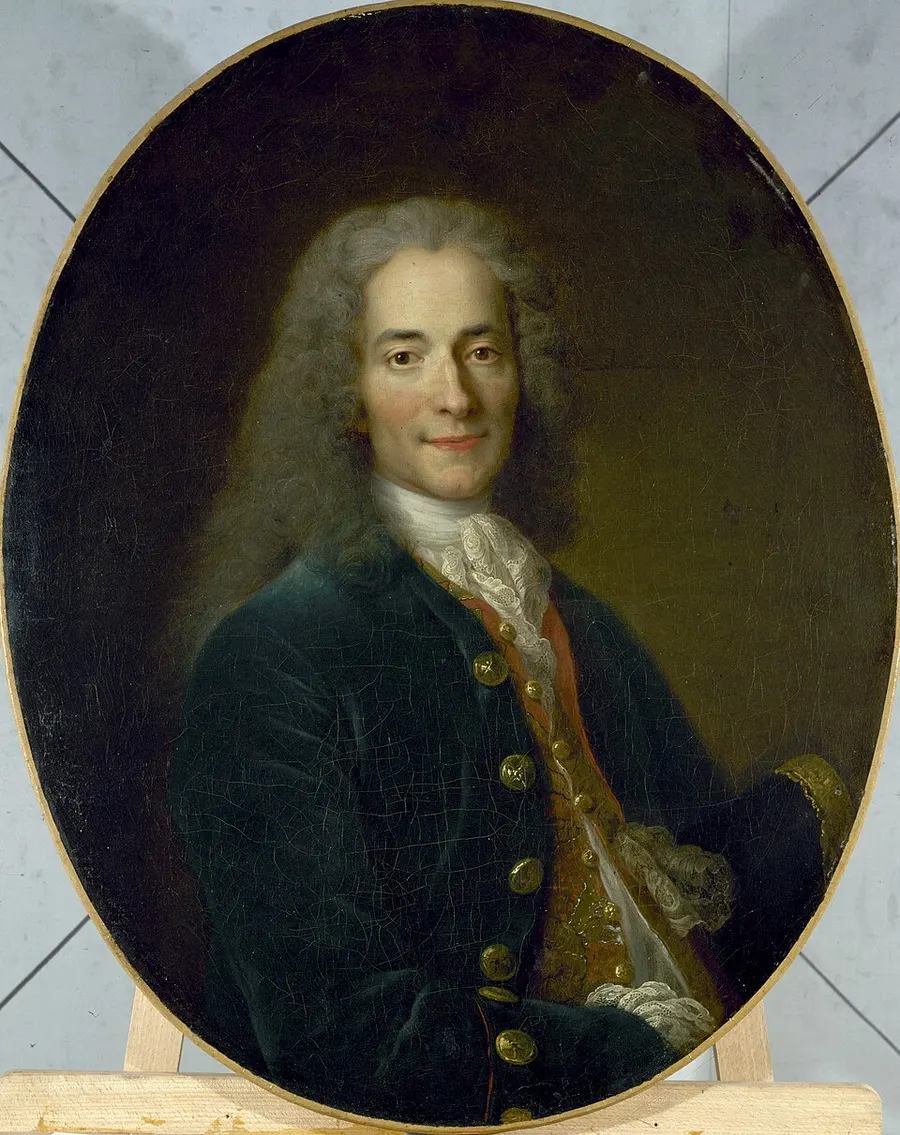
Voltaire · Nicolas de Largillière, 1718, Musée Carnavalet
At the end of Candide, after all manner of absurd and bizarre disasters, the hero gives up Doctor Pangloss’s metaphysical optimism that "all is for the best" and chooses instead that "we must cultivate our own garden" — a line later widely quoted and understood as a pragmatic philosophy of living: rather than cling to grand metaphysical systems that cannot be verified, better to concentrate on doing well the concrete tasks within one’s reach.
Campaigning for the Calas Case
In 1762 a Protestant merchant of Toulouse, Calas, was charged with killing his son who wished to convert to Catholicism, and was executed without solid evidence. Voltaire judged it a miscarriage born of religious prejudice, and for years afterward campaigned tirelessly in writing, finally bringing about the case’s reversal before his death — an important instance of Enlightenment rationalism throwing itself into the practice of social justice.
Version differences
The widely told line "I disapprove of what you say, but I will defend to the death your right to say it" is broadly held by scholars to be an early-twentieth-century biographer’s summing-up of the spirit of Voltaire’s thought, not his own exact words.
Below are how modern works borrow or reinterpret this name or story — not the original material. The two differ, so keep them apart.
"We must cultivate our own garden" (a common quotation)This closing line of Candide is still cited as a summary statement of a pragmatic philosophy of living.