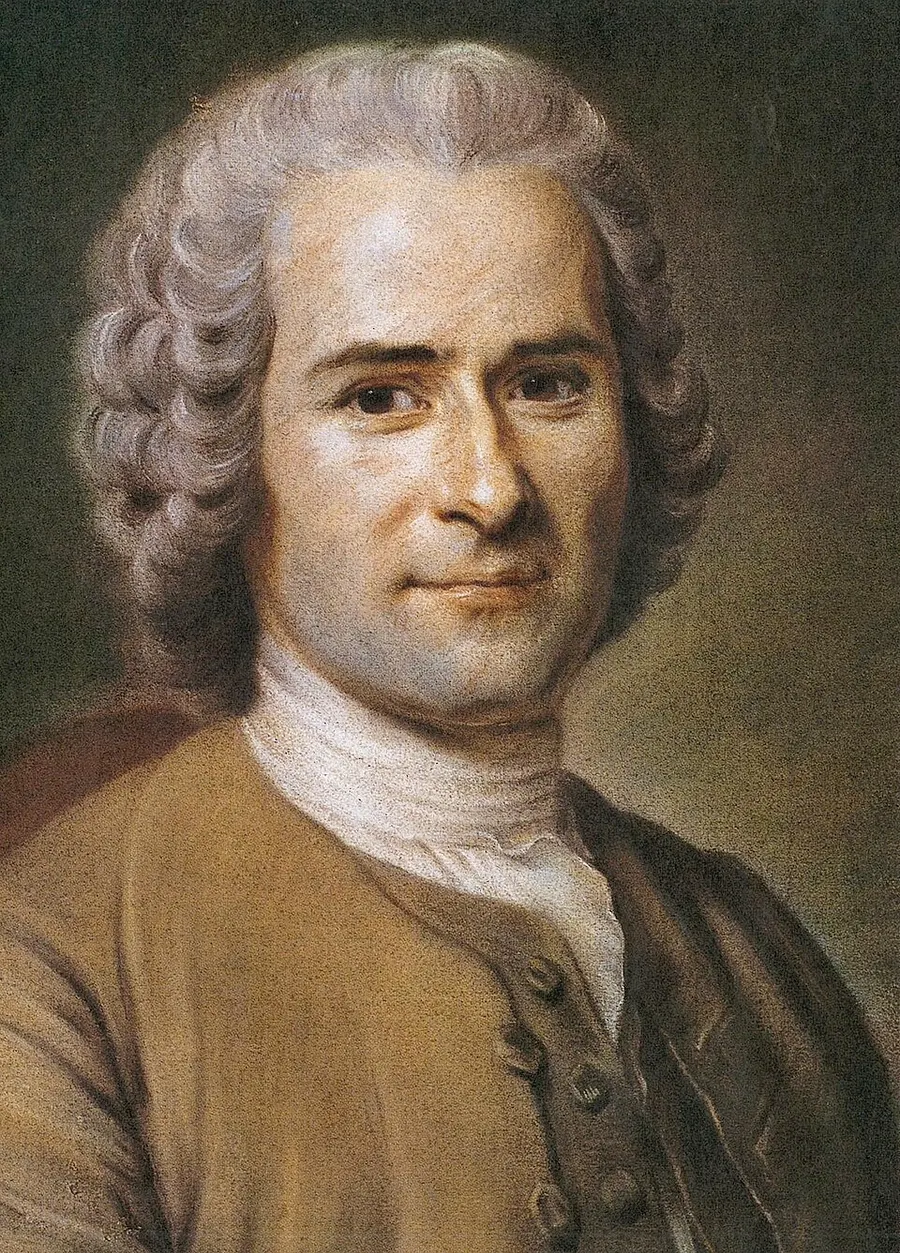
French Enlightenment Thinker, Important Representative of Social Contract Theory and the "State of Nature"
Those Who Reanswered "How Should We Live" · Modern & Contemporary Thinkers
Social Contract TheoryThe Theory of the General WillPhilosophy of Education
Who they are
Jean-Jacques Rousseau (1712–1778) was a French Enlightenment thinker whose chief work The Social Contract proposed that "man is born free, and everywhere he is in chains." Unlike Hobbes’s pessimistic conception of the "state of nature," Rousseau held that humanity, before entering civil society and the rise of private property, was in a "state of nature" originally simple and free, and that it was precisely the unequal property system of society that bound people anew into all manner of "chains." He held that the legitimacy of government power should derive from the "general will" of the whole people — a will beyond the sum of individual private interests, truly embodying the overall interest of the community — and that the individual’s obedience to the general will is precisely the necessary condition, not the bondage, of achieving true freedom. This theory of the "general will" profoundly shaped the ideological foundation of the French Revolution, and, for its stress on "the will of the community above individual rights," has long stirred philosophical debate over whether it harbors a latent collectivist or even totalitarian tendency.
Primary sourcesRousseau, The Social Contract, Émile
Key stories
"Man Is Born Free, and Everywhere He Is in Chains"
Jean-Jacques Rousseau · Maurice Quentin de La Tour, 1753
This opening line of The Social Contract concisely captures the core concern of Rousseau’s political philosophy — that humanity is by nature free and equal, but that social institutions and the unequal distribution of property have bound people anew into all manner of "chains," and that only a social contract founded on the general will can let people keep true freedom even while obeying the collective.
A Naturalist Philosophy of Education
In his work of educational philosophy Émile, Rousseau held that the education of children should follow the natural rhythm of their nature rather than instill too early the knowledge, norms, and social customs of the adult world, letting the child explore and learn on its own in direct contact with nature — a "natural education" that profoundly shaped modern Western educational theory, though he himself sent all five of his own children to a foundling hospital, a great contradiction often raised and discussed by later ages as a controversial point of his personal life.
Below are how modern works borrow or reinterpret this name or story — not the original material. The two differ, so keep them apart.
"Man is born free, and everywhere he is in chains"Still among the most frequently quoted Enlightenment formulations in political philosophy and public discussion.