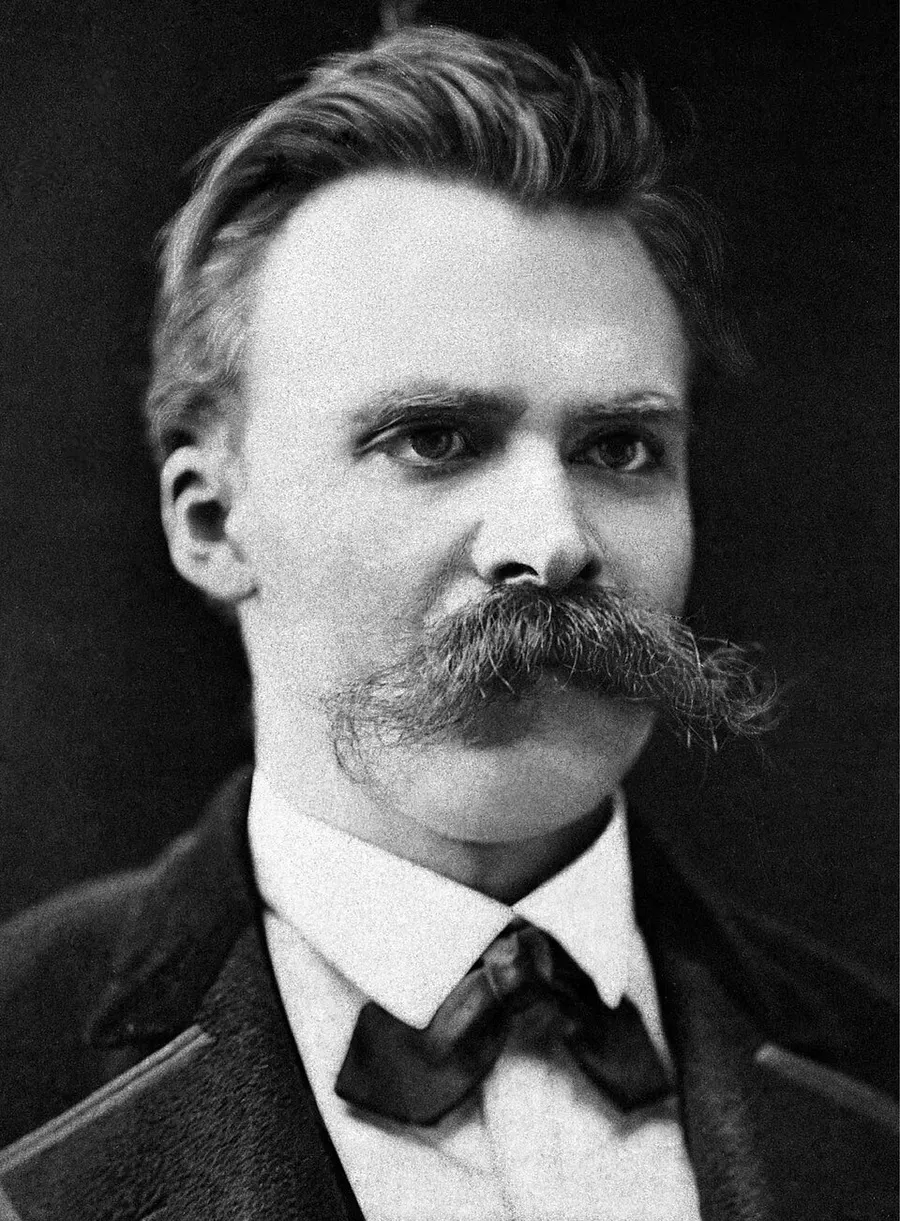
German Philosopher, Proposer of the "Will to Power" and the Revaluation of Values
The First to Ask the Right Question · Founders
The Will to PowerThe Revaluation of ValuesPerspectivism
Who they are
Friedrich Nietzsche (1844–1900) was a German philosopher who, in a strikingly forceful aphoristic and prose-poetic style, launched a fundamental critique of traditional Western morality, religion, and rationalist philosophy. He proposed that "God is dead," holding that the standing of the Christian moral system as the foundation of Western civilization’s values had collapsed and that humanity faced the grave challenge of "nihilism," and that only through the "will to power" — life’s inner impulse to surpass itself — could one revalue values anew, create one’s own meaning and worth, and truly overcome nihilism. His "perspectivism" holds that there is no absolute objective truth apart from a concrete perspective, and that all cognition inevitably bears the marks of a particular standpoint and interest — a stance that profoundly shaped twentieth-century postmodern philosophy’s deconstructive reflection on the concept of "objective truth."
Primary sourcesNietzsche, The Gay Science, Thus Spoke Zarathustra, Beyond Good and Evil
Key stories
"God Is Dead"
Friedrich Nietzsche · photograph, 1875
In The Gay Science Nietzsche has a madman cry out "God is dead, and we have killed him." The line is not a literal announcement of a god’s physical death but means that in modern society the standing of the traditional religious-moral system as the foundation of value has collapsed, so that humanity faces the grave challenge of a vacuum of meaning and value and must seek anew a ground on which to stand.
The Thought Experiment of Eternal Recurrence
In The Gay Science Nietzsche proposed a thought experiment: suppose a demon told you that every event of this life of yours, every pain and every joy, would repeat itself in exactly the same way an infinite number of times — would you feel despair, or embrace it gladly? He held that only one who can truly affirm "eternal recurrence" and embrace the whole of his life’s experience has truly achieved the most thoroughgoing affirmation of life.
Version differences
Nazi Germany once appropriated parts of Nietzsche’s works out of context to serve its ideological propaganda, markedly at odds with the actual content of his thought (Nietzsche himself was critical of nationalism and antisemitism) — an important matter long clarified in Nietzsche scholarship.
Below are how modern works borrow or reinterpret this name or story — not the original material. The two differ, so keep them apart.
"God is dead" (an idiom)This line has fully left its original philosophical context and appears widely in popular culture, music, and everyday debate, used for the collapse of a traditional authority or value system.