🦉Thought & FaithPhilosophy
🏠 Home🌐 中文
PhilosophyAGORA

Kant

Original nameImmanuel Kant

German Philosopher, Founder of German Classical Philosophy, Proposer of the "Copernican Revolution"

The First to Ask the Right Question · Founders
Transcendental IdealismThe Categorical ImperativeCritical Philosophy

Who they are

Immanuel Kant (1724–1804) was a German philosopher who almost never left his native Königsberg in all his life, yet through the "three Critiques" (the Critique of Pure Reason, the Critique of Practical Reason, and the Critique of Judgment) built a far-reaching system of "critical philosophy." He proposed the "Copernican revolution" in the history of philosophy: where it had been held that human knowledge must conform to its objects, he turned this around, holding that objects must conform to the forms of human knowledge (time, space, and the categories of the understanding), thereby reconciling the long opposition of the rationalist and empiricist camps. In ethics he proposed the "categorical imperative" as the rational rule universally applicable to moral action — "act only on that maxim by which you can at the same time will that it should become a universal law" — and this "deontological" ethical stance, together with the utilitarianism that later arose, forms the two most important opposed paradigms of Western normative ethics.

Primary sourcesKant, Critique of Pure Reason, Critique of Practical Reason

Key stories

The "Copernican Revolution"
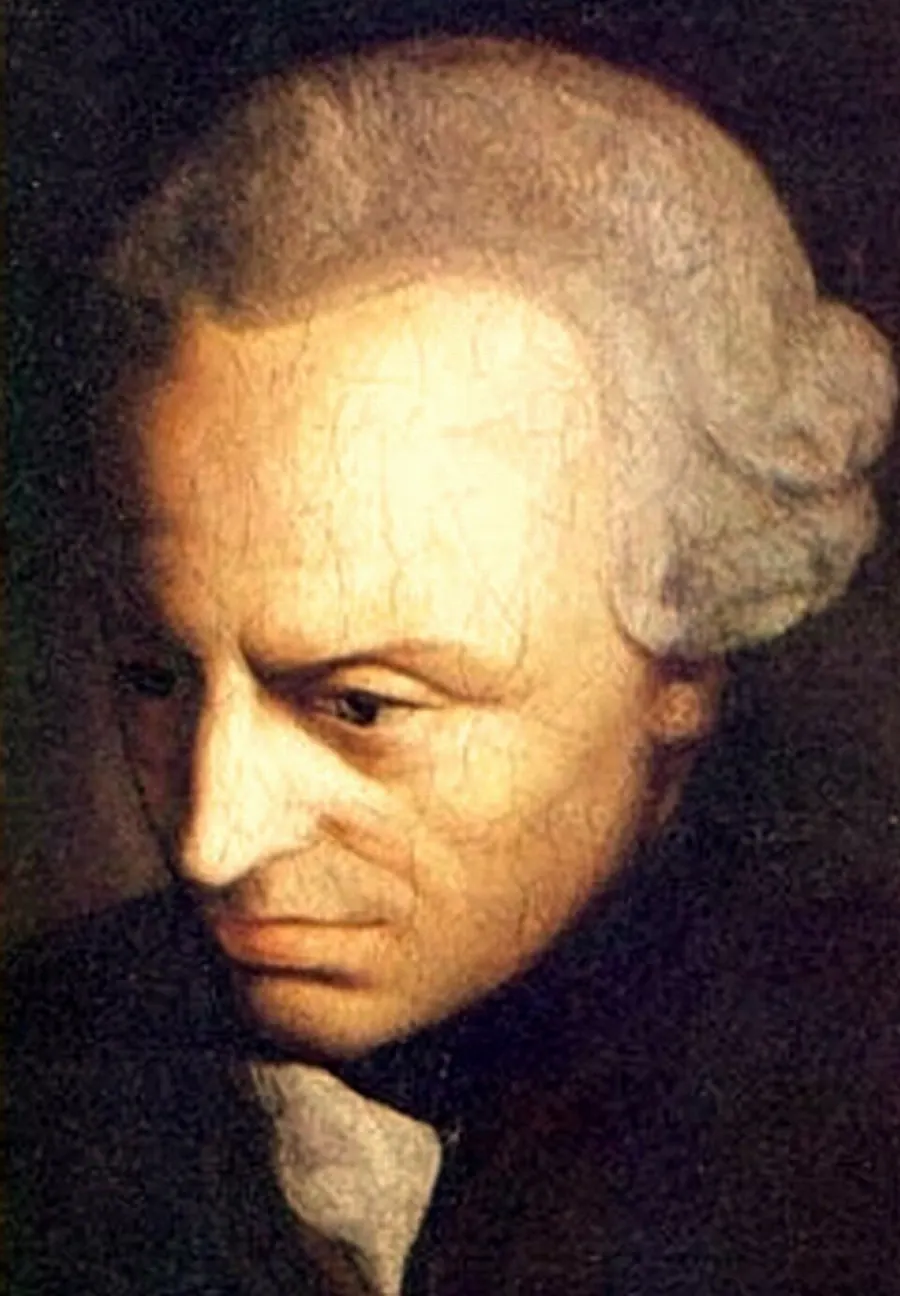
Immanuel Kant
Immanuel Kant · c. 1790

In the preface to the Critique of Pure Reason Kant likened himself to Copernicus: "Hitherto it has been assumed that all our knowledge must conform to objects… Let us then try whether we may not have more success if we assume that objects must conform to our knowledge." This fundamental reversal in epistemology was later called by historians of philosophy "Kant’s Copernican revolution," profoundly reshaping Western philosophy’s way of understanding the question of "how knowledge is possible."

The "Clock of Königsberg"

Kant’s routine was extremely regular throughout his life, walking out at a fixed hour each afternoon, and the local neighbors are said to have set their clocks by the time he appeared at their windows — an anecdote that vividly conveys his rigorous, restrained, near-ascetic philosopher’s way of life, echoing the tight construction of his critical philosophy.

Relationships

Echoes today

Below are how modern works borrow or reinterpret this name or story — not the original material. The two differ, so keep them apart.

"The starry heavens above and the moral law within"The maxim carved on his tombstone is still widely quoted in discussions of the relationship between science and ethics.

Appears in

Curiosity mailCurious about world civilization? Leave your email — we’ll tell you when there’s something worth a look.

Free · unsubscribe anytime · Privacy