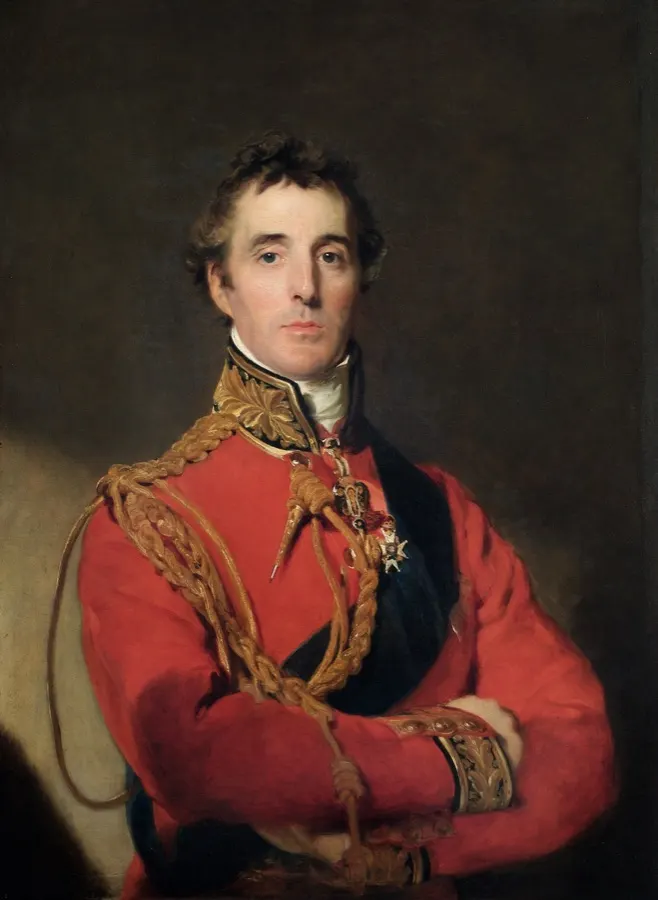
British General, Commander Who Defeated Napoleon at Waterloo
Those Who Turned a Ruler’s Decision Into Reality · Generals & Statesmen
The Napoleonic WarsThe Battle of WaterlooBritish Politics
Who they are
The Duke of Wellington, Arthur Wellesley (1769–1852), was a British army general who repeatedly beat Napoleon’s forces in the Peninsular War and in 1815, joined with the Prussians, utterly defeated the returned Napoleon at Waterloo, ending the Napoleonic Wars. He then entered politics and served for a time as Prime Minister; late in life his prestige was dented by his opposition to parliamentary reform, but as "the man who beat Napoleon" he held an important place in British history, and Wellington Arch still stands in central London in his honor.
Primary sourcesThe wartime letters and dispatches of the Duke of WellingtonContemporary military records of the Battle of Waterloo
Key stories
The Long Day at Waterloo
The Duke of Wellington · Sir Thomas Lawrence
On June 18, 1815, Napoleon assaulted Wellington’s position at Waterloo in Belgium; the battle lasted from morning to evening, Wellington’s troops several times near collapse, until the Prussian Marshal Blücher arrived in time with reinforcements to strike the flank and the French line broke at last. Wellington afterward called it "the nearest run thing you ever saw in your life."
The "Iron Duke’s" Political Career
Wellington entered politics after the war and served for a time as Prime Minister, but the hard-line manner he had formed in the army carried into politics, and his firm opposition to the 1832 Reform Act drew public fury — protesters even smashed the windows of his London home — and the nickname "Iron Duke" gradually shifted from a symbol of military prestige to a byword for his hard, conservative political stance.
Below are how modern works borrow or reinterpret this name or story — not the original material. The two differ, so keep them apart.
Beef WellingtonThe classic English dish of beef and mushroom paste wrapped in pastry, "Beef Wellington," is by legend named for him, though the exact origin of the name is variously told.