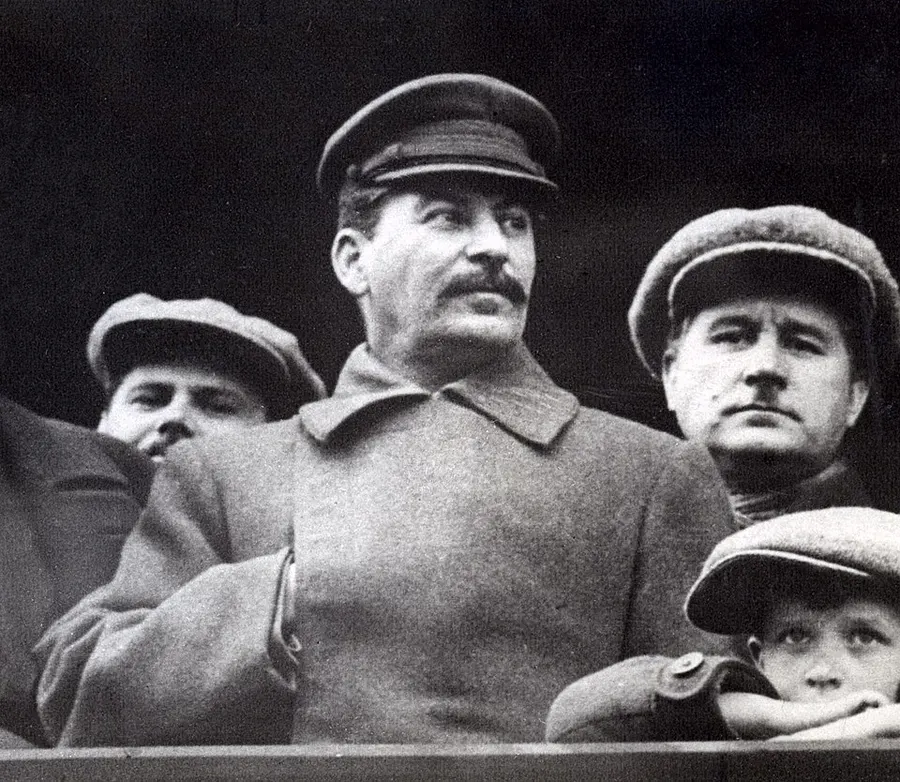
Supreme Leader of the USSR, Driver of Industrialization, the Great Purge, and WWII
Those Who Turned a Ruler’s Decision Into Reality · Generals & Statesmen
The USSRThe Five-Year PlansWorld War II
Who they are
Stalin (1878–1953) became supreme leader of the USSR after Lenin’s death through a power struggle, driving rapid Soviet industrialization through a series of compulsory "Five-Year Plans" at the cost of millions of deaths in collectivization and famine; in the "Great Purge" of the 1930s, vast numbers within and outside the party (including former revolutionary comrades) were arrested, exiled, or executed. In World War II the USSR, at extremely heavy cost, threw back the Nazi German invasion and finally took Berlin, becoming one of the two postwar superpowers, while also establishing long-term political control over Eastern Europe, deeply shaping the Cold War order for nearly half a century.
Primary sourcesSoviet official archives (some declassified after the Soviet collapse)Records of contemporary Western observers
Key stories
The Great Purge
Joseph Stalin · photograph, 1937
In the late 1930s, Stalin launched a mass political purge, and countless party, government, and military officials, intellectuals, and ordinary people were charged as "enemies of the people" and arrested, imprisoned, exiled to the Gulag, or executed, including many Old Bolsheviks who had made the revolution alongside Lenin — the exact death toll of this history is still a subject of ongoing research and debate among historians.
The Battle of Stalingrad
In 1942–1943, Soviet and German forces fought one of the most brutal urban battles of WWII at Stalingrad, with combined casualties over a million, until the Soviets successfully encircled and destroyed the main German force — a victory widely seen as the key turning point of WWII’s Eastern Front, after which the Soviet army gradually turned to the strategic offensive, driving all the way to Berlin.
Version differences
The exact death tolls of events such as the Great Purge and the Ukrainian famine, owing to the closure and destruction of Soviet-era archives, are still the subject of ongoing research and debate among historians, with sizable differences among scholars’ estimates.
Below are how modern works borrow or reinterpret this name or story — not the original material. The two differ, so keep them apart.
"Stalingrad"-style tenacious resistance (an idiom)Expressions such as "like Stalingrad" are still used for a tenacious defensive battle held to the end at enormous cost.