Tsar of Russia, Who Westernized the State and Founded St. Petersburg
Those Who Drew the Lines on the Map · Founders & Monarchs
The Russian EmpireWesternizing ReformSt. Petersburg
Who they are
Peter I (1672–1725) was a tsar of the Russian Romanov dynasty who, to learn Western European technology, worked incognito as an apprentice laborer in Dutch and English shipyards, and on returning drove Westernizing reform: reforming the army and bureaucracy, creating a Russian navy, forcing the nobility to cut their beards and wear Western dress, and moving the capital to the newly built St. Petersburg (a "window to Europe"). Through the "Great Northern War" against Sweden he won an outlet to the Baltic, brought Russia among the great powers of Europe, and in 1721 took the title "emperor," after which Russia was formally styled the "Russian Empire."
Primary sourcesRussian court archivesDutch East India Company employment records
Key stories
The Tsar Who Apprenticed Under a False Name
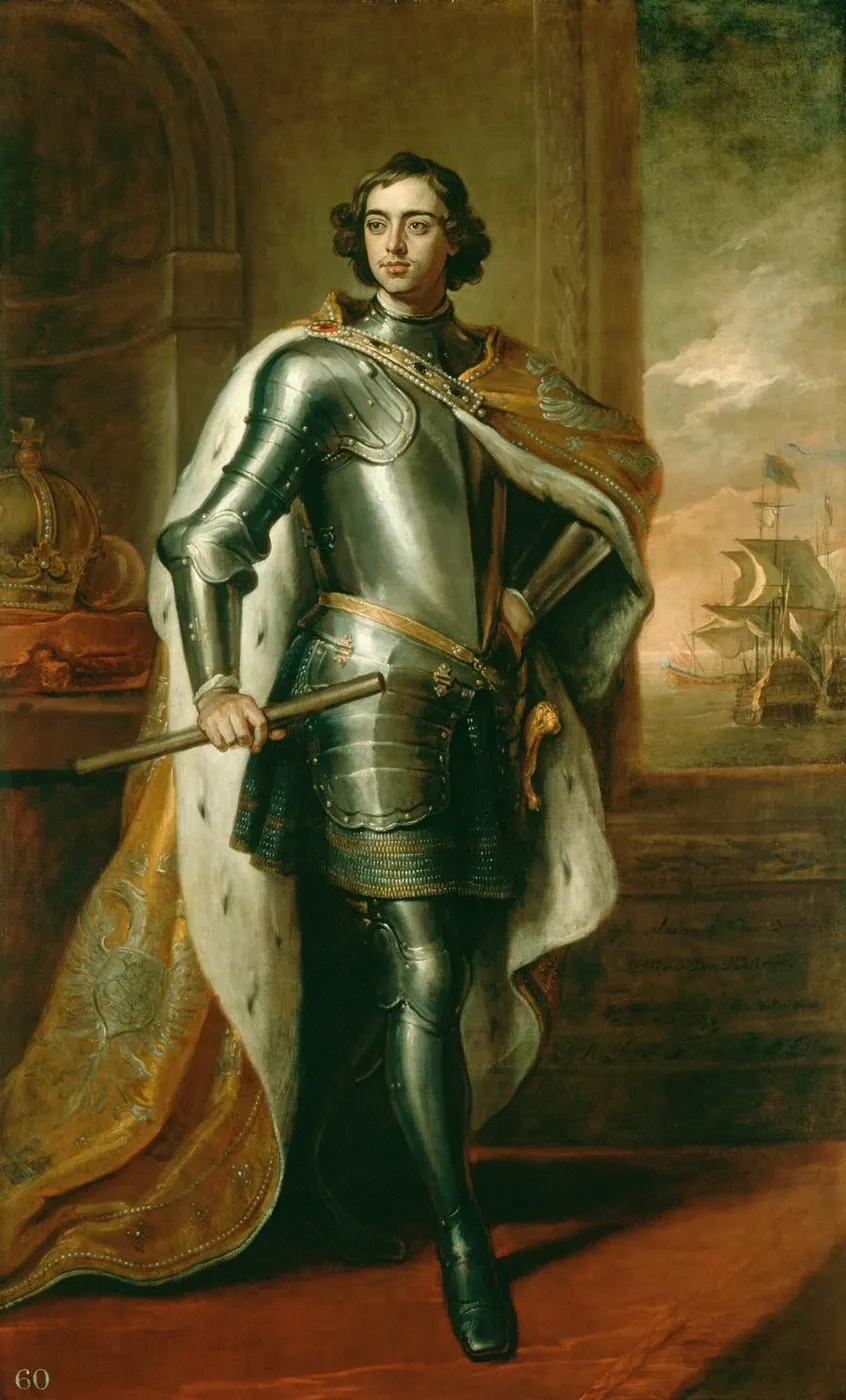
Peter the Great · Godfrey Kneller, 1698
Fascinated in his youth with Western European shipbuilding and seafaring, Peter organized a "Grand Embassy" to the West in 1697 and, under the name "Peter Mikhailov," worked several months as an apprentice laborer in the Dutch East India Company’s shipyards, learning shipbuilding with his own hands — an extraordinary act for a European monarch of the time.
A "Window to Europe"
On the newly won marshland at the mouth of the Neva, Peter ordered the new capital of St. Petersburg built, conscripting tens of thousands of serfs and craftsmen to labor in brutal conditions, at heavy cost successfully raising a European-style capital, to which he formally moved the capital in 1712 — a city that deliberately imitated Western cities like Amsterdam from site to style, symbolizing Russia’s strategic turn "toward Europe."
Below are how modern works borrow or reinterpret this name or story — not the original material. The two differ, so keep them apart.
St. PetersburgThe city he planned with his own hand is still an important cultural and tourist center of Russia; a grand international celebration was held for the 300th anniversary of its founding in 2003.