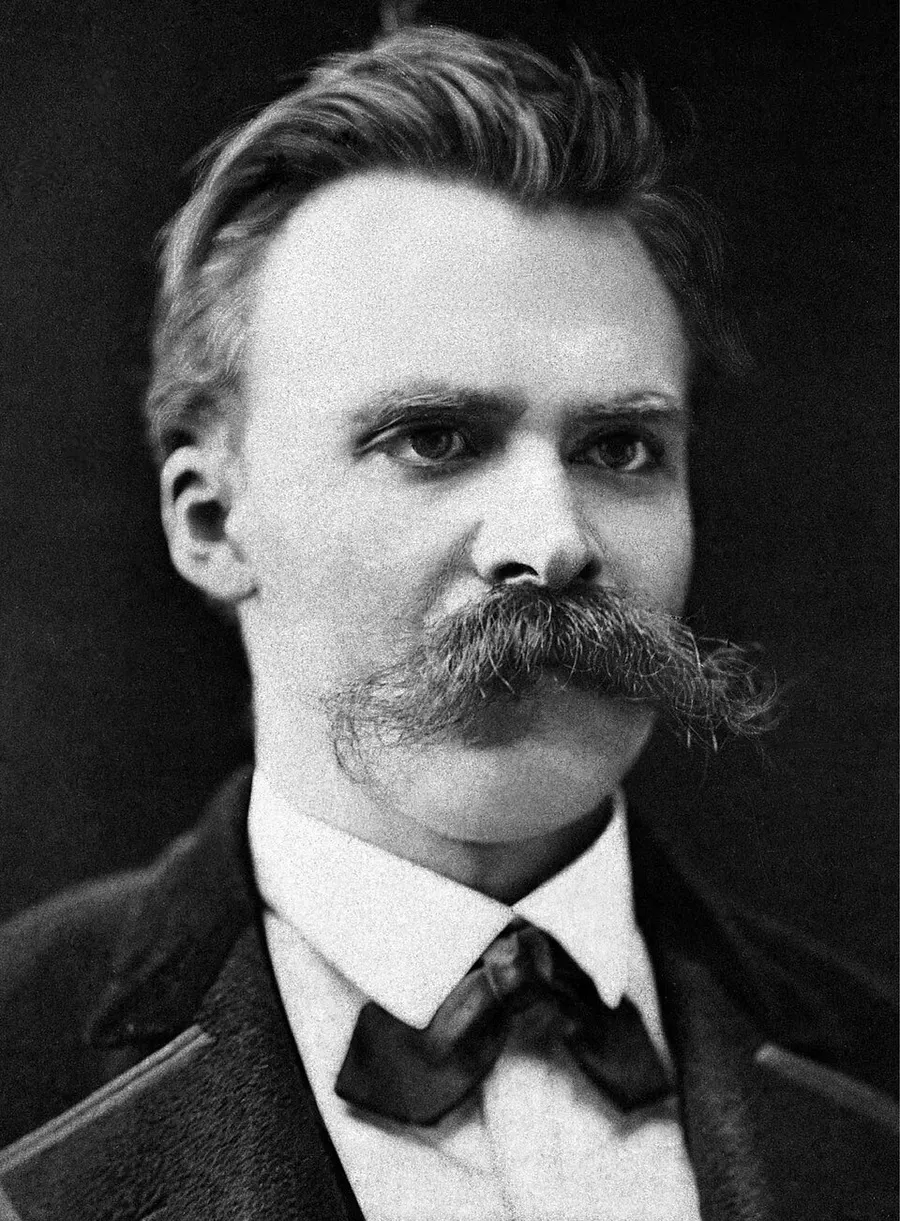
German Philosopher, Proposer of "God Is Dead" and the Philosophy of the Übermensch
Those Who Changed How Humanity Thinks · Masters & Thinkers
Critique of NihilismThe Will to PowerForerunner of Existentialism
Who they are
Friedrich Nietzsche (1844–1900) was a German philosopher known for a strikingly aphoristic style, who proposed the famous declaration "God is dead" challenging the foundations of traditional religious morality, holding that after the collapse of the traditional value system the individual should surpass himself and create new values through the "will to power," a thought later often linked to the concept of the "Übermensch." He was tormented all his life by mental and physical illness, and after a total mental breakdown on a street in Turin in 1889 sank into prolonged insanity until his death. After his death his works were selectively distorted and misused by Nazi Germany for its ideological propaganda (markedly at odds with the actual content of his thought, an important point long clarified in Nietzsche scholarship), but since the late 20th century scholars have broadly held him an important forerunner of existentialist philosophy and postmodern thought.
Primary sourcesNietzsche, The Gay ScienceNietzsche, Thus Spoke Zarathustra
Key stories
"God Is Dead"
Friedrich Nietzsche · photograph, 1875
In The Gay Science Nietzsche has a madman cry out "God is dead, and we have killed him"; the line is not a literal announcement of a god’s physical death but means that the traditional religious-moral system’s standing as the foundation of value has collapsed in modern society, so that humanity faces the grave challenge of a vacuum of meaning and value and must seek anew a ground on which to stand.
The Breakdown on a Turin Street
In 1889, seeing a horse whipped by its driver on a street in Turin, Nietzsche is said to have rushed to throw his arms around the horse’s neck and wept, and then broke down completely, sinking for over a decade into severe insanity until his death in 1900 — a tragic collapse that set a lamentable end to his intellectual life so full of contradiction and tension.
Version differences
Nazi Germany once appropriated parts of Nietzsche’s works out of context to serve its ideological propaganda, markedly at odds with the actual content of his thought (Nietzsche himself was critical of nationalism and antisemitism) — an important matter long clarified in Nietzsche scholarship.
Below are how modern works borrow or reinterpret this name or story — not the original material. The two differ, so keep them apart.
"God is dead" (an idiom)This line has fully left its original philosophical context and appears widely in popular culture, music, and everyday debate, used for the collapse of a traditional authority or value system.