British Naval Commander, Hero of the Battle of Trafalgar
Those Who Turned a Ruler’s Decision Into Reality · Generals & Statesmen
The Napoleonic WarsThe Battle of TrafalgarBritish Sea Power
Who they are
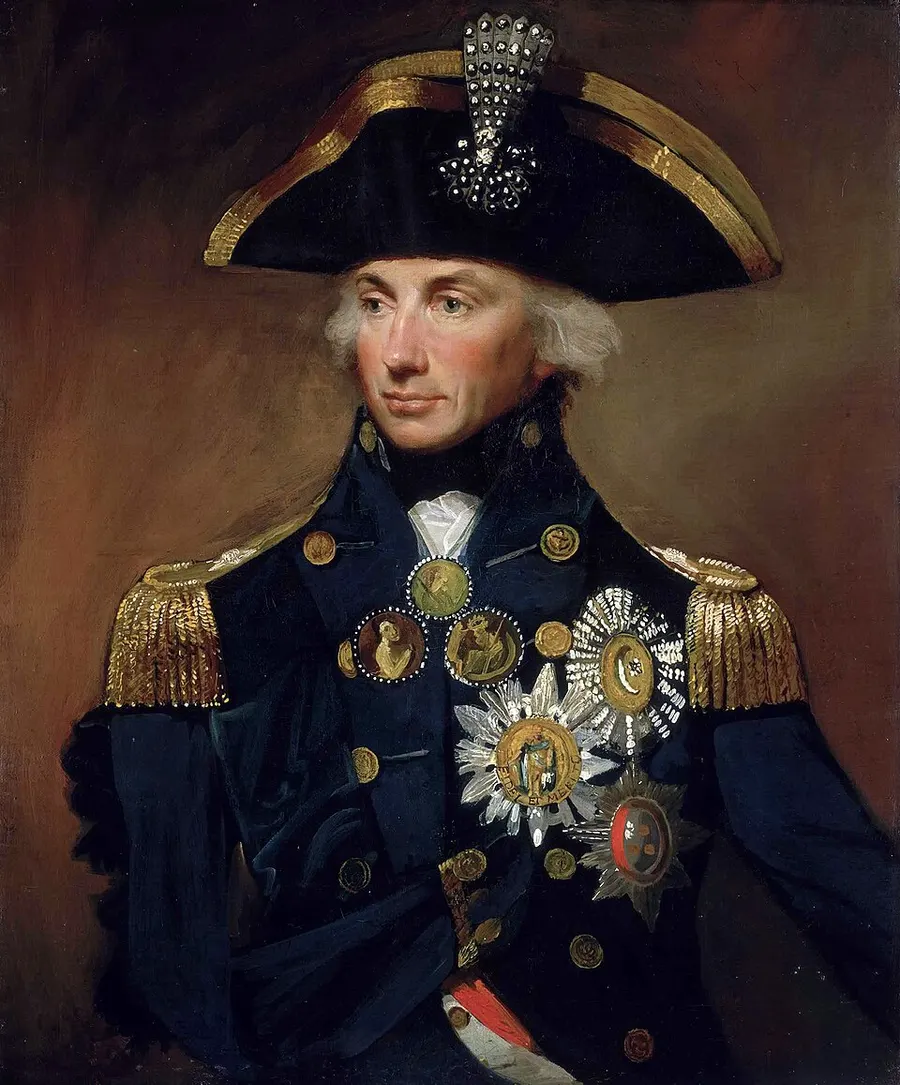
Horatio Nelson (1758–1805) was a British naval commander who in 1805, at the Battle of Trafalgar, led the British fleet in crushing the combined French and Spanish fleet, utterly shattering Napoleon’s plan for a seaborne invasion of Britain and laying the foundation for a century of British sea supremacy. He himself was shot dead by a French sniper in that decisive victory, and Nelson’s Column, rising at the center of London’s Trafalgar Square, was raised by Britain to honor this naval hero who "died for the victory."
Primary sourcesBritish Royal Navy archivesContemporary records of the Battle of Trafalgar
Key stories
"England Expects That Every Man Will Do His Duty"
Horatio Nelson · Lemuel Francis Abbott
Before the Battle of Trafalgar, Nelson sent the famous signal to the whole fleet: "England expects that every man will do his duty." He then boldly broke with traditional line-of-battle tactics, splitting the fleet into two columns that drove straight into the center of the enemy line — risky, but in the end an overwhelming victory.
The Sacrifice on Deck
At the crucial stage of the battle, Nelson insisted on standing on deck in his conspicuous officer’s uniform to command, and was shot in the shoulder by a sniper aboard the French Redoutable, the ball piercing his lung; he died aboard hours later on learning of his side’s complete victory, leaving the last words "thank God, I have done my duty."