Physicist and Chemist, First Scientist to Win Two Nobel Prizes
Those Who Changed How Humanity Thinks · Masters & Thinkers
Radioactivity ResearchThe Discovery of RadiumThe Nobel Prize
Who they are
Marie Curie (1867–1934) was born in Warsaw, Poland, and later moved to France for scientific research, joining her husband Pierre Curie in the study of radioactivity, discovering the two new elements polonium and radium; she won the 1903 Nobel Prize in Physics for radioactivity research and in 1911 won the Nobel Prize in Chemistry alone for isolating pure radium — the first person in history to win two Nobel Prizes, and to this day the only one to win in two different scientific fields. She long handled radioactive materials without adequate protection and finally died of aplastic anemia caused by prolonged radiation exposure; the notebooks she used are still radioactive and must be kept in lead boxes.
Primary sourcesMarie Curie’s laboratory notebooks (now kept in lead boxes)Official Nobel Prize archives
Key stories
Radium in a Ramshackle Shed
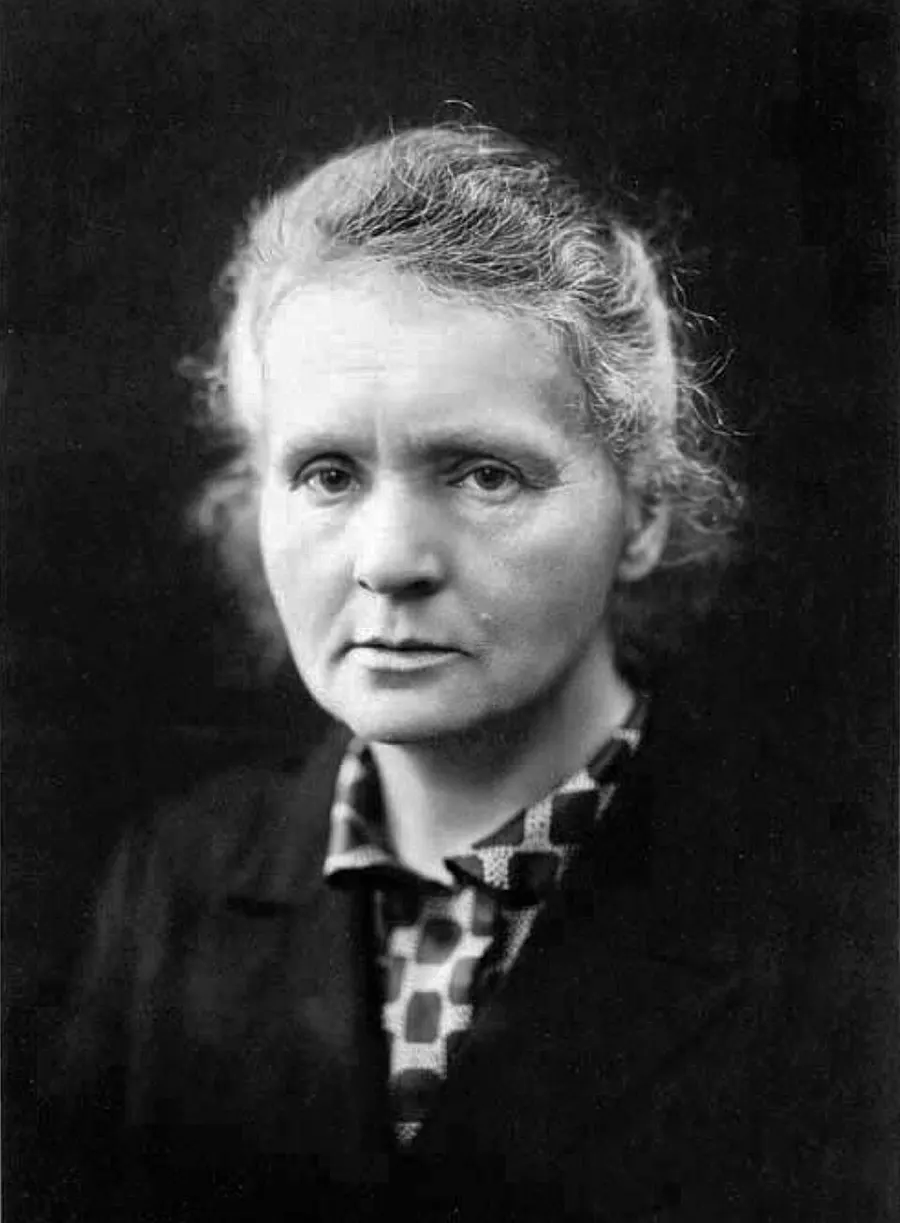
Marie Curie · photograph, c. 1920
The Curies, in an extremely crude old shed laboratory, hot in summer and cold in winter, refined and re-refined tons of pitchblende waste ore over nearly four years of grueling manual labor before at last isolating a trace of radium — a tenacity and devotion often retold as a model of scientific research achieving "great discovery in crude conditions."
The Battlefield Mobile X-Ray Units
During World War I, Marie Curie personally designed and drove the building of mobile radiological units fitted with X-ray equipment (called "petites Curies" by the soldiers), driving to the front herself to give the wounded timely X-ray examinations; these mobile units are estimated to have served over a million wounded during the war.
Below are how modern works borrow or reinterpret this name or story — not the original material. The two differ, so keep them apart.
A "Marie Curie"-style scientific iconShe is the woman scientist most often cited as a model in global science education, and many nations’ currencies, stamps, and research institutions are named for her in commemoration.