Those Who Changed How Humanity Thinks · Masters & Thinkers
PsychoanalysisThe Theory of the UnconsciousThe Interpretation of Dreams
Who they are
Sigmund Freud (1856–1939) was an Austrian psychiatrist who founded the theoretical system of "psychoanalysis," holding that human behavior is deeply driven by the "unconscious" and that childhood experience and repressed desires profoundly shape the adult psyche; his Interpretation of Dreams systematically set out the core thesis that dreams are the "royal road" to the unconscious. His theory greatly expanded the field of psychology and psychiatry, and concepts such as "the unconscious," "repression," and "defense mechanisms" have long entered everyday vocabulary. As a Jew, after Nazi Germany annexed Austria he was forced into exile in England, dying in London the following year.
Primary sourcesFreud, The Interpretation of DreamsFreud’s collected correspondence
Key stories
"The Dream Is the Royal Road to the Unconscious"
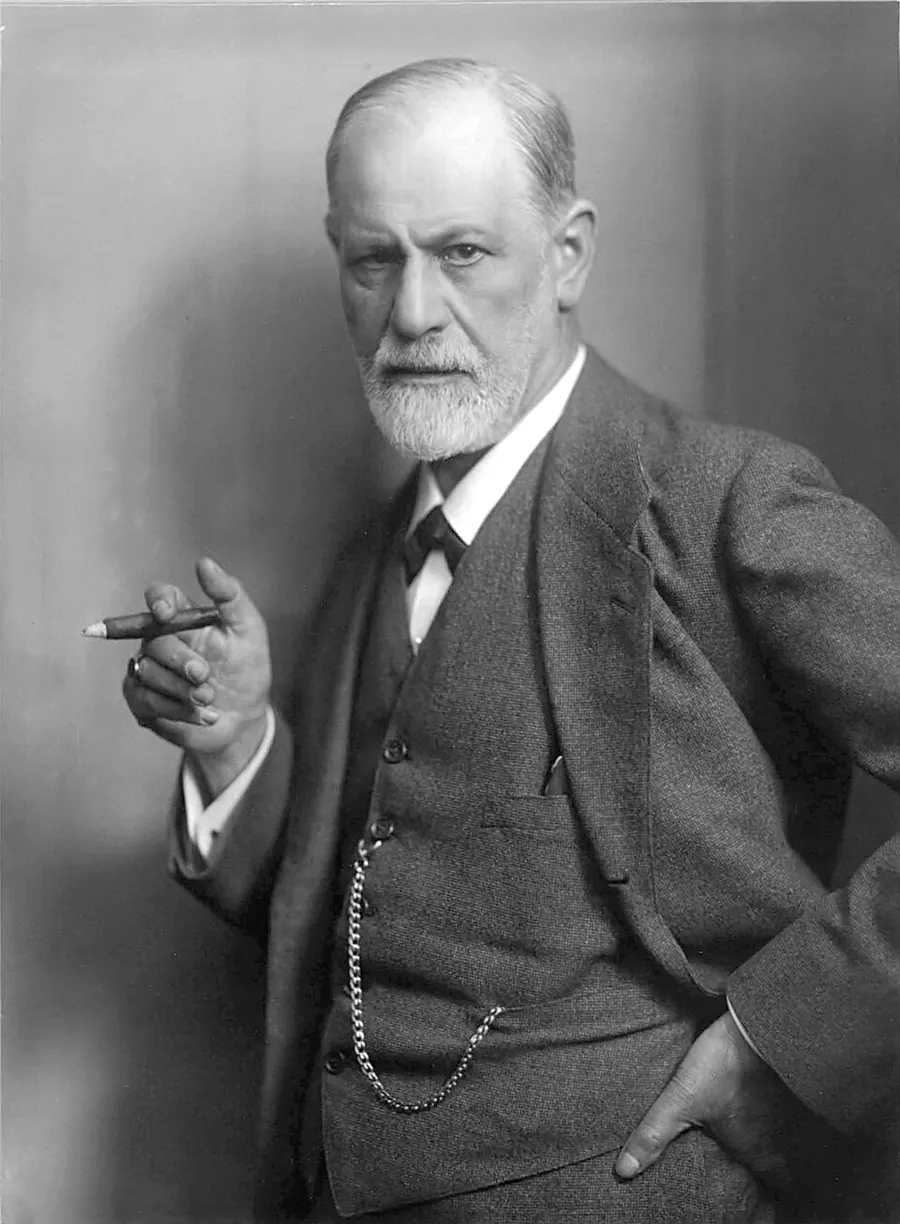
Sigmund Freud · photograph by Max Halberstadt, c. 1921
In The Interpretation of Dreams Freud proposed that dreams are not meaningless random visions but a mental activity by which repressed desires gain partial satisfaction in disguised form, and that by analyzing the details of a dream one may glimpse the dreamer’s real desires and conflicts, hidden beneath consciousness and perhaps unnoticed even by himself.
The Nazi Book-Burning and Forced Exile
In 1933 Nazi Germany burned books deemed "un-German" en masse, Freud’s works among them, and he wryly remarked, "some progress at last — in the Middle Ages they would have burned me; now they are content with burning my books." After the Nazis annexed Austria in 1938, the aged Freud, with the help of international friends, obtained leave to depart with difficulty and went into exile in London, dying of illness the next year.
Version differences
Some core concepts of Freud’s psychoanalytic theory (such as the "Oedipus complex") are considerably contested in the empirical testing of modern psychology, and scholars broadly hold that his theory, though of enormous historical influence, falls short of the standards of scientific rigor and contemporary evidence-based psychology.
Below are how modern works borrow or reinterpret this name or story — not the original material. The two differ, so keep them apart.
"The unconscious," "repression" (everyday words)These words, once technical terms of psychoanalysis, have now fully entered everyday language, used to describe every aspect of mental life.