🕊️Thought & FaithWorld Faiths
🏠 Home🌐 中文
World FaithsFAITHS
📕

Augustine

NameAugustine of Hippo

One of the Most Influential Theologians of Early Christianity

Those Who Made the Faith Clear · Sages & Theologians
ChristianityTheologyOriginal Sin

Who they are

Augustine (354–430) was born in North Africa, and after a dissolute youth and a mind that wandered among many philosophies and faiths, he converted to Christianity and became bishop of Hippo (in present-day Algeria); his works Confessions and The City of God profoundly shaped over a thousand years of Western Christian theology, including the formulation of core doctrines such as original sin, grace, and predestination. Both Catholicism and Protestantism (especially the Reformers Calvin and Luther) inherited or responded to his intellectual legacy on different levels.

Primary sourcesAugustine, ConfessionsAugustine, The City of God

Key stories

The Conversion in the Garden
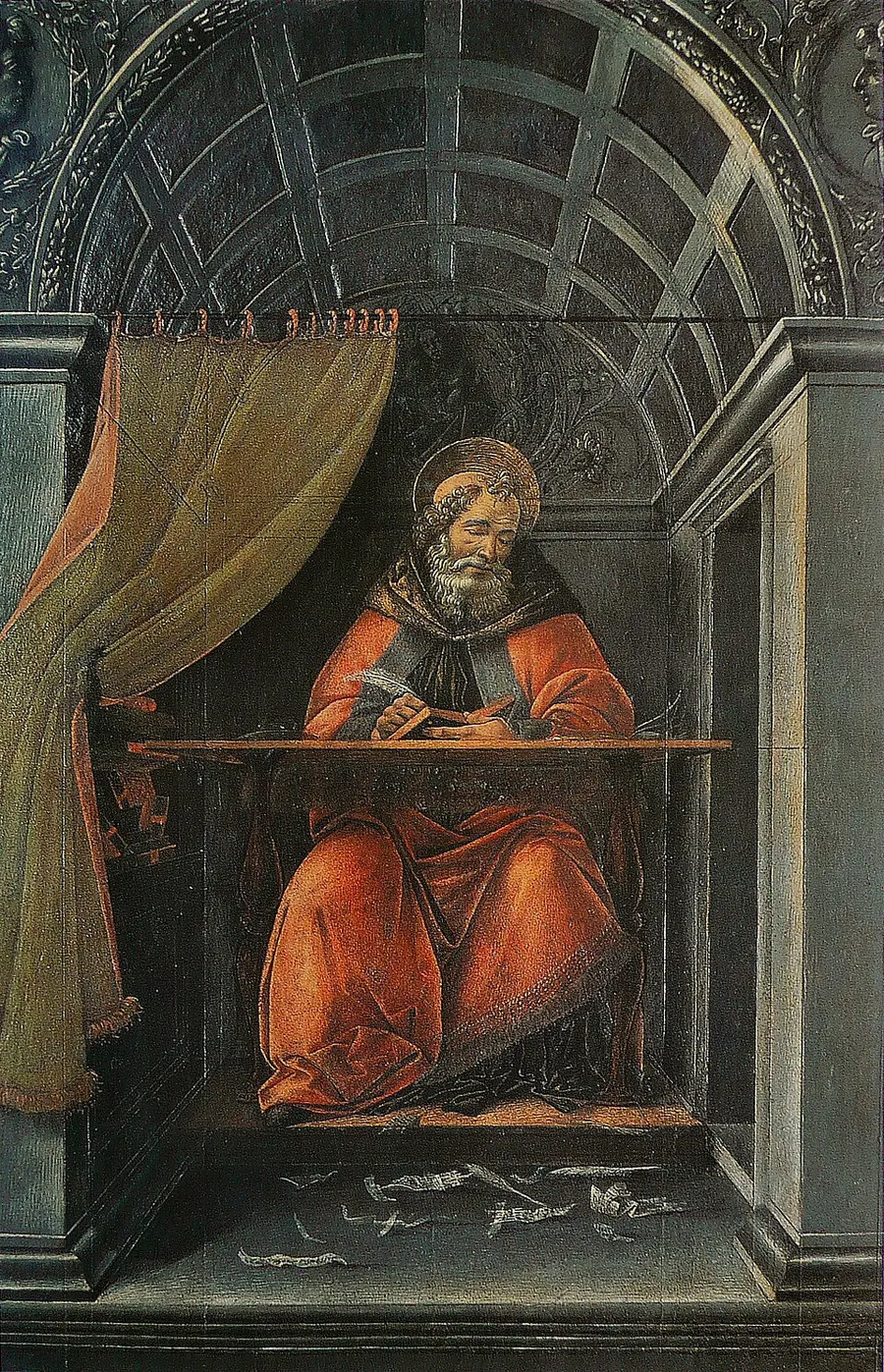
St Augustine in His Study
St Augustine in His Study · Botticelli, c. 1480

In his Confessions, Augustine records that he wrestled in anguish in a garden in Milan and heard a neighbor’s child singing over and over "take up and read, take up and read"; he opened the Bible at hand, his eyes falling on a passage about casting off dissipation and putting on Christ, and from that moment his inner struggle dissolved and he resolved to be baptized into Christianity.

Version differences

Augustine’s account of original sin and grace deeply shaped later Catholic theology, and was also an important source for Calvin’s "predestination" in the Reformation; but Catholicism and Protestantism later developed different theological formulations of the relation of "grace and free will," a long-standing doctrinal discussion within Christianity.

Relationships

Echoes today

Below are how modern works borrow or reinterpret this name or story — not the original material. The two differ, so keep them apart.

The autobiographical genre of the ConfessionsAugustine’s Confessions is widely held to be among the earliest works of autobiography in Western literary history, its "inner-monologue" style influencing much later autobiography and psychological narrative.

Appears in

Curiosity mailCurious about world civilization? Leave your email — we’ll tell you when there’s something worth a look.

Free · unsubscribe anytime · Privacy