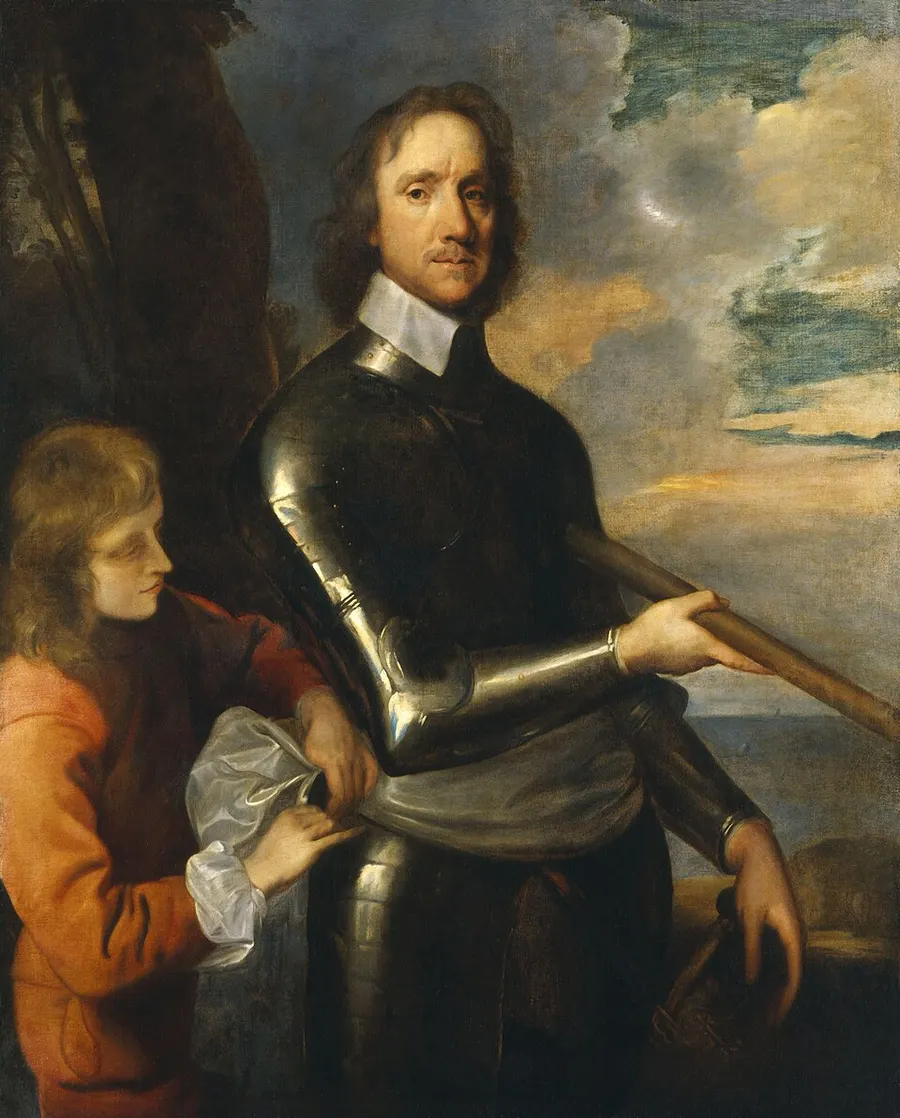
Leader of the English Civil War, "Lord Protector" of a Short-Lived Republic
Those Who Turned a Ruler’s Decision Into Reality · Generals & Statesmen
The English Civil WarThe Commonwealth of EnglandThe Puritans
Who they are
Oliver Cromwell (1599–1658) was a core leader of the parliamentary army in the English Civil War, who led it to defeat the royalist forces of King Charles I; in 1649 Charles I was tried and executed, England for the first time abolished the monarchy and founded a republic, and Cromwell thereafter effectively ruled England as "Lord Protector." Under him strict Puritan moral controls were imposed, while abroad he actively expanded sea trade and military influence; but after his death the republic quickly fell into chaos, and in 1660 Charles I’s son Charles II was restored and England’s monarchy returned — this brief republican experiment long remained a focus of repeated discussion in British political history on the sensitive questions of "regicide" and "republic."
Primary sourcesCromwell’s collected letters and speechesContemporary parliamentary archives of the English Civil War
Key stories
Trying and Executing the King
Oliver Cromwell · Robert Walker
In 1649, the parliamentary court Cromwell led tried King Charles I on charges of "tyrant, traitor, murderer, and public enemy," sentenced him to death, and executed him in public — a reigning monarch formally tried and put to death by his own subjects, unprecedented in the Europe of the time, and a reason Cromwell’s reputation in later British history has always been mixed.
Exhumed and "Hanged" After the Restoration
Just two years after Cromwell’s death, the monarchy was restored, and Charles II, to avenge his father, ordered the buried body of Cromwell exhumed and subjected to a symbolic hanging and beheading on public display — an extreme act vividly reflecting the deep division within English society over this republican experiment and the intensity of the political reckoning.
Version differences
Cromwell’s standing in English historical judgment has long been mixed — the civilian casualties of his military action in Ireland (such as the siege of Drogheda) are an important, much-criticized part of his historical image, in sharp contrast to his image as a "pioneer of the republican experiment."
Below are how modern works borrow or reinterpret this name or story — not the original material. The two differ, so keep them apart.
The controversy of the BBC’s "100 Greatest Britons" pollIn the 2002 BBC public vote Cromwell’s very inclusion on the shortlist stirred no small controversy, reflecting the still-divided attitude of British society toward his historical reputation.