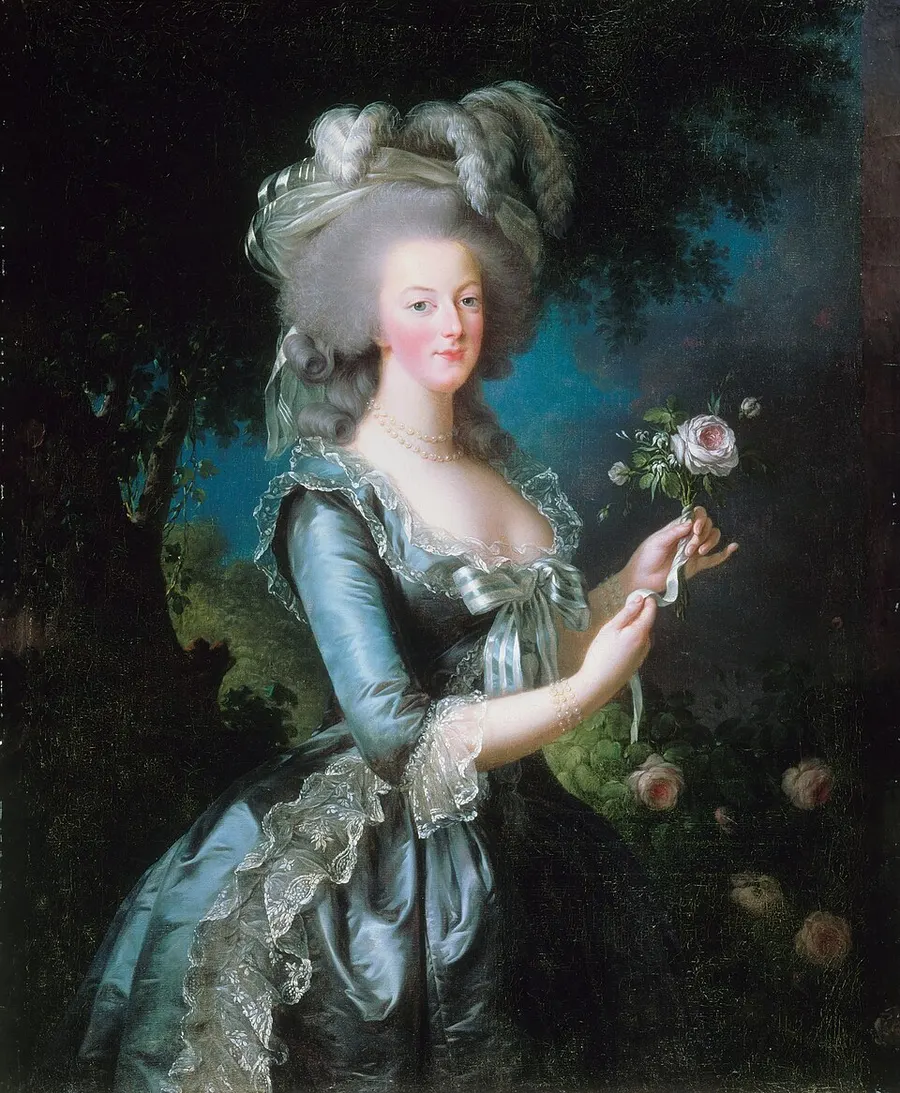
Queen of France, Sent to the Guillotine in the French Revolution
One Story Remembered for Life · Small Roles, Famous Names
The French Bourbon DynastyThe French RevolutionThe Guillotine
Who they are
Marie Antoinette (1755–1793) was a daughter of the Austrian Archduchess Maria Theresa, married off to the French dauphin (later Louis XVI) to cement the Austro-French alliance. Foreign-born and given to lavish living, and set against the empty treasury and boiling public anger on the eve of the French Revolution, she became one of the most concentrated targets of revolutionary propaganda, saddled with slurs such as "Madame Deficit." After the Revolution broke out in 1789 she was imprisoned and tried with Louis XVI by the revolutionary government, and in 1793, under the Jacobin-led Reign of Terror, was sent to the guillotine at only 37. The much-repeated line "let them eat cake" is broadly held by scholars not to have been hers at all, but a pre-Revolution rumor or an older folk anecdote misattributed to her.
Marie-Antoinette with the Rose · Vigée Le Brun, 1783, Versailles
On the eve of the Revolution, with France’s finances near bankruptcy, the public turned its anger on the court’s extravagant way of life; Marie Antoinette, fond of fine gowns, jewels, and the lavish display of Versailles, was branded "Madame Deficit," and a flood of anonymous pamphlets smearing her private life circulated widely among the people, deepening public hostility toward the crown.
The Last Moments on the Scaffold
In October 1793 Marie Antoinette was led to the guillotine, and legend says that on stepping on the executioner’s foot she said, "Pardon me, sir, I did not do it on purpose" — an anecdote whose truth is hard to fully verify, but which, for its detail of basic courtesy kept to the last moment of life, has long been retold by later ages.
Version differences
The line "let them eat cake" is broadly held by scholars not to have been hers — it appeared in folk rumor as early as before her birth, and may have been misattributed to her to reinforce her negative image as one who "let them eat cake," oblivious to the hardship of the people.
Below are how modern works borrow or reinterpret this name or story — not the original material. The two differ, so keep them apart.
The film Marie AntoinetteA biographical film directed by Sofia Coppola, rerendering her court life in a modernized audiovisual style — a representative case of her historical image being reexamined in contemporary popular culture.