Those Who Changed How Humanity Thinks · Masters & Thinkers
The RenaissancePaintingAnatomical and Engineering Manuscripts
Who they are
Leonardo da Vinci (1452–1519) was the most representative polymath of the Italian Renaissance, whose paintings the Mona Lisa and The Last Supper are among the best-known masterpieces in Western art history, yet whose thousands of pages of manuscripts are just as astonishing — covering human anatomy, fluid mechanics, and designs for flying machines and weapons, many ideas far ahead of his age. He habitually wrote his notes in reverse mirror script, the reasons for which scholars still discuss (possibly related to his habit of writing left-handed). He never completed many of his grand engineering visions, but the manuscripts themselves are the most direct witness to the Renaissance spirit that "art and science are inseparable."
Primary sourcesLeonardo’s manuscripts (now held in museums in several countries)Giorgio Vasari, Lives of the Artists
Key stories
The Smile of the Mona Lisa
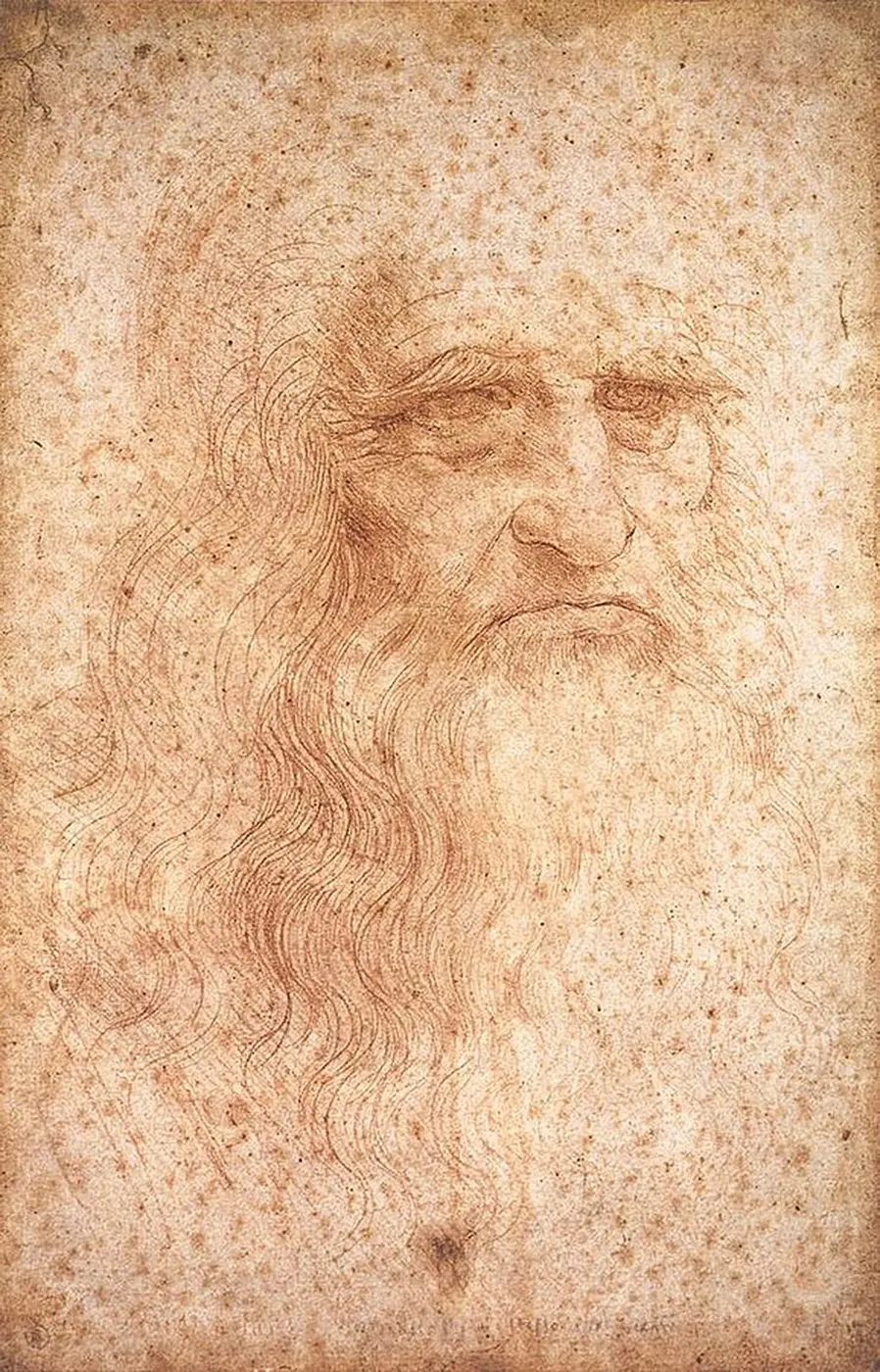
Presumed self-portrait in red chalk · c. 1512, Royal Library of Turin
Leonardo worked on the Mona Lisa on and off for years, using the "sfumato" technique to make contours and colors transition so softly that the sitter’s smile seems to appear and vanish with the viewing angle; the painting is still in the Louvre, one of the most visited works of art in the world.
Flying Machines in the Manuscripts
Leonardo left in his notebooks many design sketches for flapping-wing machines, screw-propeller devices, and gliding wings; though limited by the materials and power of his time, so that most were never built, the aerodynamic intuition they show still astonished aeronautical engineers centuries later.
Below are how modern works borrow or reinterpret this name or story — not the original material. The two differ, so keep them apart.
The global fame of the Mona LisaThe painting is the most visited exhibit of the Louvre, and its image has been widely used in all manner of parody and homage in global popular culture.