🏰HistoryEuropean History
🏠 Home🌐 中文
European HistoryEUROPA
👑

Isabella I

Original nameIsabella of Castile

Queen of Castile, Whose Marriage to Ferdinand Brought About the Union of Spain

Those Who Drew the Lines on the Map · Founders & Monarchs
The Kingdom of CastileThe Union of SpainFunding the Age of Discovery

Who they are

Isabella I (1451–1504) was Queen of Castile who in 1469 married the Aragonese heir Ferdinand, in effect joining the two kingdoms and laying the foundation of the united modern Spanish state. With Ferdinand she completed the last step of the "Reconquista" in 1492, taking Granada and ending nearly eight hundred years of Islamic rule in the Iberian Peninsula, and that same year funded the Genoese navigator Columbus’s westward voyage, directly bringing Europeans to the Americas. She was also a key figure in the drive for religious uniformity, including establishing the Inquisition and issuing the decree expelling Jews who would not convert to Catholicism — policies that, while consolidating royal power and religious uniformity, brought grievous persecution and displacement on the Jewish and Moorish communities of the time, an inescapable other side in assessing her place in history.

Primary sourcesSpanish royal archivesColumbus’s ship log

Key stories

Staking a Wager on Columbus
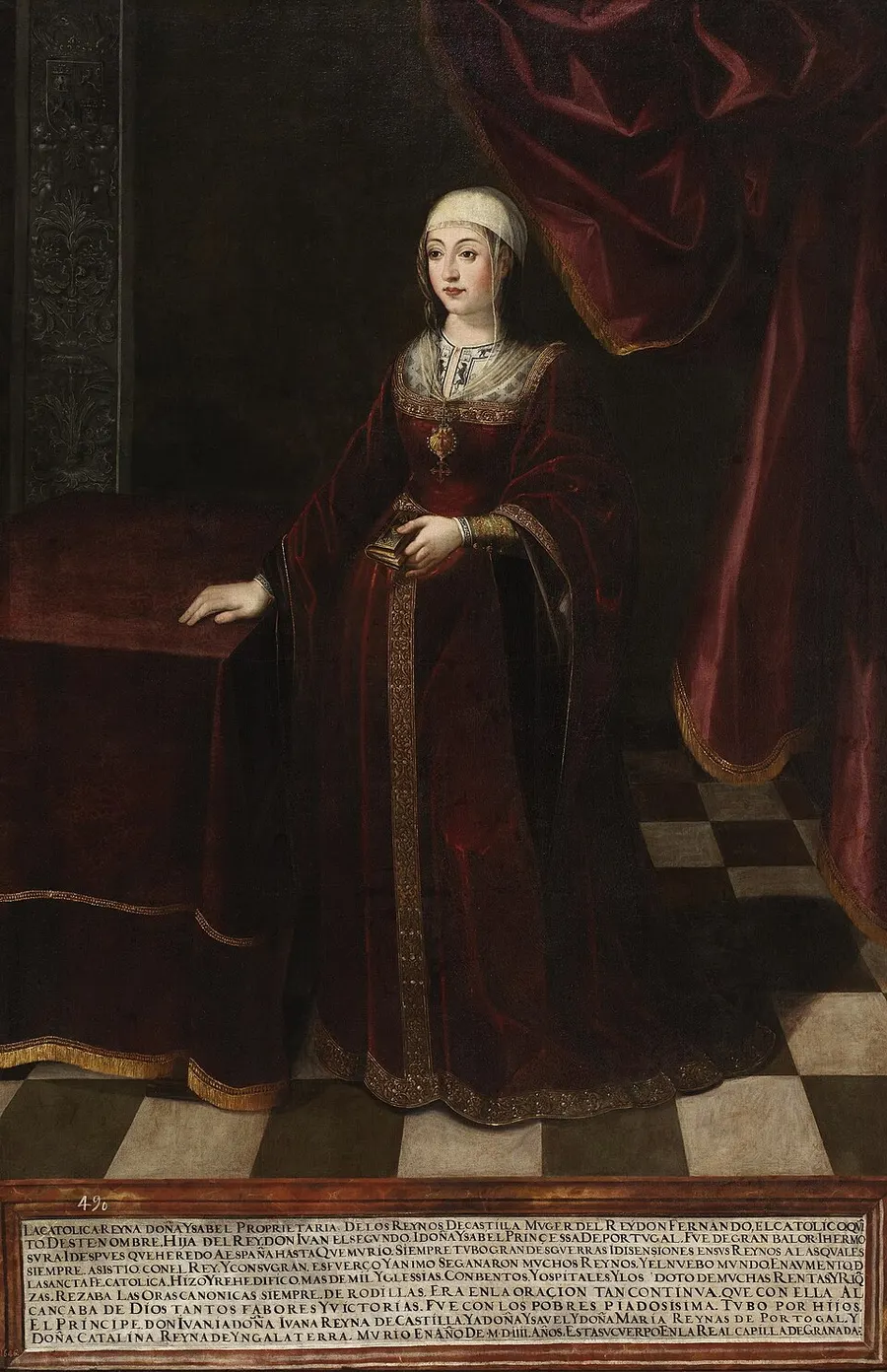
Isabella I of Castile
Isabella I of Castile · Museo del Prado

Columbus’s idea of a westward voyage to find a new route to Asia had already been refused by several courts, and Isabella, after some hesitation and weighing, at last decided to fund the uncertain voyage (a popular story that she pawned her jewels to raise the money is of disputed truth among historians). In 1492 Columbus’s fleet set sail west and that same year reached the Caribbean, opening centuries of close contact between Europe and the Americas.

The Surrender of Granada

In January 1492, the combined forces of Isabella and Ferdinand took Granada, the last Islamic polity of the Iberian Peninsula; Isabella attended the surrender ceremony in person, ending the nearly eight-century "Reconquista" — making that year a turning point of great symbolic weight in Spanish history.

Version differences

Whether she pawned her own jewels to fund Columbus’s voyage — a widely told claim — is held in modern historical scholarship more likely to be a later romanticization; the actual financial arrangements of the Spanish crown at the time were more complex.

Relationships

Echoes today

Below are how modern works borrow or reinterpret this name or story — not the original material. The two differ, so keep them apart.

"The Catholic Monarchs" (a historical title)Isabella and Ferdinand were granted the title "the Catholic Monarchs" by the pope for their religious policy, and this title is still the standard usage in Spanish history textbooks.

Appears in

Curiosity mailCurious about world civilization? Leave your email — we’ll tell you when there’s something worth a look.

Free · unsubscribe anytime · Privacy