Last Tudor Queen of England, Maker of a "Golden Age"
Those Who Drew the Lines on the Map · Founders & Monarchs
The Tudor DynastyThe Anglo-Spanish WarA Flourishing of the Arts
Who they are
Elizabeth I (1533–1603) was the daughter of Henry VIII and Anne Boleyn, who reigned 45 years (1558–1603), never married, and was called "the Virgin Queen." Under her rule England defeated the Spanish Armada (1588), overseas exploration and trade began to expand, and drama and literature flourished as never before under court patronage — Shakespeare came to prominence in the later part of her reign — a period often called the "Elizabethan Golden Age" in English history. Never marrying, she left the Tudor dynasty without an heir, and the throne passed to the Scottish house of Stuart.
Primary sourcesWilliam Camden, Annales: The History of ElizabethBritish royal archives
Key stories
"I Have the Heart and Stomach of a King"
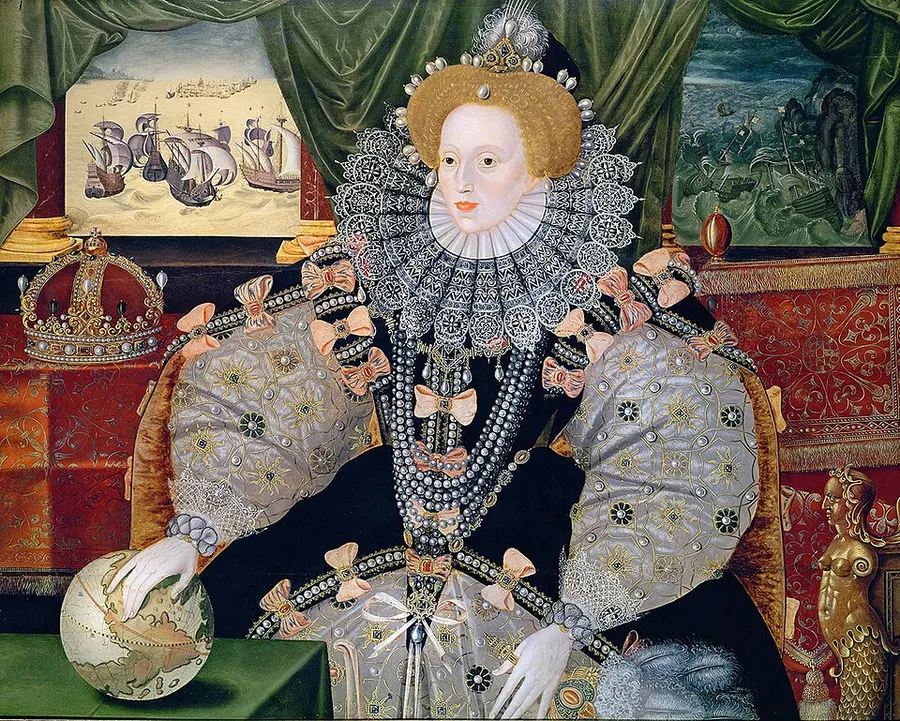
Elizabeth I, the Armada Portrait · c. 1588
On the eve of the Spanish Armada in 1588, Elizabeth went in armor to the camp at Tilbury and addressed the assembled troops: "I know I have the body of a weak and feeble woman, but I have the heart and stomach of a king, and of a king of England too." The English navy then, aided by weather and nimble tactics, crippled the Spanish fleet — a victory that became a landmark start of England’s rise at sea.
A Political Game of Lifelong Celibacy
Elizabeth received marriage proposals from many royal houses throughout her life, but always delayed and refused on various pretexts, wielding the possibility of her marriage as a diplomatic bargaining chip again and again in England’s dealings with the Continental powers, and in the end never married — a choice that both kept foreign powers from reaching English royal authority through marriage and left the Tudor dynasty heirless at her death.
Below are how modern works borrow or reinterpret this name or story — not the original material. The two differ, so keep them apart.
The "Elizabethan era" (a term of periodization)Still the standard term in the study of English literary and cultural history for this period of cultural flourishing in the later sixteenth century.
The film series ElizabethStarring Cate Blanchett, an artistic screen rendering of her reign.