Castilian Knight, Legendary Military Hero of the Reconquista
One Story Remembered for Life · Small Roles, Famous Names
The ReconquistaCastileKnightly Legend
Who they are
Rodrigo Díaz de Vivar (c. 1043–1099), honored by the Moors for his military skill as "El Cid" (from the Arabic for "lord"), was the most legend-laden Castilian knight of the "Reconquista" on the Iberian peninsula. His life was of a complex course: exiled by the king of Castile over a political entanglement, he even fought for a time in the service of a Moorish ruler, and at last conquered and ruled Valencia. His deeds, heavily worked up by the medieval epic The Song of the Cid, made him a figure symbolizing the spirit of "chivalry" and of "reconquest" in the historical memory of the Spanish nation; the balance between the historical truth of his life and its literary elaboration is itself a thing to weigh with care in studying this history.
Primary sourcesThe medieval epic The Song of the CidContemporary Arabic and Christian sources
Key stories
The Knight in Exile
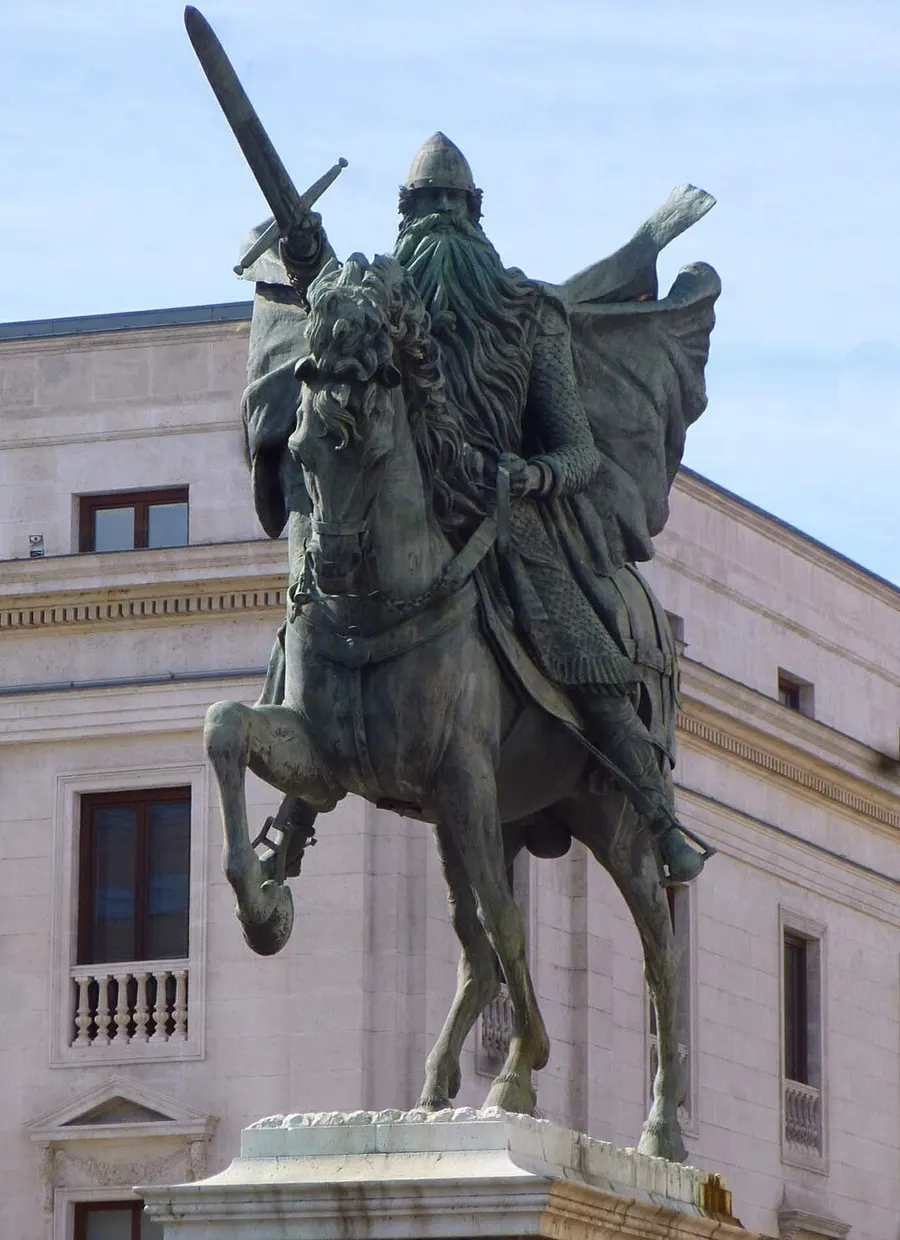
Equestrian statue of El Cid, Burgos · photograph, CC0
El Cid, caught up in a court political entanglement, was exiled by the Castilian king Alfonso VI, and, stripped of fief and standing, led an army of loyal followers to campaign here and there for his living — an episode of distinctly "wandering knight" color that, later worked up by literary works such as The Song of the Cid, shaped his legendary image as one who feared no power and carved out his deeds by his own hand.
The Legend of Charging on Horseback After Death
A popular legend holds that El Cid died on the eve of the defense of Valencia, and his followers, to raise morale, strapped his body upright on his war-horse and sent it forth armored into battle once more; the Moors, seeing it, thought El Cid still alive and were struck with dread, and the whole army’s spirit soared. The episode is of heavily literary, legendary color, plainly at odds with rigorous historical record, but vividly conveys the mythologized legendary standing he was given after death.
Version differences
As a literary epic, The Song of the Cid gives his life a considerable heroizing embellishment, and compared with the more careful contemporary Arabic and Latin sources it contains no little fiction and exaggeration — a thing to weigh with care in studying this history.
Below are how modern works borrow or reinterpret this name or story — not the original material. The two differ, so keep them apart.
The film El CidThe 1961 Hollywood epic El Cid, starring Charlton Heston, is one of the most influential screen renderings of this legend in twentieth-century popular culture.