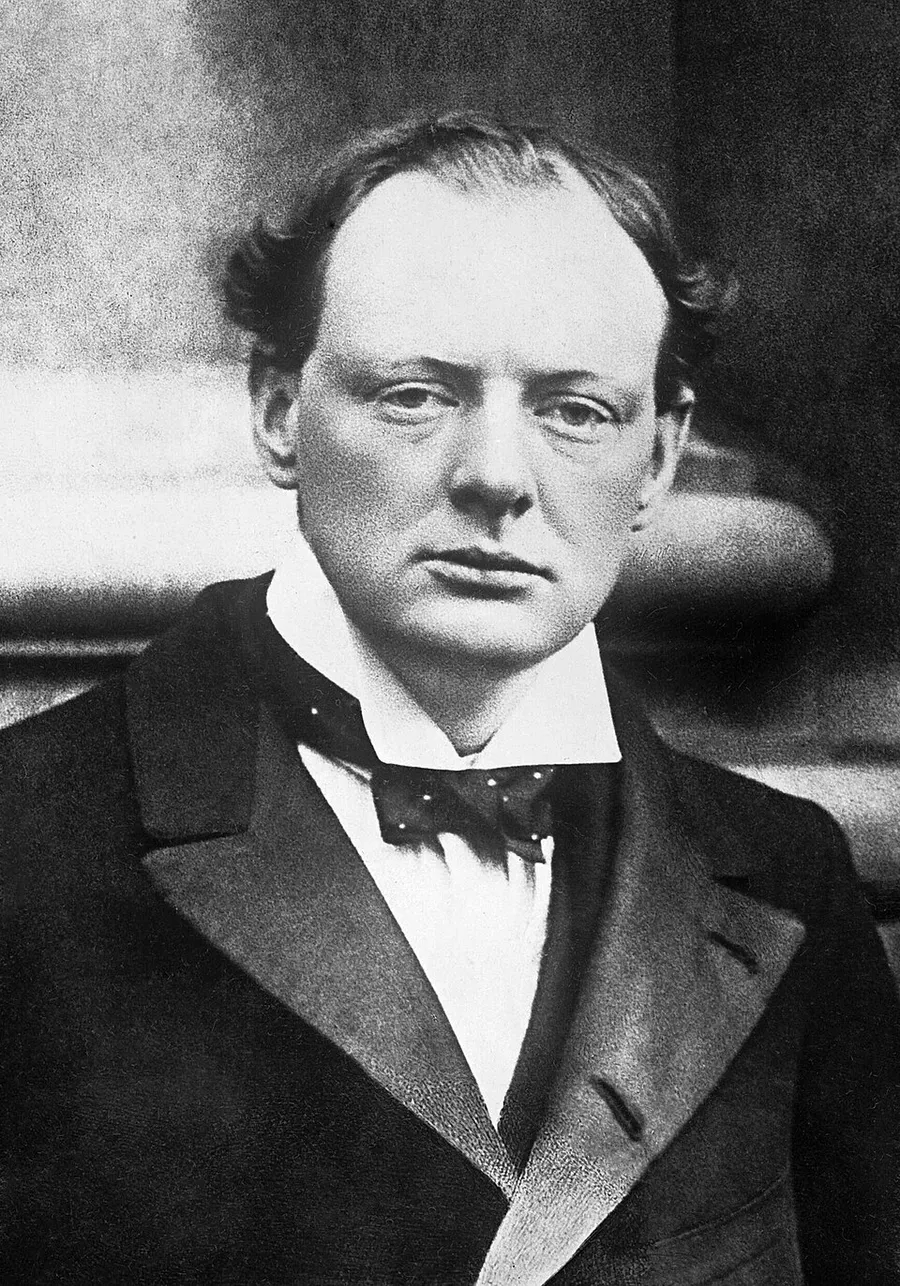
British Prime Minister Who Led Britain’s Resistance to Nazi Germany in WWII
Those Who Turned a Ruler’s Decision Into Reality · Generals & Statesmen
World War IIBritish Prime MinisterThe Iron Curtain Speech
Who they are
Winston Churchill (1874–1965) became Prime Minister in 1940, at the crisis when Britain faced the threat of Nazi German invasion, rallying British morale with his powerfully rousing wartime speeches, firmly refusing to make peace with Nazi Germany, and leading Britain to resist alone through the hardest period until the US and USSR joined the Allies and the war was won. He unexpectedly lost the postwar election, but in 1946 in the US gave the "Iron Curtain speech," first declaring that "from the Baltic to the Adriatic, an iron curtain has descended across the Continent" — one of the best-known formulations of the coming Cold War’s ideological divide.
Primary sourcesChurchill, The Second World WarRecords of speeches in the House of Commons
Key stories
"Blood, Toil, Tears, and Sweat"
Winston Churchill · Imperial War Museums photograph
On becoming Prime Minister in May 1940, Churchill gave his inaugural speech to the House of Commons, saying he had nothing to offer "but blood, toil, tears, and sweat," and after the Dunkirk evacuation gave his famous "we shall fight to the end" speech — speeches that greatly heartened British morale under the relentless advance of Nazi Germany.
The "Iron Curtain Speech"
In 1946, out of office, Churchill was invited to speak at Fulton in the US and declared that "from Stettin in the Baltic to Trieste in the Adriatic, an iron curtain has descended across the Continent," vividly depicting the postwar reality of Europe divided between the Soviet and Western camps — and the word "iron curtain" became one of the most widely spread images of the Cold War.
Below are how modern works borrow or reinterpret this name or story — not the original material. The two differ, so keep them apart.
"Iron curtain" (an idiom)The phrase Churchill used in his Fulton speech is still a common idiom for a strict barrier of political, informational, or cultural division.
Churchill’s cigar and "V" signHis signature cigar image and the "V" sign for victory are among the most widely known visual symbols of a twentieth-century political figure.