🏰HistoryEuropean History
🏠 Home🌐 中文
European HistoryEUROPA
🗡️

Cervantes

Original nameMiguel de Cervantes

Spanish Writer, Author of Don Quixote

Those Who Changed How Humanity Thinks · Masters & Thinkers
Spanish Golden Age LiteratureDon QuixoteThe Founding of the Modern Novel

Who they are

Miguel de Cervantes (1547–1616) was a Spanish writer who in his youth served as a soldier and was wounded at the Battle of Lepanto, leaving his left hand crippled for life, then spent five years as a captive of North African pirates — a life of hardship and repeated imprisonment. His late work Don Quixote, telling the absurd adventures of a country gentleman obsessed with chivalric romances who imagines himself a knight-errant, is acknowledged as one of the founding works of the modern novel in the West, and the figure of "Don Quixote" became a cultural symbol of "the idealist who chases a dream heedless of reality," still widely cited in many languages.

Primary sourcesCervantes, Don QuixoteSpanish royal archives

Key stories

The "One-Handed Man" of Lepanto
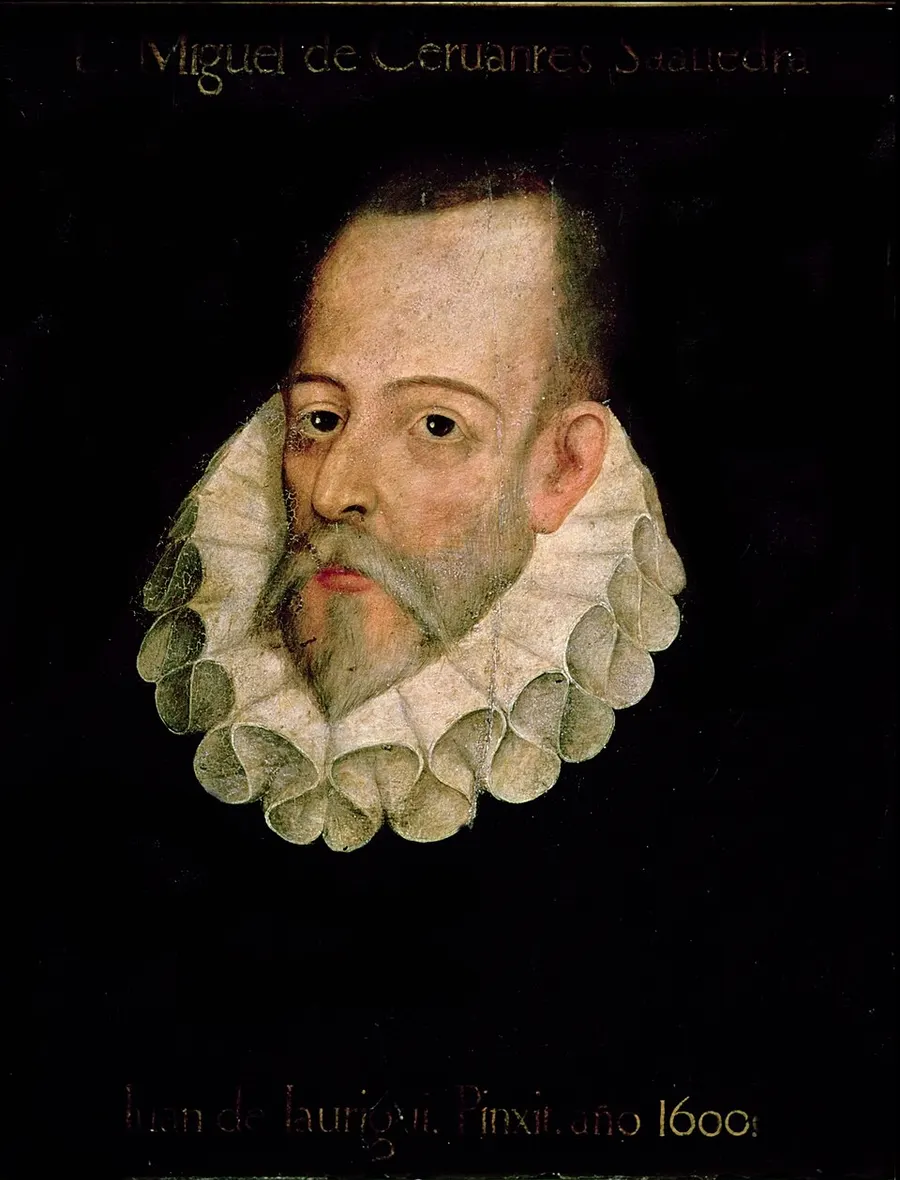
Miguel de Cervantes (attributed)
Miguel de Cervantes (attributed) · attributed to Juan de Jáuregui

In his youth Cervantes took part in the 1571 naval Battle of Lepanto between the Christian allied fleet and the Ottoman fleet, gravely wounded so that his left hand was crippled for life, but late in life he still took pride in it, calling himself "the one-handed man of Lepanto" and holding the wound the proudest mark of merit of his life.

Tilting at Windmills

The most widely known episode of Don Quixote is the hero mistaking windmills in a field for giants and charging with his lance, ending in a comic tumble. "Tilting at windmills" became an international idiom for the unrealistic act of battling in vain against imaginary enemies.

Relationships

Echoes today

Below are how modern works borrow or reinterpret this name or story — not the original material. The two differ, so keep them apart.

"Tilting at windmills" (an idiom)This image from Don Quixote has become an internationally common idiom for battling in vain and unrealistically against imaginary foes.

Appears in

Curiosity mailCurious about world civilization? Leave your email — we’ll tell you when there’s something worth a look.

Free · unsubscribe anytime · Privacy