🎨ArtArt History
🏠 Home🌐 中文
Art HistoryMASTERS
🌗

Rembrandt

Original nameRembrandt

Master of the Dutch Golden Age, of light and human nature

Putting the Human Back at the Center · Renaissance & Baroque
PaintingPortraitsLightSelf-Portraits

Who they are

The greatest painter of the Dutch Golden Age. He inherited and developed Caravaggio’s chiaroscuro, letting light rise gently out of darkness to illuminate the finest emotion on a face. He painted nearly a hundred self-portraits over his life — from the spirited youth to the bankrupt, destitute old man — recording, honestly, on his own face, the years and fortune. The Night Watch broke the stiff arrangement of the group portrait, setting the scene in motion.

Primary sourcesThe Night Watch (Rijksmuseum, Amsterdam)Rembrandt’s self-portraits

Key stories

Painting His Own Face for a Lifetime
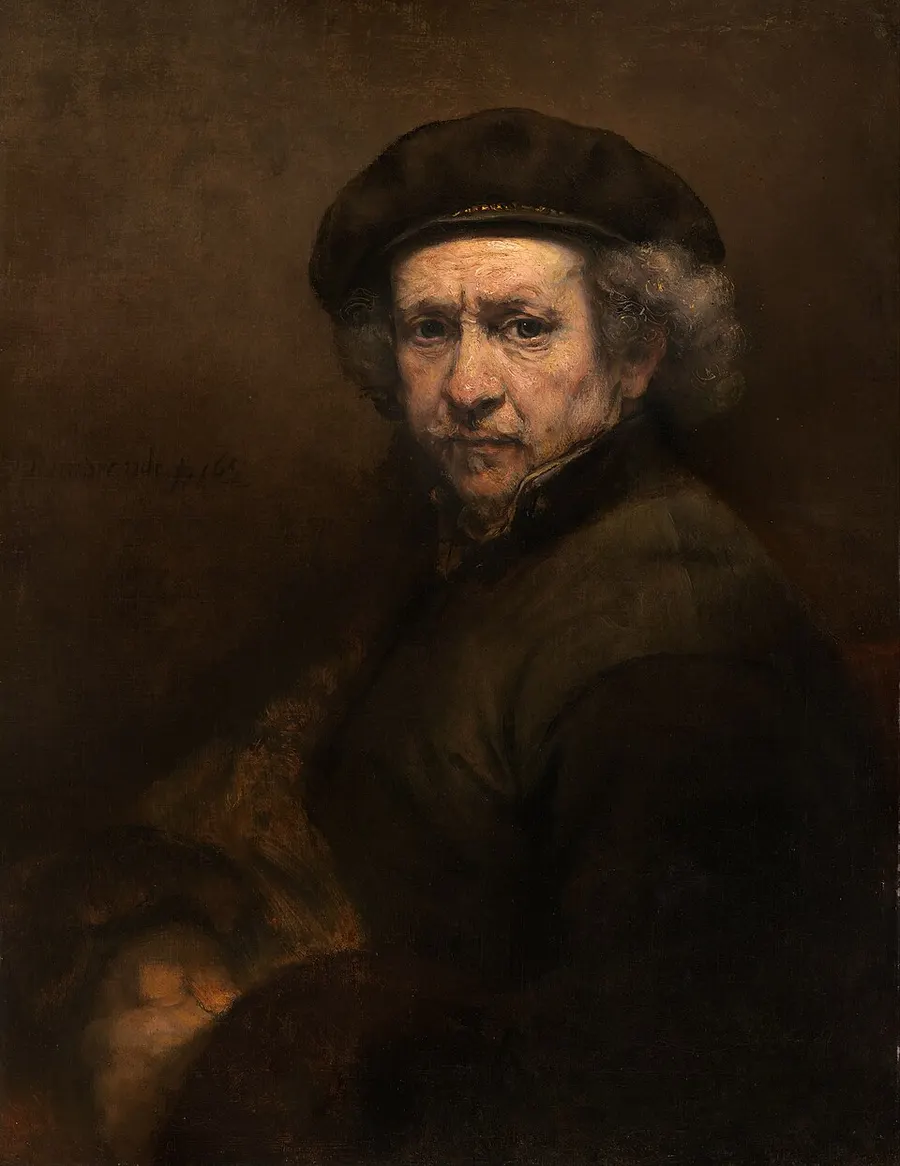
Self-Portrait
Self-Portrait · Rembrandt, 1659, National Gallery of Art, Washington

From his twenties until just before his death, Rembrandt kept painting self-portraits, leaving nearly a hundred. He did not flatter himself: the conceit of youth, the composure of middle age, the gauntness and age of his bankrupt later years — all painted without flinching. Seen together, these self-portraits are an autobiography written in oil, honest to the point of cruelty.

Relationships

Echoes today

Below are how modern works borrow or reinterpret this name or story — not the original material. The two differ, so keep them apart.

"Rembrandt lighting"The classic portrait lighting that leaves a triangle of light on one cheek is named "Rembrandt lighting" outright, still a staple of portrait photography.

Appears in