Master of the Northern Renaissance, patriarch of print and self-portrait
Putting the Human Back at the Center · Renaissance & Baroque
PrintmakingGermanySelf-PortraitDrawing
Who they are
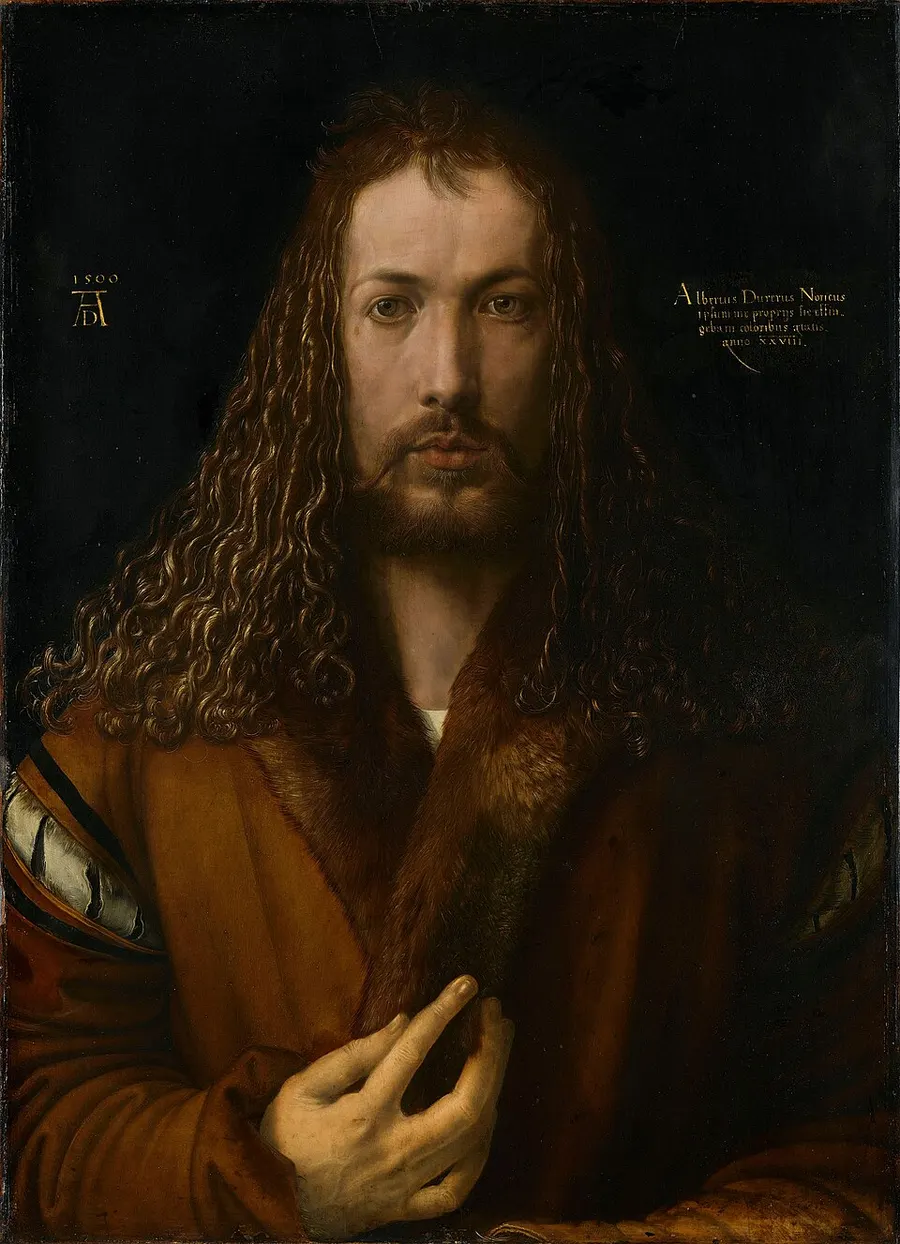
The greatest artist of the German Renaissance, who carried Italy’s perspective, proportion, and humanist ideals back north. He above all raised woodcut and engraving into an independent high art, letting art be reproduced and widely circulated for the first time. He painted many self-portraits, one making himself look strikingly like a frontal image of Christ — a staggering self-assertion for its time: the artist too is a creator.
Primary sourcesYoung Hare, Great Piece of Turfthe engraving Melencolia Imany self-portraits
Key stories
A Hare and a Patch of Grass
Self-Portrait at 28 · Dürer, 1500, Alte Pinakothek
Dürer’s watercolors Young Hare and Great Piece of Turf render every hair of a hare, every blade of a patch of grass, in exquisite detail. In an age when others painted only gods and saints, he gravely contemplated an ordinary hare — this curiosity and reverence for all of nature is itself the embodiment of the Renaissance spirit.
Below are how modern works borrow or reinterpret this name or story — not the original material. The two differ, so keep them apart.
Master of print and of "artistic" consciousnessDürer raised the print into an independent, reproducible art; his Christ-like self-portrait is seen as a landmark image of the awakening self-consciousness of the artist.