The Baths of Caracalla
📍 Southern CityAn imperial bath complex for 1,600 bathers at once — ancient Rome made "taking a bath" a civic social hub.
- 🦅 Empire
Empire · Far More Than a Bath
Completed in the 3rd century, it held not just hot and cold pools but gyms, libraries, and gardens.
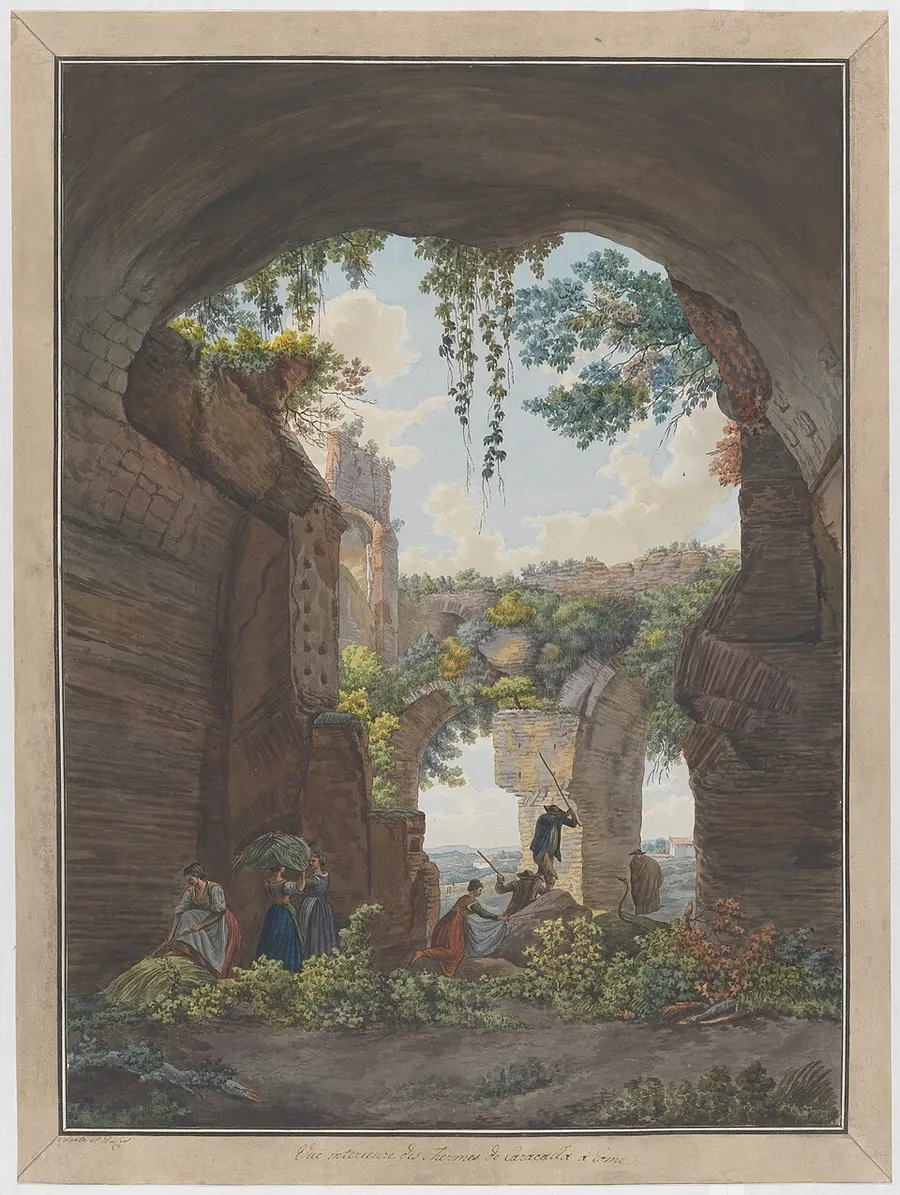
The vast baths Emperor Caracalla built were far more than a place to wash: three pools (cold, warm, and hot), steam rooms, exercise grounds, a bilingual library, shops, and gardens — a social and leisure center open to citizens for free. Beneath lay an enormous network of furnaces and water pipes, kept burning day and night by slaves. Rome turned the daily bath into a palace-scale public work — a feat of "public welfare" with few equals in the ancient world.
Sources:The site of the Baths of Caracalla · Studies of ancient Roman public baths
- 📍 Today
↑ Because of the last layer:Precisely because it was built so vast and strong, even after a thousand years of ruin it left walls tall enough to serve as a stage.
Today · An Opera House in the Ruins
Each summer, the Rome Opera turns these towering ruins into an open-air stage.
The marble decoration was long ago carried off, but the brick vaults, tens of metres high, still stand. Each summer today the Rome Opera builds a stage among these ancient ruins, performing operas like Aida — the audience listening beneath bath-walls two thousand years old. A place once for bathing and idle talk still does, in another form, its old job: bringing Romans together.
Sources:Summer season of the Teatro dell'Opera di Roma
🔭 Meanwhile in the world
In Rome:The Baths of Caracalla are completed.
At the same time, elsewhere:At the same time, the Han was on the eve of fragmenting into the Three Kingdoms.
Free email course
Rome in 7 Lessons
Before you go, load the stories behind every stone. Seven emails, Colosseum to Sistine — so on the ground you see more than ruins.
That email didn’t look right — try again?
Free · unsubscribe anytime · Privacy