🪓MythologyNorse Mythology
🏠 Home🌐 中文
Norse MythologyEDDA

Tyr

Old NorseTýrAlsoTiw

God of war and oaths, the one-handed brave

Gods of Asgard · The Æsir
WarJusticeOathsCourage

Who they are

One of the oldest war gods, keeper of the law of war and the binding force of oaths. He is remembered for a sacrifice all his own: to bind the wolf Fenrir, knowing he would lose his right hand, he still laid it in the wolf’s jaws as a pledge of good faith. When the gods’ deception was exposed, he lost that hand as promised — in the Norse mind, exactly the weight a god of oaths should bear.

Primary sourcesSnorri, Prose Edda, "Gylfaginning"

Key stories

A Hand in the Wolf’s Jaws
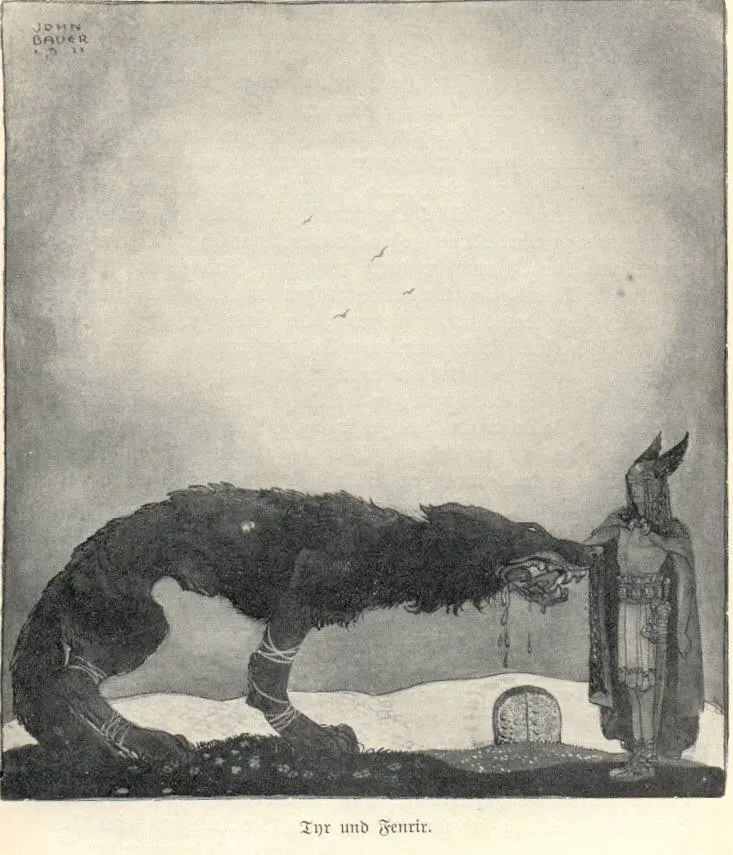
Tyr and Fenrir
Tyr and Fenrir · John Bauer, 1911

Fenrir grew ever larger, and the gods forged a magic ribbon to bind it. The cunning wolf demanded that a god lay a hand in its mouth as surety before it would let itself be bound. The gods looked at one another, and only Tyr held out his right hand. The ribbon tightened, the wolf could not break free, and it bit down — Tyr lost his hand, but secured the gods’ one defense against the end of the world.

Relationships

Echoes today

Below are how modern works borrow or reinterpret this name or story — not the original material. The two differ, so keep them apart.

TuesdayEnglish "Tuesday" comes from "Tiw’s day" (Tiw being Tyr) — the name of this one-handed war god hides in every Tuesday.
A symbol of "the price of faith"Tyr’s choice to lay his hand in the wolf’s jaws knowing he would lose it is often cited as a symbol of "upholding oath and order through personal sacrifice."

Appears in