Dragon-slayer, the heart of the Norse heroic legend
Saga Hardcases · Legendary Heroes
Dragon-slayingValorTreasureTragedy
Who they are
The hero of the Völsung line, the most renowned dragon-slayer of Norse and Germanic legend. With the reforged sword Gram he slew Fáfnir, the dragon that lay coiled upon its gold, and tasting the dragon’s blood he understood the speech of birds and learned where danger and treasure lay. His whole life turned toward tragedy over a cursed ring, and his triangle with the Valkyrie Brynhildr and the princess Guðrún forms the backbone of the entire Völsunga saga — and inspired Wagner’s opera cycle Der Ring des Nibelungen.
Primary sourcesThe heroic lays of the Poetic EddaVölsunga saga
Key stories
Dragon’s Blood and the Speech of Birds
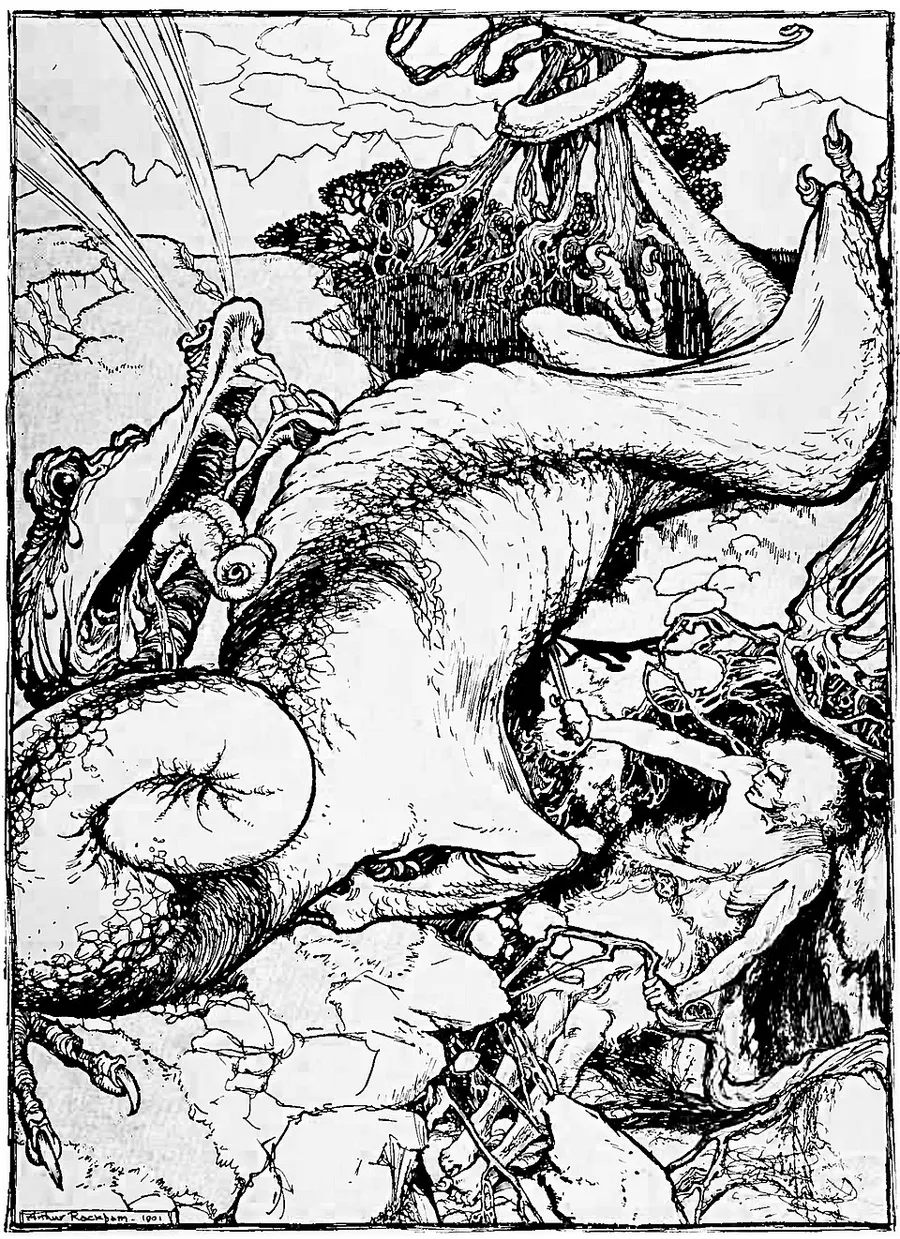
Sigurd slays Fafnir · Arthur Rackham
Guided by the smith Regin, Sigurd slew the dragon Fáfnir, and by chance licked the dragon’s blood from his fingertip — suddenly he understood the whispering of the birds in the branches, who warned him that Regin meant to kill him and take the treasure alone. Sigurd struck first, and carried off that mountainous but curse-laden gold, taking on the doom of the ring ever after.
The Cursed Ring
Among the treasure was the ring Andvaranaut, bearing the curse that its holder must die. Sigurd gave it to Brynhildr, but then, under a magic potion, forgot all that had passed and married Guðrún instead. When the truth came out, Brynhildr in grief and fury contrived Sigurd’s death, then threw herself onto his pyre — one ring, and many lives undone, the height of Norse tragedy.
Version differences
Sigurd (Norse) and Siegfried (the German Nibelungenlied) are two branches of the same legend, differing markedly in detail; Wagner’s opera reworks them further still. This site follows the Norse Völsunga saga.
Below are how modern works borrow or reinterpret this name or story — not the original material. The two differ, so keep them apart.
Wagner’s Der Ring des NibelungenThe dragon-slaying and ring-curse of Sigurd/Siegfried is the core material of Wagner’s four-opera cycle, and through it deeply shaped the entire Western fantasy motif of the "cursed magic ring."
Tolkien’s The Lord of the RingsThe core idea of "a ring that brings ruin" is widely acknowledged to draw inspiration from the Norse legend of the ring Andvaranaut.