🪓MythologyNorse Mythology
🏠 Home🌐 中文
Norse MythologyEDDA
🧵

The Norns

Old NorseNornir

Weavers of fate — past, present, and future

Small Roles, Key Moments · Mortals & Beings
FateTimeWeaving

Who they are

The three goddesses who govern fate, named Urðr (what has been), Verðandi (what is), and Skuld (what shall be). They dwell by the well of fate beneath a root of the World Tree, watering the root day by day to keep it from decay, and weaving the fate-thread of every life — god and human alike. In the Norse worldview even Odin cannot defy the fate the Norns have set: the end of Ragnarök was written long ago.

Primary sourcesPoetic Edda, "Völuspá"Snorri, Prose Edda

Key stories

The Well of Fate by the Root
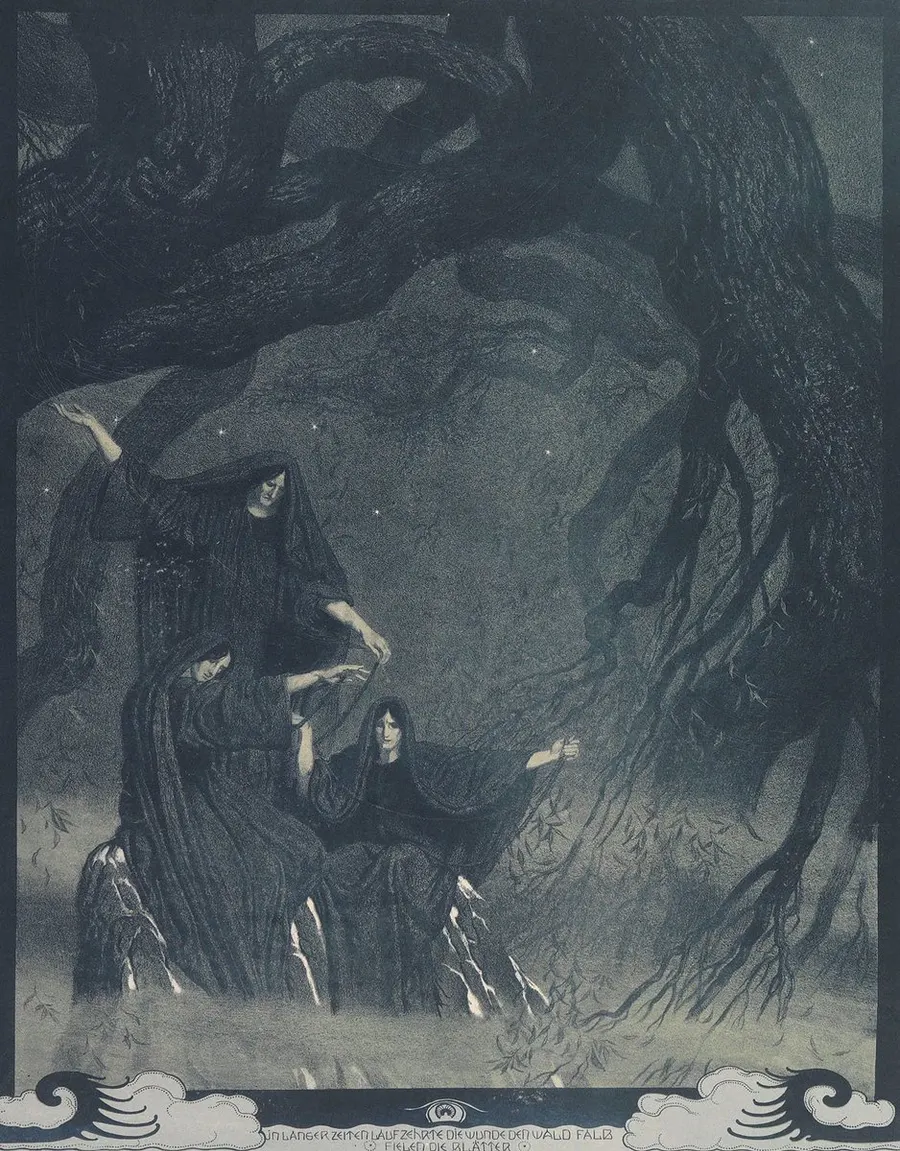
The Norns
The Norns · 19th-century illustration

The three Norns keep watch beneath a great root of the World Tree, where the well of Urðr wells up. Each day they draw the holy water and white clay to water the root, sustaining the World Tree that the venom-dragon gnaws and that decays without end. Once the fate-thread they weave is set, neither god nor human can change it — this is the wellspring of the deep sense of doom in Norse myth.

Relationships

Echoes today

Below are how modern works borrow or reinterpret this name or story — not the original material. The two differ, so keep them apart.

An echo of the Greek FatesThe three fate-weaving Norns echo the Greek Moirai and the three witches of Shakespeare’s Macbeth, a Norse representative of the Western image of a "threefold goddess of fate."

Appears in