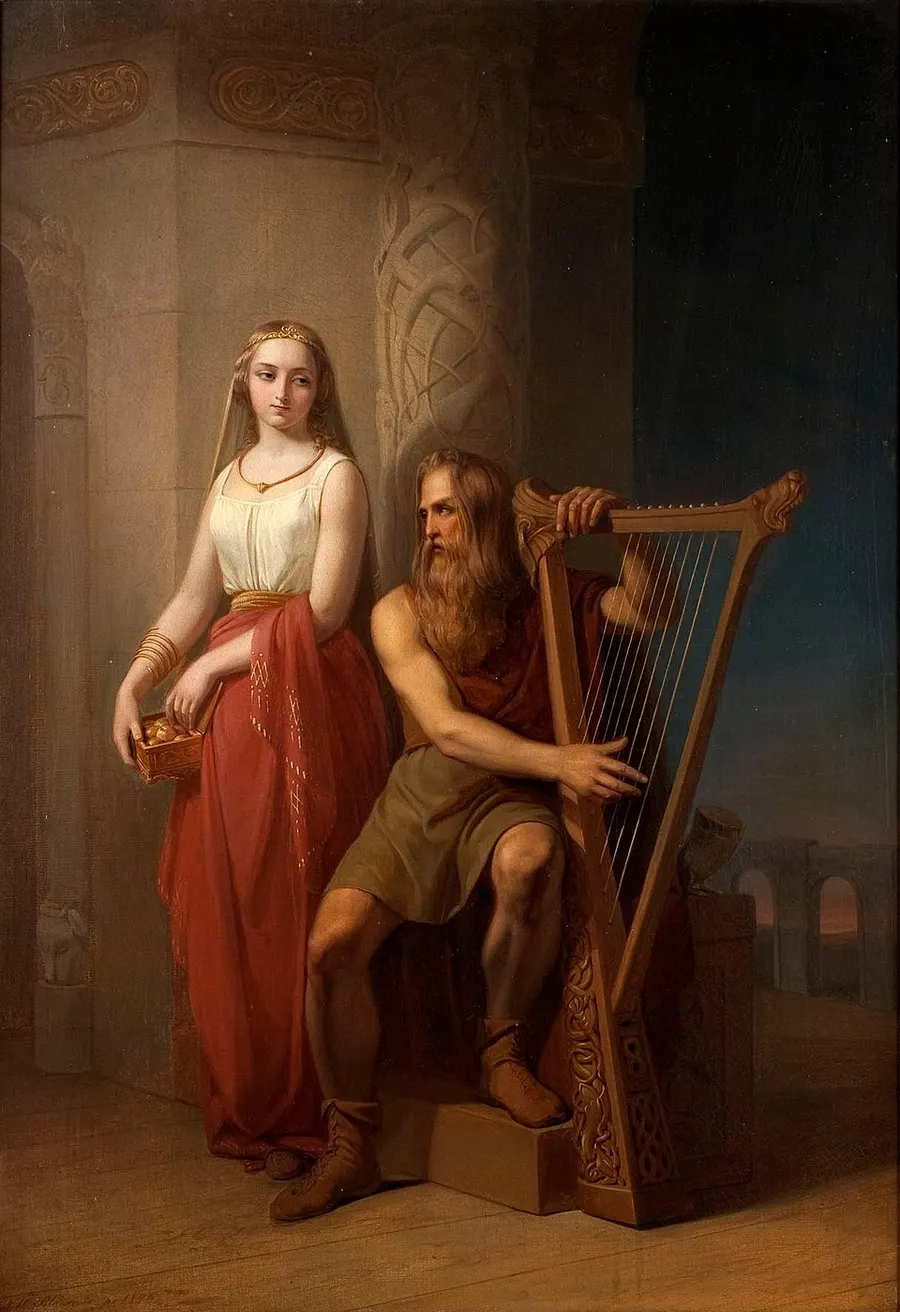
The god of poetry and eloquence, husband of the youth goddess Iðunn. Runes are carved across his tongue; his words are as verse and his eloquence without check, and he is the singer who greets the honored dead at the feast of Valhalla and sings of their deeds. In a Norse culture that prized recitation and saga, the god of the poet’s art held a singular reverence.
Whenever a brave one of the slain is brought into Valhalla by the Valkyries, Bragi steps forward to greet and to sing the welcome. In the heart of a people who held poetry and glory as equals, to be met in verse by Bragi was itself the highest praise.
Below are how modern works borrow or reinterpret this name or story — not the original material. The two differ, so keep them apart.
The etymological echo of "the poet’s art"The Old Norse root bragr, meaning "poetry / the best," is cognate with Bragi’s name, and so the god of poetry is often seen as the personification of the Norse culture in which "poetry is glory."