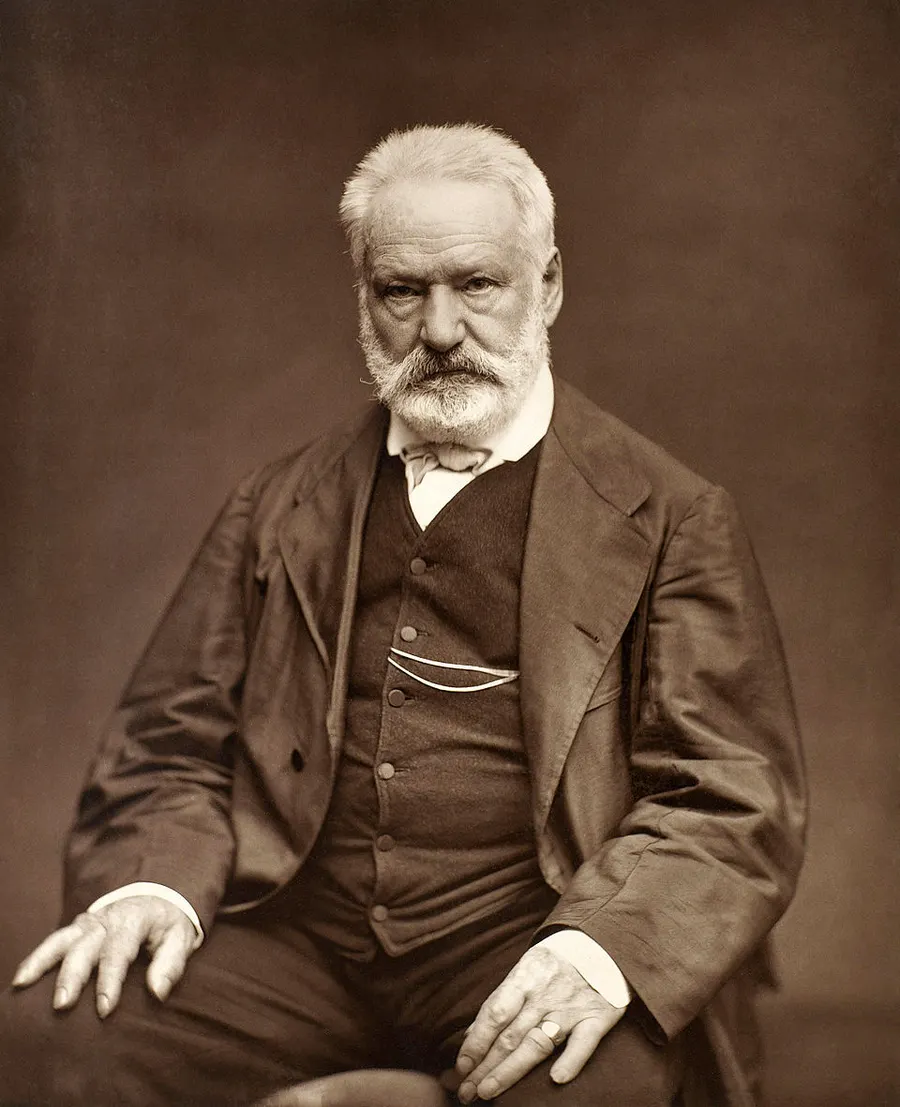
Author of Les Misérables, leader of French Romantic literature
Those Who Packed the World into a Novel · The Modern Novel
French NovelLes MisérablesHumanityRomanticism
Who they are
The standard-bearer of French Romantic literature, at once poet, novelist, and fighter. Les Misérables, through the story of Jean Valjean, hunted all his life for stealing a loaf of bread, writes to the full the suffering of the lowly, the coldness of the law, and the redemption of human nature; The Hunchback of Notre-Dame lets the tragedy of Quasimodo and the gypsy girl throw into relief the mismatch of beauty and goodness. He wielded literature as a weapon to cry out for the poor and for justice — the conscience of nineteenth-century France.
Primary sourcesVictor Hugo, Les MisérablesThe Hunchback of Notre-Dame
Key stories
A Loaf of Bread and a Lifetime’s Pursuit
Victor Hugo · photograph by Étienne Carjat, 1876
Jean Valjean, for stealing a loaf to feed a starving nephew, is sentenced to hard labor and hunted all his life. Hugo asks with this story: when a society drives the man who stole bread into a lifelong criminal, whose is the crime? Les Misérables endures precisely because it always stands on the side of the insulted and the injured.
Below are how modern works borrow or reinterpret this name or story — not the original material. The two differ, so keep them apart.
An evergreen subject for musical and filmLes Misérables became one of history’s most successful musicals, and the hunchback of Notre-Dame is a household image; his humane cry for the weak still finds universal echo.