🎨ArtArt History
🏠 Home🌐 中文
Art HistoryMASTERS
🗿

Michelangelo

Original nameMichelangelo

Master of sculpture and fresco, of David and the Sistine ceiling

Putting the Human Back at the Center · Renaissance & Baroque
SculptureFrescoAnatomyThe Human Body

Who they are

The most powerful artist of the Renaissance, who thought of himself as a sculptor yet was forced by the Pope to paint, neck craned upward, the ceiling of the Sistine Chapel. The bodies under his brush and chisel bulge with muscle and heroic force, as if about to tear free of the stone or the wall. His David stood a discarded block of marble up into the summit of the ideal human form, and the ceiling’s Genesis painted the Bible’s opening as a symphony of bodies.

Primary sourcesDavid (Galleria dell’Accademia, Florence)The Sistine Chapel ceiling and The Last Judgment (Vatican)

Key stories

Four Years on His Back, Painting a Ceiling
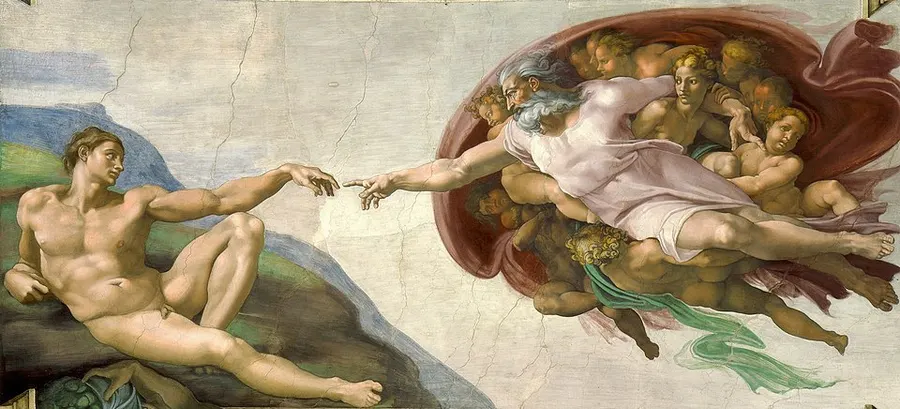
The Creation of Adam (Sistine ceiling, detail)
The Creation of Adam (Sistine ceiling, detail) · Michelangelo, 1512, the Vatican

Pope Julius II ordered Michelangelo to paint the Sistine Chapel ceiling. He resisted — he felt he was a sculptor, not a painter. But once he began, he raised scaffolding, craned his neck, paint dripping into his eyes, and painted for a full four years, completing over three hundred figures alone. When it was done his neck could barely straighten again, but he had left the world the most magnificent ceiling in the history of art.

Relationships

Echoes today

Below are how modern works borrow or reinterpret this name or story — not the original material. The two differ, so keep them apart.

The touching fingers of The Creation of AdamThe near-touching fingertips of God and Adam on the Sistine ceiling are among the most quoted and parodied images in Western art, a symbol of the hair’s-breadth between the divine and the human.

Appears in