🎨ArtArt History
🏠 Home🌐 中文
Art HistoryMASTERS
🖌️

Gu Kaizhi

Original nameGu Kaizhi

Eastern Jin painter, founder of Chinese figure painting

Another Pair of Eyes on the World · Eastern Art
Figure PaintingLine DrawingSpirit-ResonanceEastern Jin

Who they are

A painter of the Eastern Jin, revered as the first recorded master in the history of Chinese painting. He held that in painting a person what matters most is not likeness but capturing the spirit — and the spirit lies above all in the eyes. His surviving copy of the Nymph of the Luo River scroll, in lines flowing "like a silkworm spinning silk," paints the longing, never-to-be-fulfilled meeting of the poet Cao Zhi and the goddess of the Luo, setting a thousand-year model for Chinese figure painting.

Primary sourcesNymph of the Luo River (Song-dynasty copy, held in the Palace Museum and elsewhere)Admonitions of the Instructress (Tang copy, British Museum)

Key stories

The Difficulty of Dotting the Eyes
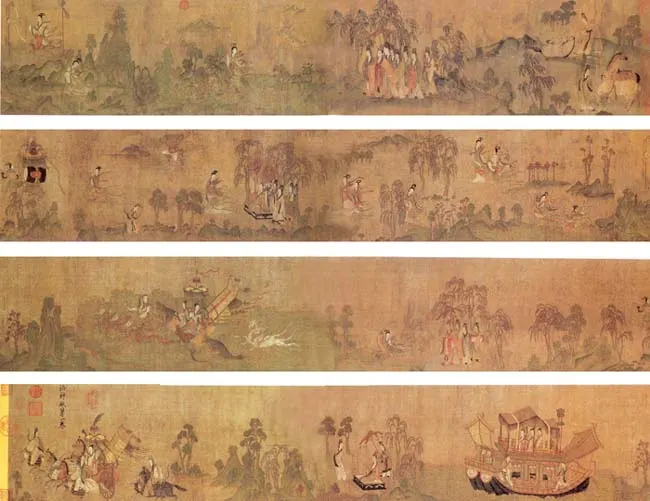
Nymph of the Luo River (Song copy)
Nymph of the Luo River (Song copy) · after Gu Kaizhi, Song-dynasty copy

When Gu Kaizhi painted figures, he would often finish the whole body yet long delay putting in the eyes. Asked why, he said: whether the limbs and form are painted beautifully hardly matters; a person’s spirit is all in these eyes. This care — like "adding the eyes to bring the dragon to life" — spoke what Chinese painting sought from the very start: not likeness of form, but likeness of spirit.

Version differences

Gu Kaizhi’s originals are all lost, and what survives are later copies; the difference between them and the originals is a long-discussed question in painting history, which this site notes.

Relationships

Echoes today

Below are how modern works borrow or reinterpret this name or story — not the original material. The two differ, so keep them apart.

The thousand-year influence of the "spirit" theoryGu Kaizhi’s call to "capture the spirit through the form" set the basic aesthetic of Chinese painting — spirit over likeness — an influence running straight through the following fifteen hundred years.

Appears in