Precursor of Romanticism, author of The Raft of the Medusa
A Century’s Duel of Reason and Passion · Neoclassicism & Romanticism
RomanticismTrue EventsSufferingDied Young
Who they are
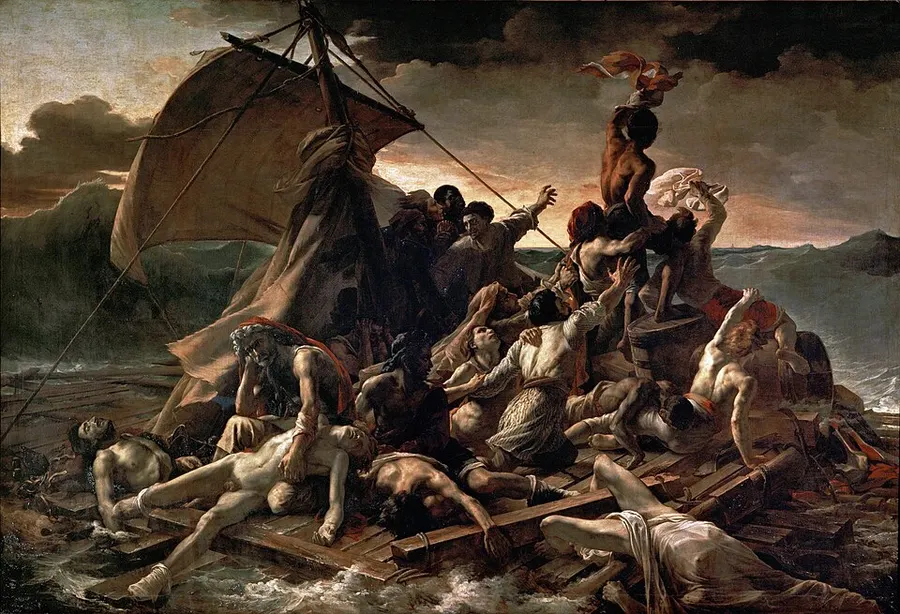
A precursor of French Romanticism who, though he lived only thirty-two years, left the painting that shook art history, The Raft of the Medusa. Rather than mythic heroes, he took his subject from a sensational shipwreck scandal of the day: a warship wrecked, the abandoned survivors on a raft enduring hunger, madness, and cannibalism. He visited hospitals and morgues to study corpses, painting this real human catastrophe as a monumental epic — an indictment, through art, of the negligent men in power.
Primary sourcesThe Raft of the Medusa
Key stories
Going to See Corpses for a Painting
The Raft of the Medusa · Géricault, 1818–1819, the Louvre
To paint truthfully the dying and the dead on the Raft of the Medusa, Géricault went to hospitals and morgues to observe the sick and study the color of corpses, even bringing rotting limbs back to his studio to draw from. What he wanted was a piercing truth — so that even through the canvas, the viewer could smell the despair of that shipwreck.
Below are how modern works borrow or reinterpret this name or story — not the original material. The two differ, so keep them apart.
The precedent of taking subject from real disasterThe Raft of the Medusa turned a contemporary shipwreck scandal into an epic-scale indictment, founding the tradition of facing real social suffering and injustice in monumental painting.