🎨ArtArt History
🏠 Home🌐 中文
Art HistoryMASTERS
🌴

Gauguin

Original namePaul Gauguin

Post-Impressionist painter, seeker of the primitive who fled to Tahiti

Carrying the Easel Outdoors · Impressionism & Post-Impressionism
PaintingSymbolismThe PrimitiveFlat Color

Who they are

A Post-Impressionist painter, once a Paris stockbroker, who in middle age abandoned his work and family to give himself wholly to painting. Weary of the elaboration and hypocrisy of Western civilization, he sailed far across the ocean to Tahiti in the South Pacific, painting the islanders and their myths in great flat expanses of intense color. What he sought was a more authentic, more "primitive" life and art, and this yearning for the non-Western deeply shaped the modern art that followed.

Primary sourcesWhere Do We Come From? What Are We? Where Are We Going? (Museum of Fine Arts, Boston)the Tahiti series

Key stories

Fleeing to the End of the World to Paint
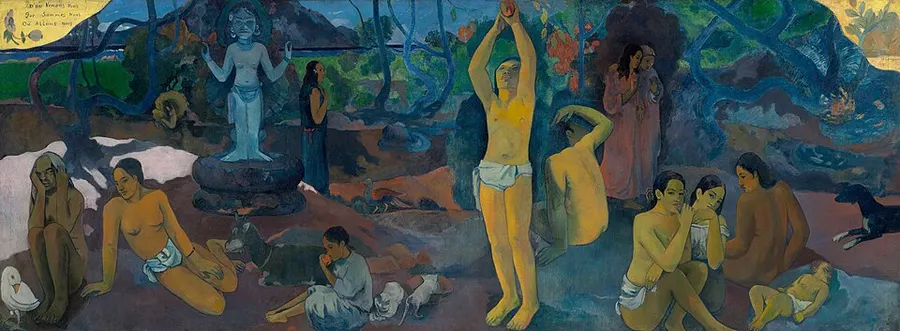
Where Do We Come From? What Are We? Where Are We Going?
Where Do We Come From? What Are We? Where Are We Going? · Gauguin, 1897–1898

Gauguin believed European civilization had made art mannered and hollow. To find something more authentic, he fled all the way to Tahiti in the South Pacific, lived among the local people, and painted their bronze bodies, bright garments, and ancient beliefs. The title of his great masterpiece is itself a string of questions: "Where do we come from? What are we? Where are we going?"

Relationships

Echoes today

Below are how modern works borrow or reinterpret this name or story — not the original material. The two differ, so keep them apart.

The romantic myth of "fleeing civilization"Gauguin’s abandoning of everything to sail for the South Pacific was written by Somerset Maugham into the novel The Moon and Sixpence, becoming the classic archetype of "the artist who flees the world."

Appears in