Master of German Romantic landscape, painter of solitude and the sublime
A Century’s Duel of Reason and Passion · Neoclassicism & Romanticism
RomanticismGermanyThe SublimeSolitude
Who they are
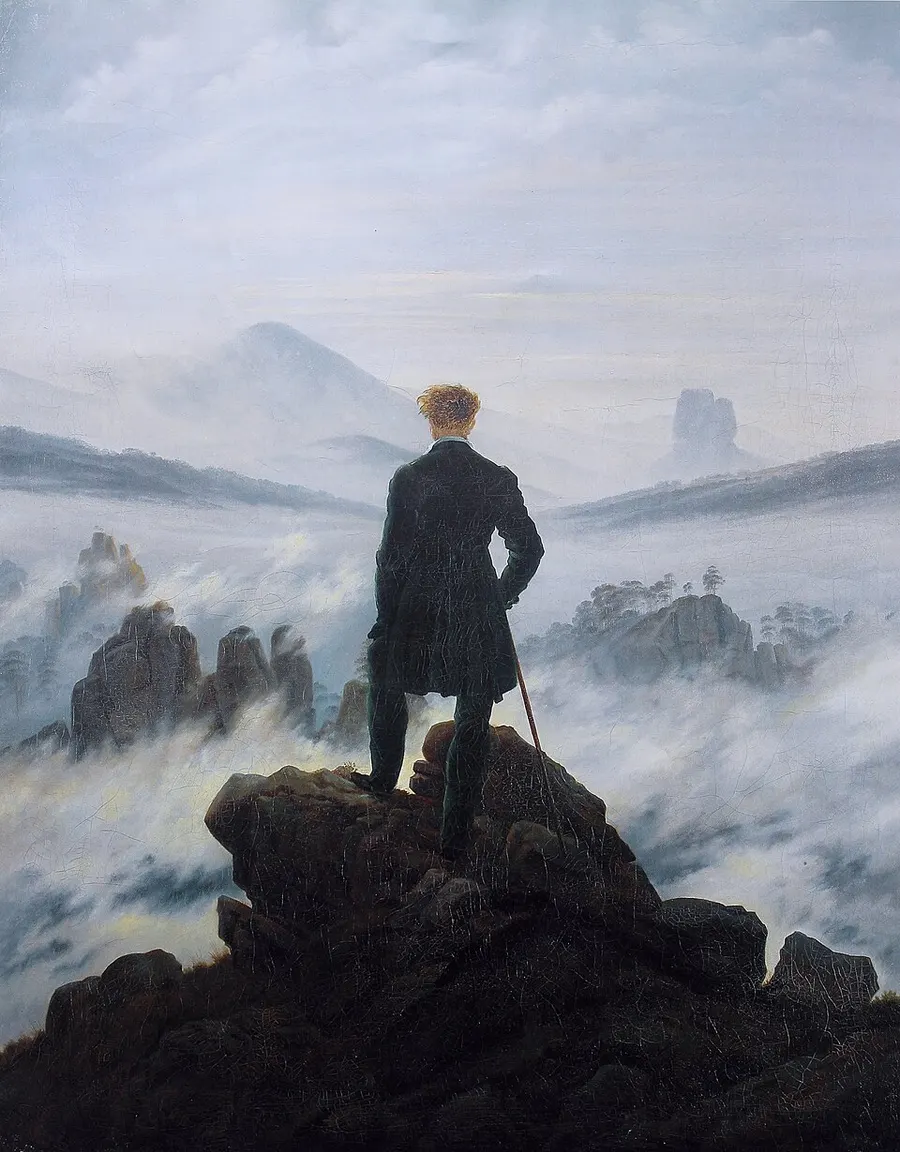
The emblem of German Romantic landscape. He painted seas of fog, barren peaks, ruins, and solitary backs, setting a tiny human alone before a vast and mysterious nature, forcing a sense of the "sublime" that mixes awe, melancholy, and the spiritual. In Wanderer above the Sea of Fog, a man stands on a summit with his back to us, gazing down at the surging clouds — that solitary contemplating back became the most famous symbol of the whole Romantic spirit.
Primary sourcesWanderer above the Sea of FogThe Monk by the Sea
Key stories
The Wanderer with His Back to Us
Wanderer above the Sea of Fog · Friedrich, c. 1818, Hamburger Kunsthalle
The man in Wanderer above the Sea of Fog keeps his back to the viewer; we never see his face, only follow his gaze out over the vast clouds. Friedrich painted it so on purpose: he lets every viewer place themselves into that back, alone before the immensity of nature and the unknown of life.
Below are how modern works borrow or reinterpret this name or story — not the original material. The two differ, so keep them apart.
The image of the Romantic "sublime"The solitary contemplating back of Wanderer above the Sea of Fog became the most famous symbol of the whole Romantic spirit, endlessly borrowed by book covers, advertising, and film.