🎨ArtArt History
🏠 Home🌐 中文
Art HistoryMASTERS
🩰

Degas

Original nameEdgar Degas

Impressionist painter, observer of the ballet

Carrying the Easel Outdoors · Impressionism & Post-Impressionism
PaintingBalletThe Fleeting MomentComposition

Who they are

An unconventional member of the Impressionists — he cared little for plein air, preferring the indoor theater and rehearsal room. He painted a great many ballet dancers: not only the polished moment on stage, but more often the backstage instants of stretching, tying shoes, resting in exhaustion. His bold compositions often look like a frame snatched at random — a figure cut off by the frame’s edge — catching precisely the offhand, dynamic reality of modern life.

Primary sourcesthe ballet-dancer seriesThe Dance Class (Musée d’Orsay)

Key stories

Painting the Backstage, Not the Stage
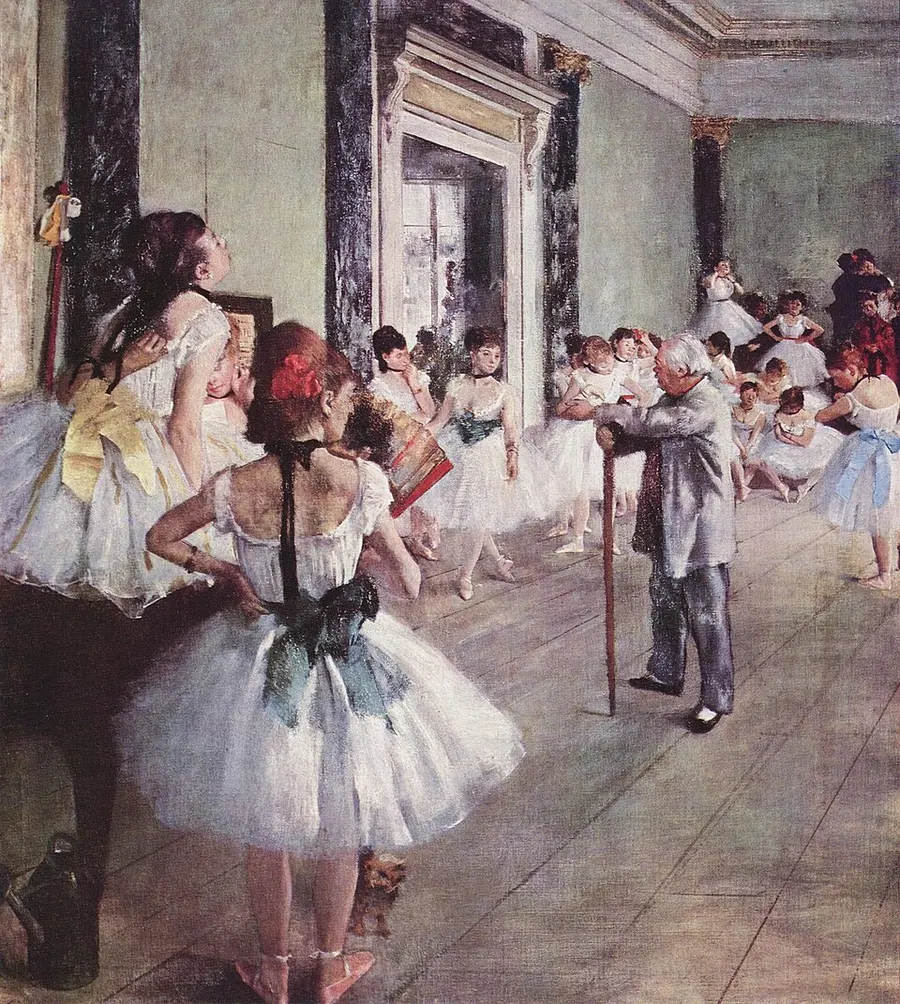
The Ballet Class
The Ballet Class · Degas, c. 1874, Musée d’Orsay

Other painters of ballet mostly painted the loveliest moment under the stage lights. Degas turned his eye backstage instead: a dancer bending to tie her shoe, rubbing an aching ankle, yawning in a corner. He painted not the "performance" but the labor and reality behind it — and this sensitivity to the everyday instant made him one of the coolest observers of modern life.

Relationships

Echoes today

Below are how modern works borrow or reinterpret this name or story — not the original material. The two differ, so keep them apart.

A precursor of the "snapshot" compositionDegas’s bold, snatched-frame compositions, thought to be influenced by photography and ukiyo-e, foreshadowed the modern photographic way of seeing "the decisive moment."

Appears in