🎨ArtArt History
🏠 Home🌐 中文
Art HistoryMASTERS
🐚

Botticelli

Original nameSandro Botticelli

Florentine painter of The Birth of Venus

Putting the Human Back at the Center · Renaissance & Baroque
PaintingMythological ThemesLineGrace

Who they are

A leading painter of the early Renaissance in Florence, under the patronage of the Medici. In an age dominated by religious themes, he boldly revived Greco-Roman myth, painting The Birth of Venus and Primavera — the goddess arriving over the sea on a shell, her lines flowing and graceful as poetry. In his later years, swept up in the friar Savonarola’s religious fervor, his style turned devout and somber, and he is said to have burned some of his own "pagan" works.

Primary sourcesThe Birth of Venus (the Uffizi)Primavera (the Uffizi)

Key stories

The Goddess Arriving on a Shell
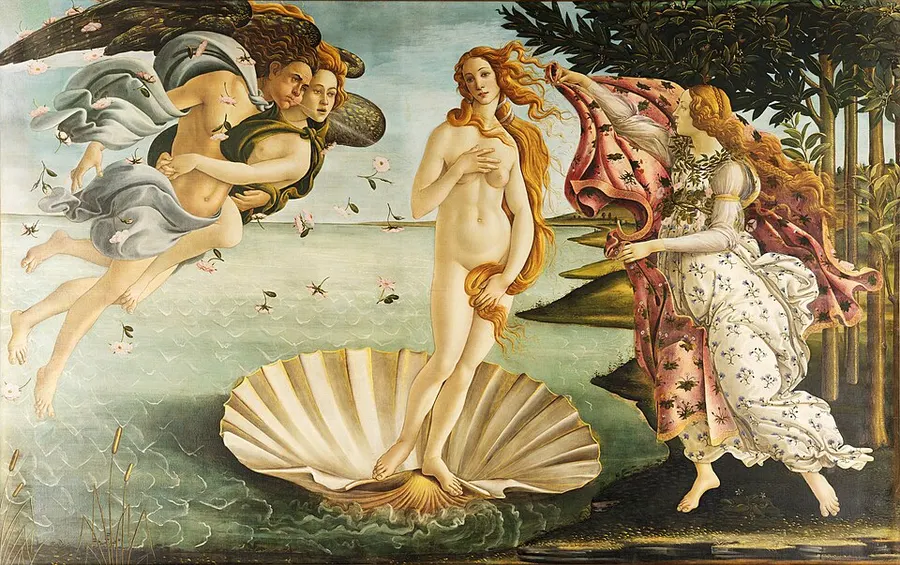
The Birth of Venus
The Birth of Venus · Botticelli, c. 1485, the Uffizi

In The Birth of Venus, the goddess of love and beauty stands nude upon a giant shell, drifting in from the sea, her long hair and thin veil flowing in the wind. It is among the first Western paintings since the Middle Ages to show a pagan goddess life-size and frontally nude — a declaration that the beauty of the human body itself was once again a subject worthy of praise.

Relationships

Echoes today

Below are how modern works borrow or reinterpret this name or story — not the original material. The two differ, so keep them apart.

The "shell goddess" in pop cultureThe goddess on a shell in The Birth of Venus is borrowed again and again by fashion, advertising, and film, a universal visual symbol of "classical beauty."

Appears in